Multiple Factors Behind Washington Midair Collision to Be Detailed by Investigators
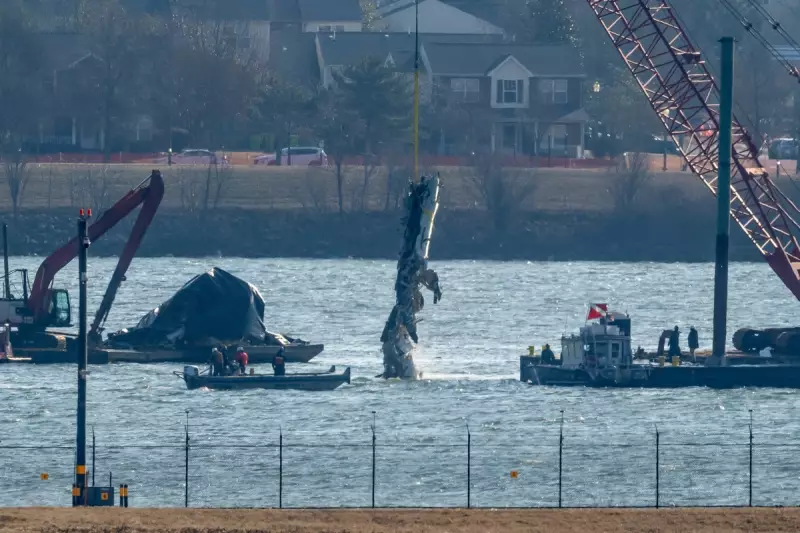
Investigators are preparing to detail the complex web of causes behind the devastating midair collision over Washington that claimed sixty-seven lives last January. The National Transportation Safety Board (NTSB) hearing on Tuesday is not expected to identify a single cause for the tragedy involving an American Airlines airliner and an Army Black Hawk helicopter near Washington, D.C.
Instead, the board will outline numerous contributing factors and recommend systemic changes to prevent similar disasters. This approach reflects the investigation's finding that multiple safety layers failed simultaneously on January 29, 2025.
Permanent Changes Already Implemented
Last week, the Federal Aviation Administration (FAA) made permanent the temporary restrictions imposed after the crash, ensuring planes and helicopters will no longer share the same airspace around Reagan National Airport. This represents one of the most immediate regulatory responses to the tragedy.

Family members of victims hope these and future recommendations will not be ignored like many past NTSB suggestions. Tim Lilley, whose son Sam served as first officer on the American Airlines flight, expressed this concern powerfully.
"Instead of writing aviation regulation in blood, let's start writing it in data," said Lilley, a former Black Hawk pilot familiar with Washington area operations. "Because all the data was there to show this accident was going to happen. This accident was completely preventable."
Key Contributing Factors Identified
Over the past year, the NTSB has highlighted several critical factors that converged to cause the disaster:
- A poorly-designed helicopter route along the Potomac River that allowed dangerously close proximity to aircraft
- The Black Hawk flying seventy-eight feet higher than its designated altitude
- Multiple warnings that the FAA ignored in preceding years
- The Army disabling a key system that would have broadcast the helicopter's location more clearly
This collision marked the first in a series of high-profile aviation incidents throughout 2025 that alarmed the public, despite 2025 recording the lowest total number of crashes nationwide since the pandemic began.
Specific Safety Failures Detailed
The investigation revealed several specific safety breakdowns that contributed to the tragedy:
Inadequate Separation Standards: The helicopter route permitted aircraft to come within seventy-five feet of each other when planes used Reagan's secondary runway. This distance was only guaranteed if helicopters strictly followed the riverbank, which the official route did not require.
NTSB Chairwoman Jennifer Homendy described this arrangement as "an intolerable risk to flight safety," particularly when compared to the standard five-hundred-foot separation maintained by air traffic controllers.
Altitude Discrepancy: The collision occurred two hundred seventy-eight feet above the river, though the Black Hawk should not have exceeded two hundred feet according to its designated route. Investigators discovered the helicopter's barometric altimeter was reading eighty to one hundred feet lower than the actual altitude recorded by flight data.
Testing of three other Black Hawks from the same Army unit revealed similar instrument discrepancies.
Ignored Warnings: FAA controllers had been warning about helicopter traffic risks around Reagan Airport since at least 2022. The NTSB found eighty-five near misses between planes and helicopters in the three years preceding the crash, along with over fifteen thousand close proximity events.
Despite these clear indicators, officials refused to add cautionary warnings to helicopter charts regarding the secondary runway involved in the collision.
Human Factors and Visual Separation Issues
Controllers at Reagan had developed the practice of asking pilots to maintain visual separation to accommodate more aircraft on what airport authorities called the country's busiest runway. The FAA halted this practice after the crash.

On the night of the collision, a controller twice asked helicopter pilots if they had the jet in sight. The pilots confirmed visual contact and requested visual separation approval. However, investigative hearings raised questions about whether the crew could adequately spot the plane while wearing night vision goggles and whether they were looking in the correct direction.
Families Seek Meaningful Change
For family members like Rachel Feres, who lost her cousin Peter Livingston along with his wife Donna and their two young daughters, the revelation of ignored warnings has been particularly painful.
"It became very quickly clear that this crash should never have happened," Feres said. "And as someone who is not particularly familiar with aviation and how our aviation system works, we were just hearing things over and over again that I think really, really shocked people, really surprised people."
Tim Lilley has used his aviation expertise to push for changes, meeting with top lawmakers, Transportation Secretary Sean Duffy, and Army officials since the tragedy. "We had a moral mandate because we had such an in-depth insight into what happened," he explained. "We didn't want to become advocates, but we could not shirk the responsibility."
While experts maintain that flying remains the safest travel method due to multiple overlapping safety layers, the Washington collision demonstrates how catastrophic failures can occur when several of those layers fail simultaneously.