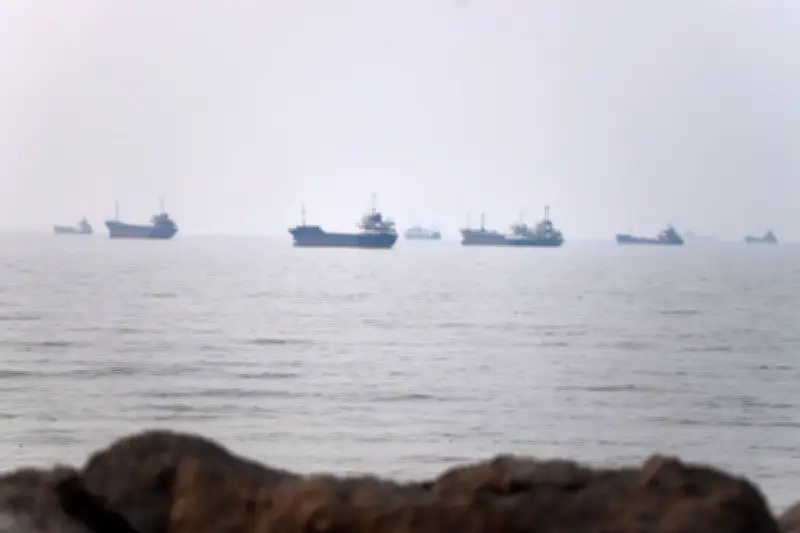
US Central Command (CENTCOM) announced on Wednesday that it had completed a new round of offensive strikes against Iran, hitting over 80 targets with precision munitions. The strikes were in response to Iran's attacks on three commercial vessels transiting the Strait of Hormuz, including the Marshall Islands-flagged M/T Al Rekayyat, Saudi Arabia-flagged M/T Wedyan, and Liberian-flagged M/T Cyprus Prosperity.
Details of the Strikes
The US military stated that it struck Iranian air defense systems, command and control networks, coastal radar sites, anti-ship missile capabilities, and over 60 Islamic Revolutionary Guard Corps small boats in and near the strait. The goal was to degrade Iran's ability to continue attacking international commerce flowing through the trade corridor.
In a statement on X, CENTCOM said: "U.S. Central Command forces completed a new round of offensive strikes against Iran, July 7, hitting over 80 targets with precision munitions as an immediate response to Iran’s latest attacks on commercial vessels transiting the Strait of Hormuz." The statement described Iran's actions as "unwarranted aggression" and a "clear and dangerous violation of the ceasefire."
Iranian Retaliation and Accusations
Iran retaliated by reportedly striking military sites in Bahrain and Kuwait, where the US Navy's 5th Fleet and US Army personnel are based. Iran's Revolutionary Guard confirmed the strikes, accusing the "child-killing and terrorist U.S. army" of openly violating the ceasefire.
Iran's top negotiator, Mohammad Bagher Ghalibaf, accused the US of committing "major" violations of the initial ceasefire deal, known as the Islamabad memorandum of understanding. In a post on X, he listed "Persistent threats of further strikes," "Reinstating oil sanctions," and "Attacks on southern Iran" as violations. He added: "The era of bullying and extortion is over. It leads nowhere. We don’t fold."
Impact on the Ceasefire and Global Trade
The renewed hostilities threaten to disrupt shipping in the Gulf channel and complicate efforts to secure a permanent end to the conflict, which began on February 28. Three civilian vessels were hit on Tuesday, the most in a single day since late April, according to UN International Maritime Organisation figures. Maritime authorities have raised the threat level from "substantial" to "severe."
President Donald Trump has stated that the US would either reach a deal with Tehran or "finish the job." NATO Secretary-General Mark Rutte, speaking at the NATO summit in Turkey, called the US strikes "absolutely necessary," saying: "When you have a ceasefire and Iran is basically violating the ceasefire… I think it is totally crucial that the US forcefully reacts."
Background and Tensions
Tensions have been high in Iran following the funeral of former Supreme Leader Ayatollah Ali Khamenei, who was killed in the opening attack of the war. The initial ceasefire deal, reached between the US and Iran, only secures safe passage through the Strait of Hormuz for 60 days, pending a final agreement on Tehran's nuclear plans. The pact leaves it to Iran and Oman, along with other Gulf states, to define the future administration of the strait.
Iran has continued to exert leverage over the channel, demanding ships seek permission to transit and raising the possibility of future charges. Tehran claims it is the only entity permitted to carry out mine clearance in the strait under the interim agreement, after Oman agreed to work with Britain and France to keep the sea route open. Iran has warned that involvement of any other country would be a provocation.
A joint statement by UK Prime Minister Sir Keir Starmer and French President Emmanuel Macron last Friday affirmed their commitment to ensuring safe transit through the strait, with Oman agreeing to work with the UK and France. The two leaders stated: "The Strait of Hormuz is a vital artery for the global economy. Restoring safe transit for ships of all nations through the Strait is a matter of global concern."