

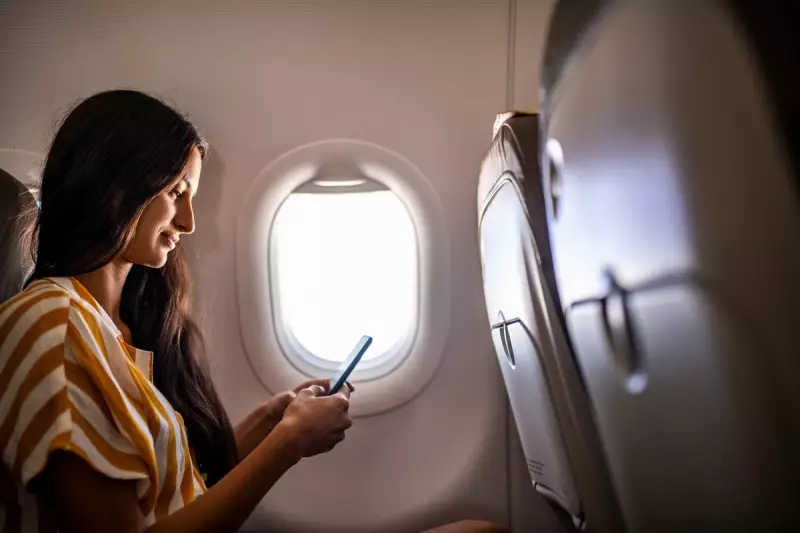
Remember when flying meant a mandatory digital detox? Those days are firmly in the past. For modern travellers, a reliable internet connection at 35,000 feet has shifted from a luxury to a key expectation. US airlines are now fiercely competing on this very perk, using Wi-Fi as a major tool to attract and retain customers.
The Battle for Connectivity: Free Access vs Blazing Speeds
The landscape of in-flight internet is defined by a clear trade-off: universal free access versus cutting-edge, high-speed performance. Currently, only one carrier offers the former with no strings attached, while another is pioneering the future of connectivity with satellite technology.
JetBlue stands alone as the sole US airline providing complimentary Wi-Fi to every passenger, from gate to gate. There is no requirement to join a loyalty scheme. Powered by Viasat, its "Fly-Fi" service delivers average speeds around 23 Mbps, sufficient for light browsing and streaming but not for data-heavy tasks.

In contrast, United Airlines is setting the pace for velocity. It is fitting its fleet with SpaceX's Starlink system, which offers ultra-fast speeds between 100 and 250 Mbps. This enables seamless online gaming and multi-device, buffer-free streaming of high-definition content. However, access is free only for members of its MileagePlus programme. On aircraft yet to be upgraded, Wi-Fi costs around $8-$10 per flight.
Loyalty Schemes and Phased Rollouts: The Middle Ground
Most other major carriers tie free Wi-Fi access to their frequent flyer programmes, creating a compelling reason for passengers to sign up.
Delta Air Lines offers free connectivity for SkyMiles members, with speeds reported near 54 Mbps from its traditional satellite system. This supports light streaming and browsing.
American Airlines has begun rolling out free Wi-Fi, signalling the end of fees that ranged from $10 to $30. To log on for free, passengers must be enrolled in the AAdvantage loyalty programme. Its AT&T-powered service offers roughly 60 Mbps.
Similarly, Southwest Airlines introduced fleetwide free Wi-Fi in 2025, but exclusively for members of its Rapid Rewards scheme. Speeds are variable, often around 20 Mbps, making consistent movie streaming a challenge.
Alaska Airlines typically charges between $8 and $25 per flight, though T-Mobile customers on certain plans browse for free. Its current system provides robust speeds of about 60 Mbps, but the carrier has announced it will install Starlink in 2026.
Quick Takeaways for Connected Travellers
The key facts for passengers are clear. If your priority is cost-free access for everyone on board, JetBlue is your only choice. For the fastest possible connection capable of handling demanding online activities, look to United Airlines' Starlink-equipped aircraft.
For everyone else, the message from the industry is evident: signing up for an airline's loyalty programme is increasingly the golden ticket to staying connected without paying extra. As technology advances, the race to provide both free and fast Wi-Fi continues to shape the competitive skies above America.






