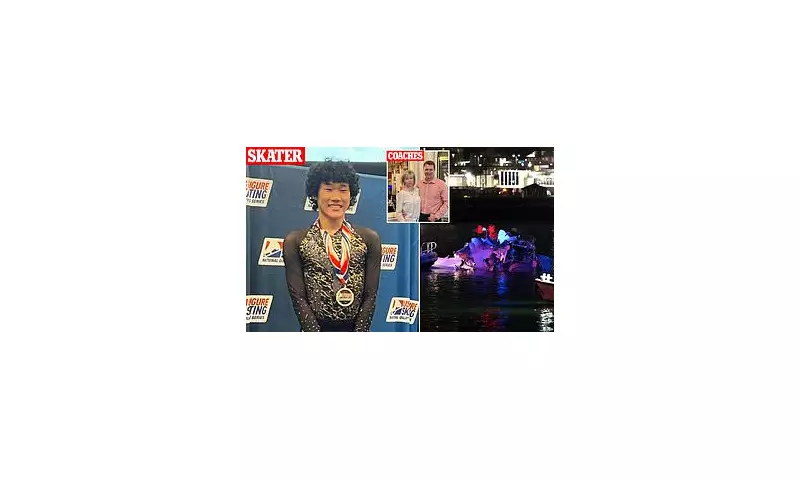
The United States government has formally acknowledged that mistakes by an air traffic controller and an Army helicopter pilot were factors in the catastrophic mid-air collision over Washington DC in January, which claimed 67 lives.
A Tragedy in the Winter Sky
On 29 January, an American Airlines regional jet, operated by PSA Airlines, collided with a US Army Black Hawk helicopter while approaching Ronald Reagan National Airport in northern Virginia. The impact sent both aircraft plunging into the icy Potomac River. There were no survivors among the 60 passengers and four crew on the jet, or the three soldiers aboard the helicopter.
The victims included a group of elite young figure skaters, their parents, and coaches returning from the US Figure Skating Championships in Wichita, Kansas. Also lost were four union steamfitters from the Washington area.

Government Concedes Breach of Duty
In a response to an initial lawsuit filed by the family of victim Casey Crafton, government lawyers stated: "the United States admits that it owed a duty of care to plaintiffs, which it breached, thereby proximately causing the tragic accident."
The filing specifies two key failures. Firstly, the air traffic controller violated visual separation procedures. Secondly, the Army helicopter pilots failed in their duty to "maintain vigilance so as to see and avoid" the commercial airliner. The government also noted it was aware of previous near-miss events involving Black Hawk helicopters on routes around Washington.
Investigation Uncovers Systemic Issues
While the National Transportation Safety Board's (NTSB) final report is due next year, preliminary findings have highlighted multiple contributing factors:
- The helicopter was flying 78 feet (24 metres) higher than the 200-foot (61-metre) limit on its route.
- The route design allowed only minimal separation between landing planes and helicopters below.
- The Federal Aviation Administration (FAA) failed to recognise persistent dangers despite 85 near misses in the three years preceding the crash.
- Controllers at Reagan had become overly reliant on visual separation, a practice now discontinued.
- Questions remain about the helicopter crew's use of night vision goggles and the accuracy of their altimeter.
Robert Clifford, an attorney for a victim's family, said the admission acknowledges "the Army's responsibility for the needless loss of life" and the FAA's procedural failures, while also noting the airlines' potential role.
Legal Repercussions and Denials
American Airlines and PSA Airlines, also named in the lawsuit alleging inadequate pilot training and risk mitigation, have filed motions to dismiss. An American Airlines spokesman stated the plaintiffs' proper recourse was against the US government, not the airline.
Despite its admission of breached duty, the US government denied that any air traffic controllers, FAA officials, or Army personnel were negligent. Aviation experts, however, note that such a swift admission of partial responsibility is unusual and suggests the government sees its liability as clear.
This disaster stands as the deadliest plane crash on American soil in over twenty years, leaving families "deeply saddened and anchored in grief" and prompting serious questions about aviation safety protocols in one of the world's busiest airspaces.