UK Airports Face Scathing Critique as National Embarrassment
Few experiences are more disheartening than arriving at Gatwick Airport's North Terminal in torrential rain for an early morning flight of uncertain timing, hoping your checked luggage reaches its destination. The terminal resembles a bleak industrial warehouse, complete with a £10 drop-off fee that escalates to £100 if unpaid by midnight the following day. Passengers must then navigate either a clanky lift to Level One or a painfully slow travelator angled at 35 degrees, which still issues a "Caution" warning as you disembark.
A Grim Welcome Home
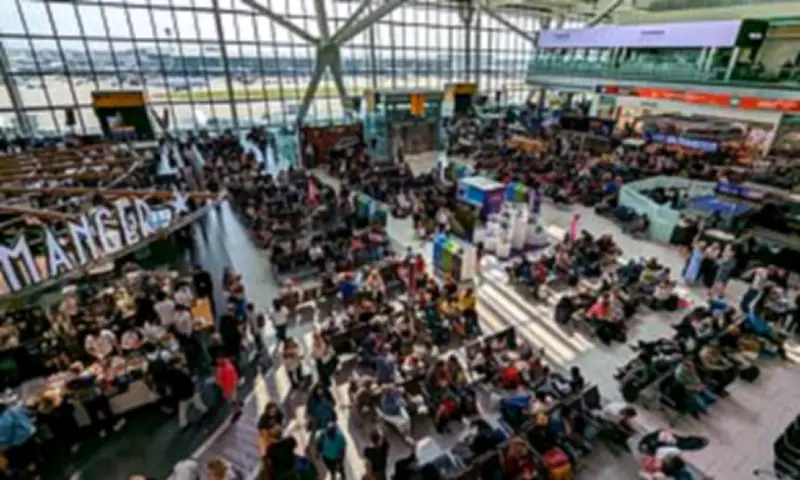
Even more depressing is returning to that same dismal terminal weeks later to encounter trolleys with defective wheels, abandoned bags beside broken carousels, soap-less restrooms, and indifferent staff managing immigration queues like poultry herders. The confusion extends to locating Uber pickup points, compounding the frustration.
Arriving in the UK proves worse than departing because airports prioritize departing passengers who spend more time—and money—in terminals. Inbound travelers simply want to exit quickly, making their experience secondary. This creates a national embarrassment where airports serve as visitors' first impression of Britain.

Architectural Stagnation and Excessive Costs
Rather than showcasing a vibrant, functional nation, the UK's approximately 25 major passenger airports exemplify sluggish growth, inefficiency, and low morale. Most suffer from architectural stagnation, chaos, overcrowding, and exorbitant prices—nearly £5 for a Heathrow Starbucks latte or £7.15 for a tomato and mozzarella panini at Luton.
In global surveys over the past year, no British airport ranked in the top 50, except Heathrow Terminal 5, which offers an expansive concourse but descends into a dim basement post-security with inadequate seating for millions of transfer passengers.
Passenger Resignation and Sky-High Prices
Britons have grown largely immune to airport horrors, flying only once or twice annually and enduring the experience with grim acceptance. Business class travelers find some refuge in overcrowded lounges, but all face pervasive ugliness, endless queues, and staggering costs—up to £50 for four hot drinks and undercooked bacon rolls.
"Welcome to Britain" signs featuring smiling Beefeaters ring hollow, especially when e-gates at Passport Control are closed due to technical faults. Skytrax, the UK-based consultancy behind annual World Airline and Airport Star Ratings, will announce 2026 winners next month, with British airports expected to dominate the losers' list.
Consistently Poor Rankings
Last year, London Stansted and Manchester Airport were among the world's worst, aligning with Which? survey results that placed Manchester last for four consecutive years, followed by Luton. Exeter, Liverpool John Lennon, and London City topped the rankings across categories like customer service, baggage wait times, security queues, seating availability, and retail variety.
Julia Simpson, former CEO of the World Travel & Tourism Council, notes: "Unlike many countries where gleaming airports symbolize national pride, ours are grim reminders of sacrificed customer satisfaction, enabled by Civil Aviation Authority regulations allowing airports to overcharge airlines and consumers."
Global Comparisons Highlight Deficiencies
Singapore's Changi Airport, consistently ranked world's best, has become a tourist destination where families spend entire days for pleasure—a concept unthinkable for Heathrow or Gatwick. Changi's Jewel complex features the world's tallest indoor waterfall, the Rain Vortex, plunging 40 meters through a rainforest canopy, even hosting weddings.
Hong Kong airport provides another contrast, with staff escorting transferring passengers to gates during tight connections and ensuring luggage arrives—a stark difference from Manchester Airport, where autowalks are often broken, signage is misleading, and Terminal 3 departures confusingly operate from Terminal 1.

Glimmers of Hope Amid Systemic Issues
Manchester's new T2 terminal, opened after nearly a decade and £1.3 billion in construction, offers natural light and helpful staff, demonstrating potential. Stansted, once an architectural marvel with its "floating roof" designed by Norman Foster's firm, now struggles with overcrowding, handling 30 million passengers annually—double its original capacity—with plans to expand to 51 million by 2040.
Post-security areas at Stansted become gauntlets of duty-free shops and chain restaurants like Burger King and Starbucks, which hike prices to cover exorbitant rents.
Ownership and Regulatory Challenges
Heathrow, handling one in four UK arrivals, is considered the world's most expensive airport, with passenger charges double those of other global hubs. Ironically, despite British Airways planes sporting Union flag tail fins, Heathrow is foreign-owned under Heathrow Airport Holdings Ltd, controlled by a consortium including French, Qatari, Saudi, Singaporean, Australian, and Chinese investors.
CEO Thomas Woldbye, a Dane, faced criticism for being asleep during last year's electrical outage that shut the airport for nearly two days. Surinder Arora, British-Indian billionaire and founding member of Heathrow Reimagined, laments: "It breaks my heart that Heathrow is entirely foreign-owned. We keep selling off the family silver when fundamental change is needed."
Calls for Reform and Competition
Heathrow Reimagined—including Virgin Atlantic, International Airlines Group, and American Airlines—advocates a regulatory framework review, noting that capital projects increase costs passed to passengers through pricier flights, parking, and refreshments. Julia Simpson adds: "These investors get guaranteed dividends leaving the country, with no interest in excessive charges paid by airlines and customers."
The group also proposes introducing competition, such as allowing third parties to build and operate terminal buildings. Arora criticizes Heathrow's control over parking: "To make passengers pay for being dropped off is shocking and unnecessary if the company was fit for purpose."
Luton's Ongoing Struggles
Luton Airport, used by easyJet, Jet2, Tui, Wizz Air, and Ryanair, plans a new terminal despite environmental concerns. Reaching Luton via train from London involves a £5 Dart air-rail shuttle for a 3.5-minute ride. The current terminal resembles an overcrowded warehouse, where a Guinness at The Fletton pub costs nearly £8.
An unmanned information desk with a sign reading "Your adventure starts here" epitomizes the disconnect, leaving urgent queries unanswered. The fundamental question remains: What can be done to transform UK airports from sources of shame and dread into points of national pride?