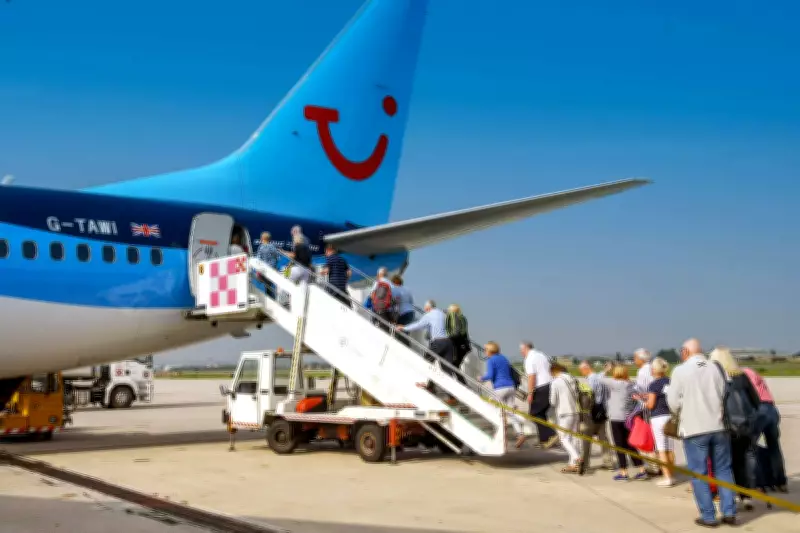
Tui has moved to reassure holidaymakers that their peak summer flights will proceed as planned, despite concerns over potential aviation fuel shortages stemming from the ongoing conflict in Iran. Mathias Kiep, Chief Financial Officer of Tui Group, expressed confidence in an interview with The Independent, stating, “I’m very much convinced that we will see no shortage in the next 10 weeks. There’s definitely enough fuel.”
Financial Results and Fuel Outlook
Speaking as Europe’s largest holiday company unveiled its financial results for the period from October 2025 to March 2026, Kiep addressed the fuel debate directly: “We think that the discussion on fuel is a little bit artificial as we do see no shortages for the next weeks. I would also see no impact in the summer at all except prices – and for the higher prices we are luckily hedged.” He elaborated that Europe is now sourcing more oil from alternative suppliers such as Nigeria, driven by increased profitability at higher prices. Additionally, consumption has dropped significantly compared to the previous year, while refinery capacity has risen. Kiep further noted that even a prolonged closure of the Strait of Hormuz would not lead to a fuel shortage.
First-Half Performance and War Impact
The company described its first half of the financial year, spanning October 2025 to March 2026, as “very successful.” However, it cautioned that the second half “will require great dedication and flexibility.” The war in Iran inflicted a €40 million (£35 million) blow to profits, attributed to lost sales and the extra costs of repatriating holidaymakers from the Middle East and Asia. Additionally, Hurricane Melissa in Jamaica cost the company €5 million (£4.3 million).

Sebastian Ebel, Chief Executive of Tui Group, emphasised the company’s commitment to customer security: “We offer our customers a high level of security and quality, especially in turbulent times. The package holiday remains the gold standard.” The occupancy rate on Tui cruises dipped from 97% to 93% due to the Iran war, with two ships from the German cruise operation stranded in the Gulf for ten weeks.
Summer Bookings and Travel Trends
Air bookings for the summer are currently 7% below last year’s levels. The firm observed that customers are comfortable booking two or three weeks in advance, but are hesitant to book two or three months ahead. Despite these trends, Tui has not seen any decline in the overall intention to travel, nor a shift from air to surface transport. The recent hantavirus scare has also had no impact on cruise demand.
In related news, Britons are increasingly turning away from Spain after a rival destination dropped its EU biometric requirement, signalling shifts in travel preferences.