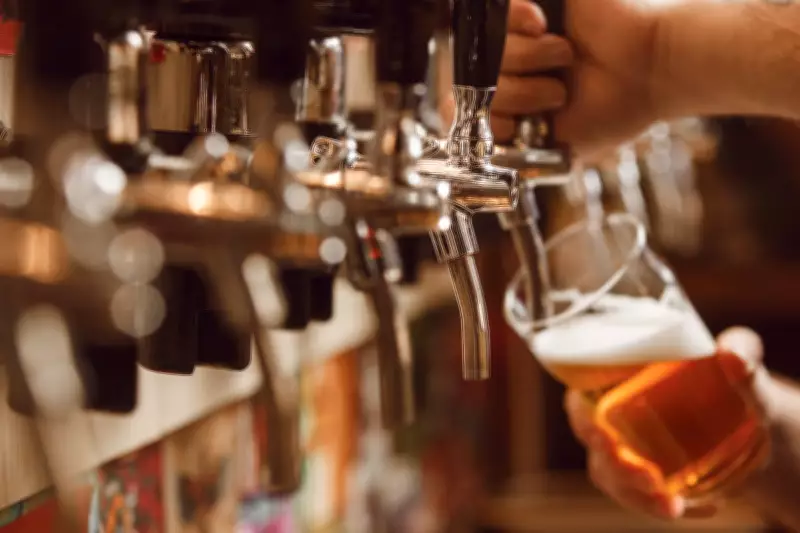
London's vibrant pubs and restaurants are bracing for a severe blow to their businesses this week as industrial action by Tube drivers causes widespread transport disruption across the capital. Members of the Rail, Maritime and Transport (RMT) union initiated a 24-hour walkout starting at midday today, with a second strike planned for Thursday, creating service interruptions expected to last throughout the entire week.
Transport Chaos and Economic Impact
Transport for London (TfL) has urgently advised passengers to verify travel arrangements before setting out, issuing warnings that the industrial action will affect all Tube services. Since the strike began, RMT members have been actively establishing picket lines outside numerous Tube stations, demonstrating their resolve in the ongoing dispute.
Union official Jared Wood emphasized that the conflict extends beyond the headline issue of a four-day working week. "Union members felt strongly about the issues at the heart of the dispute," Wood stated, highlighting additional concerns including shift lengths and alterations to annual leave entitlements.

Substantial Financial Consequences for Hospitality
The strike action arrives at a particularly vulnerable moment for London's hospitality sector. Emma McClarkin, chief executive of the British Beer and Pub Association, revealed the staggering economic contribution at risk: "In a typical week, London's pubs generate approximately £80 million in gross value added (GVA) between Tuesday and Friday alone."
McClarkin further explained that this financial figure represents far more than mere economic activity. "This doesn't just boost the economy but represents the jobs, high streets, and community spirit that revolve around pubs," she noted, adding that many establishments are already operating precariously due to escalating operational costs.
"At a time when so many locals are already operating on a knife edge because of huge costs, significant disruption to trade will be acutely felt," McClarkin warned. She called for comprehensive government support including permanent business rates reform, reductions in beer duty and VAT, and decreased regulatory burdens to help the struggling sector.
Negotiation Stalemate and Additional Disruption
Jared Wood expressed frustration with the current deadlock in negotiations, stating: "TfL need to come forward with changes to their proposals for this dispute to be resolved. There is absolute unanimity among our members that we have to fight these proposals." He acknowledged that considerable animosity has developed between drivers and London Underground management during the protracted dispute.
Meanwhile, Claire Mann, TfL's chief operating officer, defended the organization's position: "We have set out proposals to the RMT for a four-day working week. This allows us to offer train operators an additional day off, whilst at the same time bringing London Underground in line with the working patterns of other train operating companies, improving reliability and flexibility at no additional cost."
Mann emphasized that the proposed changes would be entirely voluntary, with no reduction in contractual hours, and that employees preferring a traditional five-day working week would retain that option.
Compounding Transport Challenges
The Tube strikes represent just one component of this week's transport difficulties. A separate 24-hour strike affecting some Stagecoach-operated bus routes in the capital is scheduled to commence at 5am on Friday, potentially extending the disruption into the weekend and further impacting businesses reliant on customer mobility.
With London's intricate transport network experiencing significant paralysis, the hospitality industry faces a critical test of resilience. The combined strikes threaten to isolate venues from their customer bases during what would typically be a productive midweek trading period, placing additional strain on an already challenged sector.