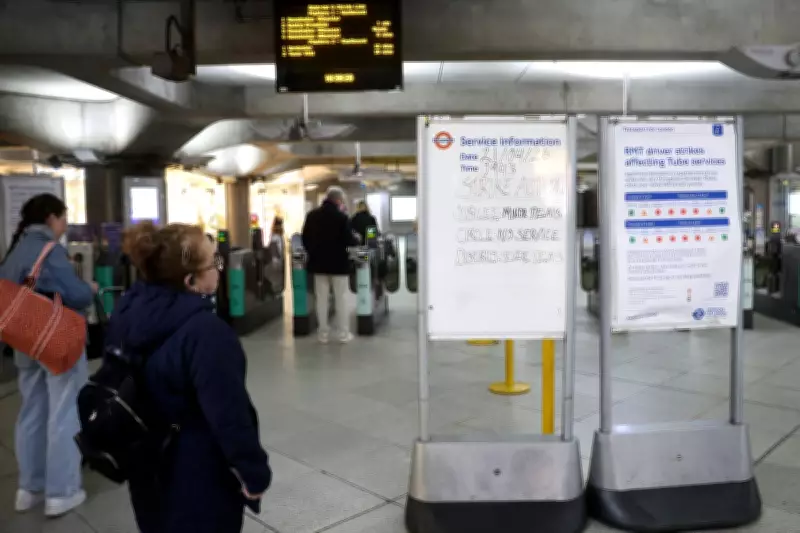
London Underground Strike Halts Tube Services, Causing Major Commuter Chaos
London's transport network faced significant and widespread disruption on Tuesday as the first in a series of 24-hour strikes by Underground drivers brought many Tube services to a standstill, severely impacting commuters and visitors across the capital. The industrial action, initiated by members of the Rail, Maritime and Transport (RMT) union at 12 noon, led to extensive delays and suspended operations on several key lines, with a further 24-hour strike planned for Thursday, ensuring continued disruption throughout the week.
Severe Service Suspensions and Delays Across the Network
Transport for London (TfL) urgently advised passengers to check their journeys before travelling, as the strike action resulted in full or partial suspensions on multiple Tube lines. The Circle, Central, and Piccadilly lines were among those most affected, experiencing either complete halts or severe operational limitations. Other parts of the Underground network reported significant delays, compounding the chaos for thousands of daily travellers. The union, embroiled in a contentious dispute over proposed changes to the working week, has scheduled four additional 24-hour strikes in May and June if the disagreement remains unresolved, threatening prolonged transport instability.
Union and Management at Loggerheads Over Working Conditions
RMT official Jared Wood emphasised that the dispute extends beyond the proposed four-day week, highlighting other critical issues such as shift lengths and alterations to annual leave entitlements. He stated that union members hold strong convictions and absolute unanimity regarding the need to resist TfL's proposals, which they argue could undermine working conditions. Wood told the Press Association that there is now "a lot of bad feeling" between drivers and London Underground management, and he called for TfL to revise their proposals to resolve the conflict. In response, Claire Mann, TfL's chief operating officer, defended the proposals, noting that they aim to align London Underground with other train operating companies by offering a voluntary four-day week without reducing contractual hours, thereby improving reliability and flexibility at no additional cost.

Economic Impact on London's Hospitality Sector
The strike has raised serious concerns for London's hospitality industry, with pubs and restaurants warning of severe impacts on trade during a typically lucrative period. Emma McClarkin, chief executive of the British Beer and Pub Association, highlighted that London's pubs generate approximately £80 million in gross added value between Tuesday and Friday alone in a typical week. She stressed that this economic activity supports jobs, high streets, and community spirit, and that significant disruption could be acutely felt by businesses already operating on a knife edge due to high costs. McClarkin urged the government to support the sector through measures such as permanent business rates reform, cuts in beer duty and VAT, and a reduction in regulatory burdens to mitigate the financial strain.
Additional Transport Disruptions Looming
Compounding the transport woes, some bus routes in the capital operated by Stagecoach will be affected by a separate 24-hour strike starting at 5am on Friday, further straining London's public transport system. This additional industrial action underscores the broader challenges facing the city's infrastructure and the potential for ongoing commuter inconvenience. As the situation develops, passengers are urged to stay informed and plan alternative travel arrangements to navigate the disruptions effectively.