

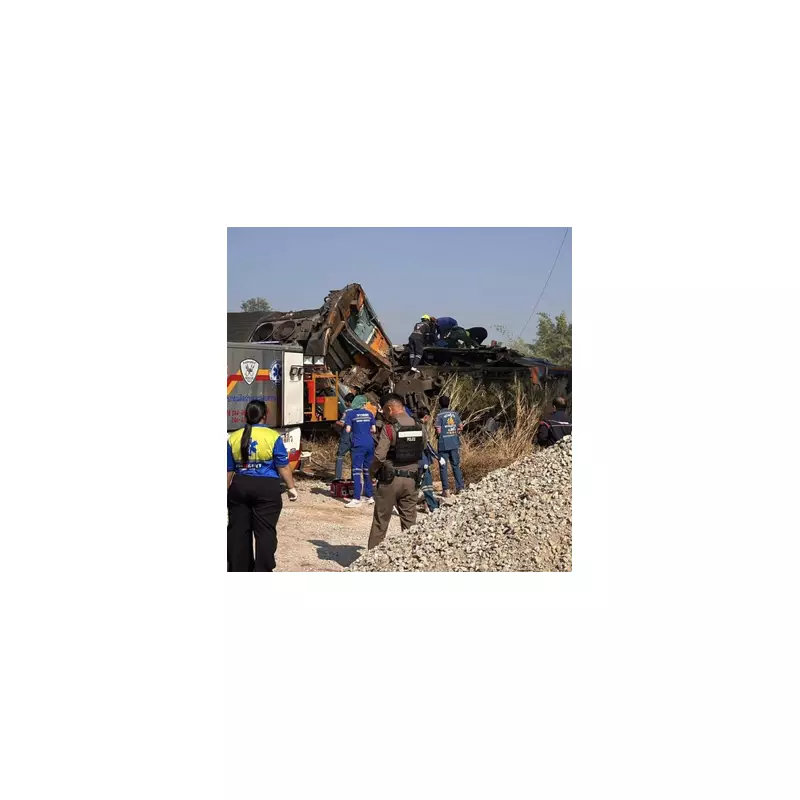
A catastrophic crane collapse in central Thailand has left at least 22 people dead and dozens more injured after the machinery smashed onto a moving passenger train.
The Scene of the Disaster
The tragedy unfolded early on the morning of 14 January 2026 in the area of Ban Thanon Khot, located in Thailand's populous Nakhon Ratchasima province. This key transport hub lies north of the capital, Bangkok.
At approximately 9am local time (2am GMT), the crane toppled onto railway tracks, directly striking a train that was carrying an estimated 195 passengers. The impact was devastating.

Eyewitness Accounts and Rescue Efforts
A local resident, Mitr Intrpanya, described hearing a loud noise followed by two explosions. Upon arriving at the scene, he told the AFP news agency he "found the crane sitting on a passenger train with three carriages".
He gave a harrowing description of the damage, stating: "The metal from the crane appeared to strike the middle of the second carriage, slicing it in half."
Emergency services worked swiftly, and authorities confirmed that all passengers had been removed from the wreckage by 11.45am local time (4.45am GMT). The injured, who number around 80, include a one-year-old child.
Investigation Launched Amid Safety Concerns
The Governor of the State Railway of Thailand has been called to "thoroughly and comprehensively" investigate the cause of the collapse. Early indications point towards serious safety lapses as the likely culprit.
This incident has tragically highlighted a persistent issue in the country. Previous infrastructure and construction disasters in Thailand, such as a tower block collapse that killed over 100 people, have been responsible for hundreds of deaths in recent years.
The train tragedy in Nakhon Ratchasima serves as a grim reminder of the human cost when safety protocols fail, prompting urgent questions about regulation and enforcement on construction sites near public transport routes.






