Plans for a monumental underwater railway tunnel connecting Europe and Africa have received a significant boost, with Spain now pushing the decades-old project towards a potential reality.
Technical Viability Confirmed
A crucial feasibility study, commissioned by the Spanish government and conducted by German tunnelling specialists Herrenknecht, concluded in October 2025 that constructing a rail tunnel beneath the Strait of Gibraltar is technically achievable with today's technology. This finding has reignited the ambitious scheme, first seriously proposed in the 1970s.
Following the positive study, Spanish consultancy Ineco has been tasked with drawing up detailed blueprints for the project by the end of 2026. The aim is to seek formal government approval as early as 2027.

Project Scope and Immense Challenges
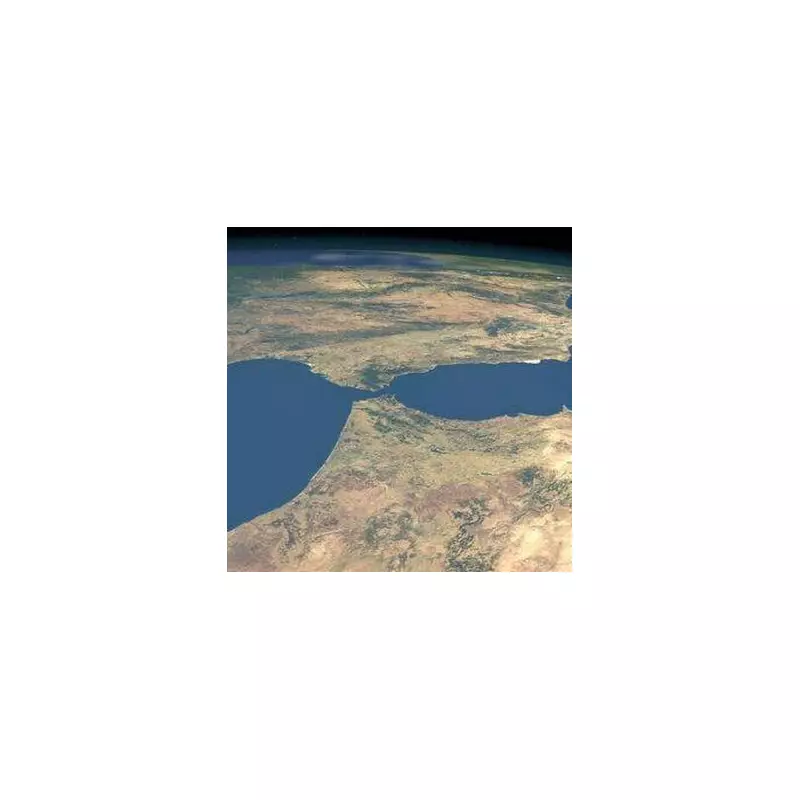
The proposed fixed link would take inspiration from the Channel Tunnel. It envisions two separate railway tunnels, each carrying trains in one direction, connecting Punta Paloma in Cadiz, Spain, with Cape Malabata near Tangier, Morocco.
The engineering challenge is staggering. The tunnel would span approximately 26 miles, with nearly 17 miles submerged underwater. At its deepest point, it would plunge to around 1,540 feet below sea level—far deeper than the Channel Tunnel. The route must navigate the geologically complex Camarinal Threshold and sits on the seismically active boundary of the Eurasian and African tectonic plates.
The most recent cost estimate for the project stands at a colossal €8.5 billion (approximately £7.4 billion).
A Long Road Ahead to Connection
If approved, the project timeline is extensive. Fieldwork could begin in 2030, with the main construction phase slated for between 2035 and 2040. An initial target to complete the tunnel by 2030, in time for the FIFA World Cup co-hosted by Spain, Portugal, and Morocco, has been dismissed by experts as unrealistic given the project's complexity and current preliminary stage.
Upon completion, the journey across the Strait is projected to take roughly 30 minutes by train. The tunnel is designed to carry both passengers on high-speed AVE trains and freight, providing a transformative rail connection between the two continents.
The project is being jointly managed by Spain's SECEGSA (Society for Studies on Fixed Communication across the Strait of Gibraltar) and its Moroccan counterpart, SNED (National Society for Strait Studies).