Plans for a monumental underwater railway linking Europe and Africa have received a significant push forward, with Spain taking concrete steps to turn a decades-old dream into reality.
Feasibility Confirmed and Blueprints Ordered
A major feasibility study, commissioned by the Spanish government and conducted by German tunnelling specialists Herrenknecht, concluded in October 2025 that constructing a rail tunnel beneath the Strait of Gibraltar is technically achievable with current technology. This pivotal finding has reignited the ambitious project.
Following the positive assessment, Spanish consultancy Ineco has been tasked with drawing up detailed blueprints for the scheme, with a deadline set for the end of 2026. This crucial work paves the way for potential government approval as early as 2027.

Engineering Ambition and Immense Challenges
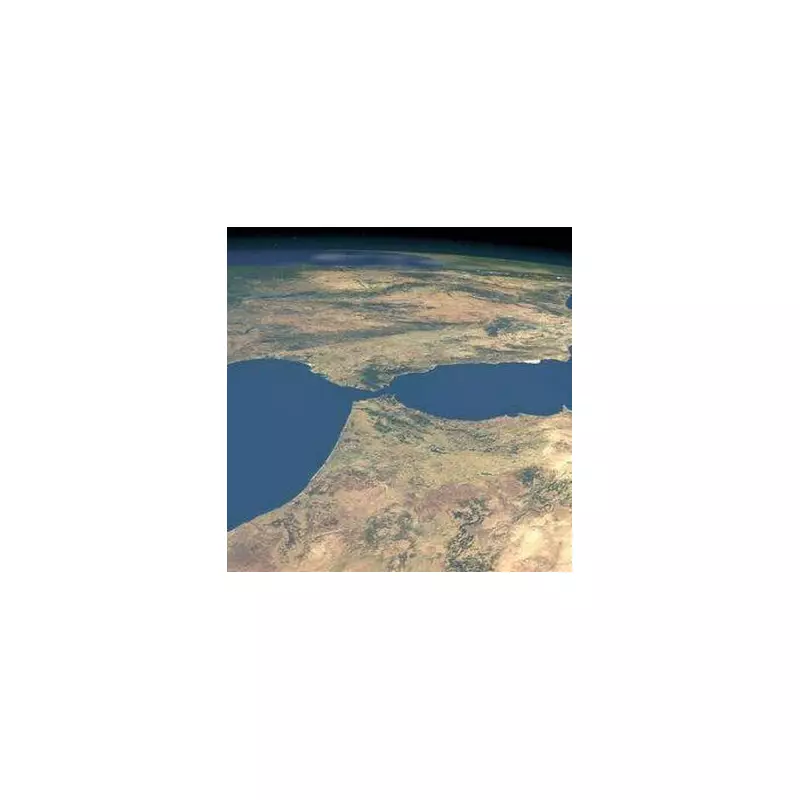
The proposed fixed link would take inspiration from the Channel Tunnel but on an even grander and more complex scale. It is designed to connect Punta Paloma in Cadiz, Spain, with Cape Malabata near Tangier, Morocco.
The tunnel would span approximately 26 miles in total, with nearly 17 miles of that submerged beneath the sea. At its deepest point, it would plunge to around 1,540 feet—far deeper than the Eurotunnel. The plan features two separate bores for bidirectional rail traffic, capable of carrying both high-speed passenger trains and freight, with a crossing time of roughly 30 minutes.
However, the project faces formidable obstacles. The route lies on the seismically active Azores-Gibraltar fault line, the boundary between the Eurasian and African tectonic plates. The geology at the Camarinal Threshold presents particularly difficult conditions for construction.
A Long Road from Concept to Construction
The vision of a physical link between the two continents first emerged in the 1970s. A joint Spanish-Moroccan committee was established in 1979 to assess the idea, but no tangible progress was made for decades. Earlier concepts, including a suspension bridge, were discarded due to the Strait's depth, high winds, and seismic risk.
The project is now jointly managed by Spain's SECEGSA and Morocco's SNED. While initial hopes aimed for completion by 2030 to coincide with the FIFA World Cup in Spain, Portugal, and Morocco, experts now deem that timeline unrealistic.
Current projections suggest that if approved, fieldwork could begin in 2030, with the main construction phase taking place between 2035 and 2040. The most recent cost estimate for this colossal undertaking stands at €8.5 billion (approximately £7.4 billion).