

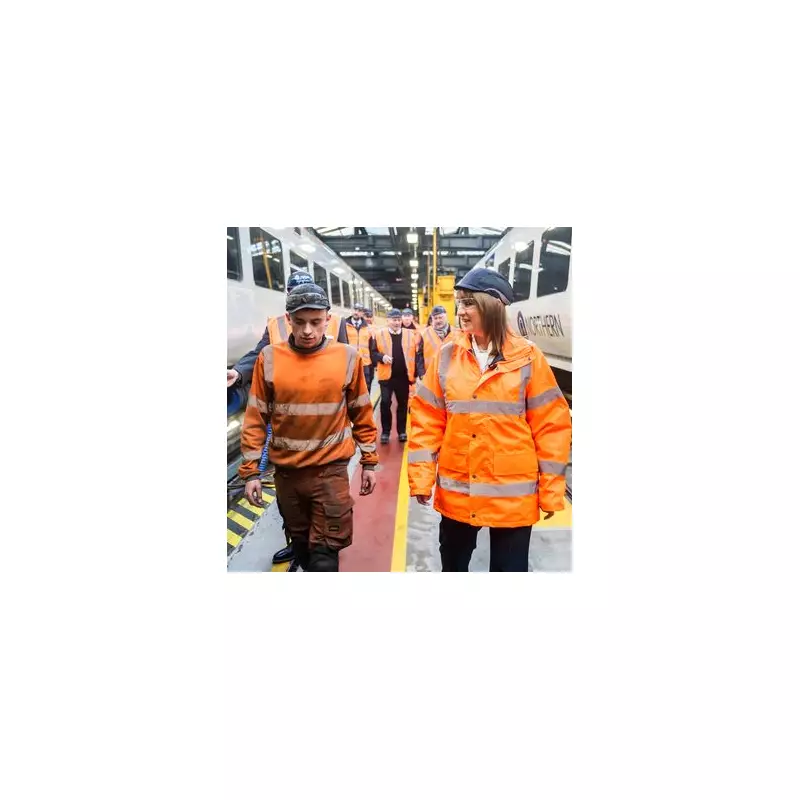
Chancellor Rachel Reeves has launched a landmark investment programme for Northern England's railways, vowing to end years of "broken promises" and transform regional connectivity.
A Generation-Defining Investment
In a major policy announcement, the Chancellor confirmed the government is committing to the biggest investment in Northern rail in a generation. The move directly targets what she describes as the economic damage caused by 14 years of Tory underinvestment in critical infrastructure.
Writing exclusively, Reeves stated that the previous administration "chose chaos and instability over raising living standards," deliberately neglecting trains, roads, clean energy, and public services. Northern Powerhouse Rail (NPR) is positioned as the corrective to this legacy, designed in partnership with local leaders.

Transforming Travel Across the North
The new rail network will create faster, more frequent services linking key economic hubs. The core route will connect Liverpool, Manchester, Leeds, Bradford, Sheffield, and York, with services extending to Newcastle and Hull.
Reeves highlighted the stark reality of current services to illustrate the need for change. A resident of Liverpool currently has only two fast trains per hour to Manchester, with a journey to Manchester Airport—just 28 miles away—taking up to an hour and 25 minutes. Meanwhile, Leeds, the largest city in Western Europe without a mass transit system, sees only a third of its population able to reach the city centre within half an hour.
"These aren’t just frustrating inconveniences," the Chancellor argued. "It's holding back jobs, businesses and families across the North."
Unlocking a £40 Billion Economic Boost
The economic rationale for the investment is central to the government's case. Reeves pointed to the unique strengths of Northern cities: Manchester's tech sector, Leeds's financial services, Sheffield's advanced manufacturing, Liverpool's life sciences, and Newcastle's clean energy leadership.
The government estimates that raising productivity in the North to the national average would add a staggering £40 billion annually to the UK economy. This growth, Reeves contends, would generate more funding for schools, hospitals, and vital public services nationwide.
This initiative builds on early transport measures from the government, including freezing rail fares for the first time in 30 years and maintaining the £3 bus fare cap.
Restoring Trust After 'Economic Betrayal'
Acknowledging deep-seated public scepticism after repeated failures to deliver on grand infrastructure pledges, Reeves drew a clear line under the past. She accused previous governments of talking "a big game about 'levelling up'" while services deteriorated and young people were forced to move away for work.
"The previous lot promised the earth and delivered nothing," she stated. "Communities were told they'd get new rail links, only to see plans scrapped. That economic betrayal forced people to leave their hometowns."
Concluding with a firm commitment, the Chancellor declared: "We're different. We're putting our money where our mouth is. The North built the railways that changed the world. Now we're building the railways that will change the North. No more broken promises."






