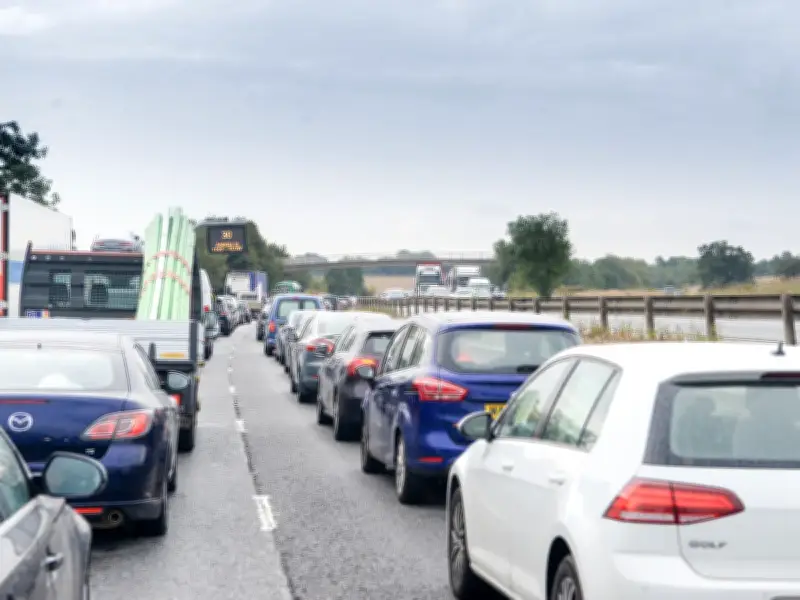
The RAC has warned that 14.1 million motorists are expected to take to UK roads between Friday and Sunday, marking the second-highest figure since records began in 2016. Most schools in England and Wales have broken up for summer holidays this week or early next, while Scotland and Northern Ireland have already ended their academic year.
Busiest Days and Key Routes
Saturday is predicted to be the busiest day for getaway journeys, with 3.8 million trips planned. Friday and Sunday are each expected to see around 3.4 million journeys. The Port of Dover anticipates about 7,500 outbound cars on Friday, rising to nearly 10,000 on Saturday. The RAC warned that south-west and north-west England are likely to experience the most leisure traffic.
Why Lane Changes Don't Help
Randa Herzallah, Associate Professor of Applied Mathematics at the University of Warwick, explained that many queues this weekend will be 'phantom traffic jams' – stop-start waves that travel backwards through traffic even though every vehicle is moving forward. She stated: "If you've ever found yourself staring enviously at the lane next to you, convinced it's moving faster, you're not alone. Most of us instinctively believe that changing lanes will get us home sooner. But mathematics suggests this intuition is usually wrong."
Professor Herzallah added: "There is an optimal traffic density that maximises the number of vehicles passing through the road each hour. Beyond that point, adding more cars reduces the efficiency of the road – and increases the time it takes everyone to get to their destination."
Mathematical Evidence for Better Driving
The professor noted that constant lane changing creates small disturbances that accumulate, increasing the likelihood of traffic waves. She said: "What feels like a clever decision for one driver can ultimately make conditions worse for everyone." She recommended three mathematically backed tips: maintain a safe following distance, accelerate and brake smoothly, and resist the temptation to switch lanes for tiny gains.
She told The Conversation: "Applied mathematics shows the fastest way to your destination isn't to drive more aggressively. It's to help keep the entire system stable."