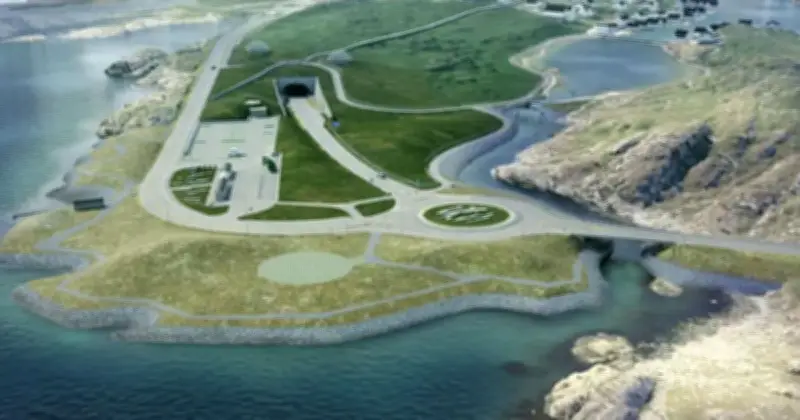
The Rogfast Tunnel, a £1.8 billion mega-project in southwestern Norway, is set to become the world's longest and deepest underwater road tunnel when it opens in 2033. Stretching 27 kilometres (16.7 miles) and reaching 392 metres below sea level, the tunnel will connect Randaberg, north of Stavanger, with Bokn, eliminating a 25-minute ferry crossing and reducing travel time between Bergen and Stavanger by about 40 minutes.
Project Overview and World Records
The Rogfast Tunnel, officially named the Rogfast subsea road tunnel, is being built beneath the Boknafjord and Kvitsøyfjord. It will consist of two separate tunnels—one for northbound traffic and one for southbound traffic—with emergency passages every 250 metres. The tunnel is part of Norway's plan to make the E39 coastal highway ferry-free, improving connectivity along the west coast.
According to the Norwegian Public Roads Administration, the tunnel will break two world records: longest underwater road tunnel and deepest subsea road tunnel. The current deepest subsea tunnel is the Eiksund Tunnel in Norway, at 287 metres below sea level.
Construction Challenges and Engineering
Construction began in January 2018 but was paused in 2019 due to higher-than-expected costs. After a two-year review, work restarted in late 2021. Instead of using tunnel boring machines, workers drill into solid rock and blast it away with explosives. Teams are digging from both ends simultaneously, using laser scanners that collect millions of measurements per second to ensure precise alignment.
The depth of 392 metres poses significant challenges due to high water pressure on the rock. Engineers constantly inspect the rock ahead for cracks or weak points. Additionally, an underground roundabout at 250 metres below sea level will connect the main tunnel to the island of Kvitsøy, making it the deepest undersea road junction ever built.
Funding and Safety Features
The latest approved budget is 25 billion Norwegian kroner (approximately £1.8 billion). The Norwegian government covers about 40% of the cost, with the remainder funded through tolls paid by drivers. Special ventilation shafts will remove smoke in case of fire, and emergency passages provide escape routes.
Norconsult, the project's engineering firm, highlighted the complexity: Building at this depth requires innovative solutions to manage water pressure and ensure safety.
If the schedule holds, Rogfast will open to traffic in 2033.