

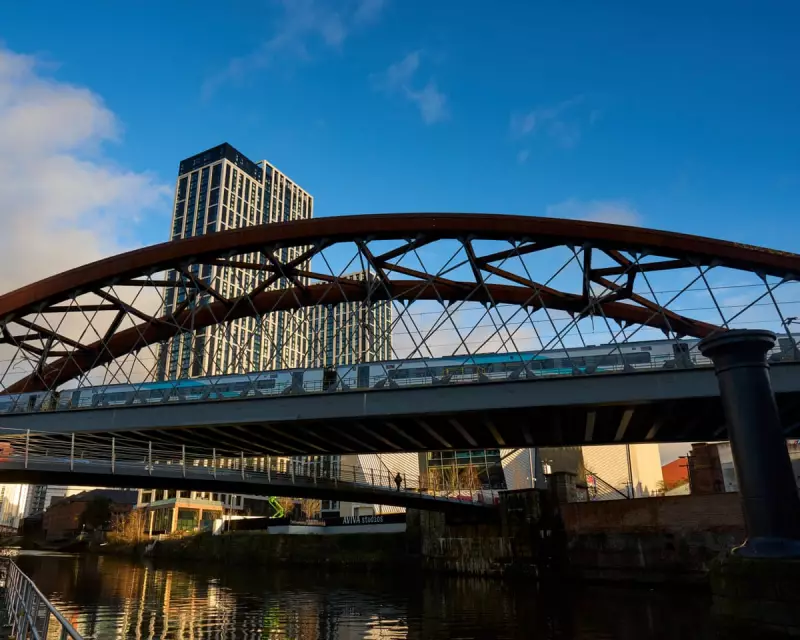
After more than a decade of delays and political wrangling, plans for the transformative Northern Powerhouse Rail (NPR) network have finally been given the official go-ahead. The project, hailed by ministers as the most significant upgrade to northern travel in a generation, aims to better connect cities across the region. However, the announcement arrives shrouded in major uncertainties over how it will be funded and precisely when passengers will benefit, with some key sections not expected to begin construction for another twenty years.
A Long-Awaited Plan, Scaled Back and Delayed
The journey to this point has been fraught. The concept for NPR was first conceived over 11 years and six prime ministers ago, originally envisioned as a fully electrified high-speed line replacing Victorian-era tracks. Its progress was complicated by the saga of HS2, the world's most expensive rail line, whose northern legs to Manchester and Leeds were dramatically axed by former Prime Minister Rishi Sunak in 2023.
NPR itself was significantly scaled back under successive Conservative governments. The latest iteration, while welcomed by Labour mayors and business leaders, is a more modest proposal. It will feature a partly new line between Liverpool and Manchester, including a new station for Bradford, a city long starved of adequate rail links. The remainder of the 70-mile core route will involve upgrades to existing lines, many of which are already part of an £11bn programme announced back in 2015.

Notably, ambitions for the new services to be officially labelled "high speed" appear to have been quietly shelved, absent from the government's landmark announcement. Perhaps the most staggering delay concerns a new line connecting Birmingham to Manchester, which is not expected to start construction until the 2040s, leaving a key Midlands bottleneck unaddressed for a generation.
The Billion-Pound Funding Question
While the political fanfare has been significant, the financial underpinnings of the project remain opaque and contentious. Whitehall, still haunted by the spiralling costs of HS2, has committed only £1.1bn to the project up to 2029. Crucially, it has imposed a strict £45bn cap on all subsequent spending.
Any costs exceeding that substantial ceiling will have to be found by northern leaders themselves. Potential avenues include raising business rates—similar to the Crossrail levy in London—implementing a new tourist tax, or taking on significant debt. The final bill for authorities in Greater Manchester, Liverpool, and elsewhere is unclear but is anticipated to run into the billions, raising questions about the appetite of already highly-taxed businesses to shoulder another major overhead.
The approval followed months of tense, behind-the-scenes negotiations with Treasury officials. One mayor revealed that the initial proposals were repeatedly the "cheapest" options, causing the announcement to be delayed past the Labour party conference. Greater Manchester's Andy Burnham held out until the last minute over funding concerns and a lack of commitment to his vision for an underground terminal at Manchester Piccadilly.
Regional Ambitions and Omissions
The economic case for improving northern transport is powerful. Government estimates suggest that boosting the productivity of the north's biggest combined authorities to the UK average would add £15bn a year to the Treasury. Areas like Greater Manchester are already growing four times faster than the national average, highlighting the region's potential.
However, the latest plans have not pleased everyone. As in previous iterations, Hull has missed out on a direct connection, with its Lib Dem council leader labelling the decision an "absolutely shocking failure by Labour". In West Yorkshire, Mayor Tracy Brabin has expressed frustration over continued government dithering on a tram network for Leeds, the largest city in Europe without a mass-transit system.
There is a glimmer of progress elsewhere, with government backing for the long-anticipated reopening of the Leamside line in the North East, though this project remains in its early stages.

The fragile consensus among northern leaders is expected to be displayed publicly as they stand alongside Chancellor Rachel Reeves. Yet, with many not receiving everything they campaigned for, and with the final scope, cost, and timeline still shrouded in uncertainty, this hard-won agreement may prove difficult to maintain. After waiting so long for the train to leave the station, passengers across the North will be hoping it finally reaches its destination.





