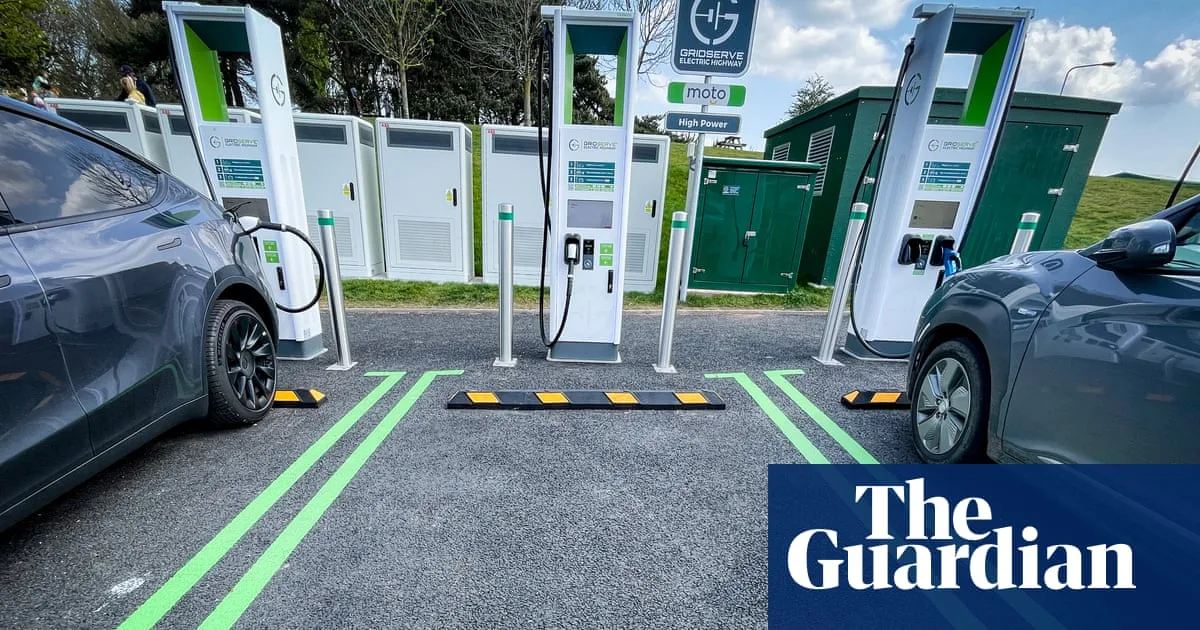
Fresh analysis has laid bare a profound and growing geographical split in the United Kingdom's readiness for the electric vehicle revolution. As the government readies new funding for on-street charging, data from Electrifying.com shows a nation accelerating at two very different speeds.
The Stark Numbers Behind the Charging Chasm
The figures paint a picture of a "charging postcode lottery", where access to essential infrastructure depends heavily on where you live. The research highlights that five of the North's most significant urban centres – Liverpool, Leeds, Manchester, Newcastle, and Sheffield – with a collective population of 2.7 million people, must share just 2,485 public chargers.
In a shocking comparison, the city of Coventry, with only 350,000 residents, boasts 2,578 chargers. This means a single Midlands city outperforms the combined charging infrastructure of all five northern hubs.
The disparity becomes even more pronounced at the top of the national rankings. London's Westminster leads the country with 2,746 public chargers – a figure that exceeds the total available in Manchester, Liverpool, Leeds, Sheffield, and Newcastle together. The entire top ten list of UK charging hotspots is located exclusively in London and the South of England.
Expert Warnings and the Coventry Blueprint
Ginny Buckley, Chief Executive of Electrifying.com, stated the scale of the imbalance is now impossible to ignore. "Coventry has over 750 chargers per 100,000 people, every one of the Northern Five has fewer than 100, and Westminster tops the chart with more than 1,300 per 100,000," she revealed. "Not a single area in the top ten is in the North, Scotland, Wales or Northern Ireland."
Buckley emphasised that this is not merely a geographical issue but one of inconsistent policy and execution. "This isn't about geography – it's about consistency," she argued. She pointed to a patchwork approach where some local authorities innovate successfully while others struggle to begin, calling for a unified national strategy to provide councils with the necessary guidance and confidence.
Coventry stands out as a rare success story, demonstrating what is possible with clear strategy and partnerships. Its focused, collaborative approach has delivered one of the UK's most comprehensive public charging networks.
Public Confidence Remains Low
Even in areas with better infrastructure, driver trust is fragile. A separate survey of over 11,000 UK motorists by Electrifying.com and the AA found that 60 per cent consider the public charging network unreliable. A mere six per cent believe there are enough chargers available nationwide.
John Lewis, CEO of charging provider char.gy, cited Coventry as proof that rapid rollout is achievable outside the capital. "It's what happens when a council has clarity, capability and committed partners," he said. He warned that many other regions are held back by planning hurdles and grid capacity constraints, issues that funding alone cannot solve.
The report's findings emerge as ministers prepare to announce increased financial support for local charging projects. However, experts caution that money must be coupled with stronger national coordination and clearer frameworks to ensure every part of the country can keep pace.
The risk, as outlined by the study, is the creation of a two-tier electric future: one where drivers in London and the South can charge with ease, while those in northern and rural areas are left stranded, potentially stalling the UK's broader transition to cleaner transport.




