

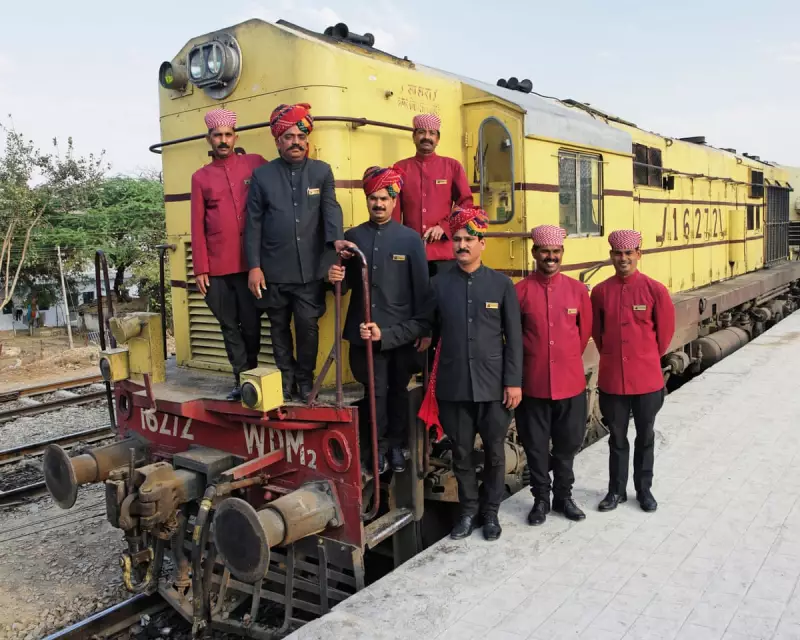
The distinctive bandhgala jacket, a high-collared garment long worn by Indian Railways staff, is being removed from the official uniform. The move comes after the country's railways minister labelled it a symbol of a lingering 'colonial mindset'.
A Garment Steeped in History
This decision has sparked a fierce debate about the jacket's true heritage. While it became part of the Indian Railways uniform in the late 19th century under British rule, fashion historians strongly contest its classification as a colonial relic.
Renowned menswear designer Raghavendra Rathore, a descendant of Jodhpur's royal family, champions the bandhgala as 'India's most refined expression of royal tailoring'. He traces its origins back four centuries to the courts of Mughal emperor Akbar, long before British influence.

The design evolved through the Rajput kingdoms of Rajasthan, with its high neck offering warmth in north Indian winters. By the 19th century, the Jodhpur royal family adapted it for polo and riding, later popularising it in the West.
The Political Drive for Change
Railways Minister Ashwini Vaishnaw announced the immediate change, stating the need to 'get rid of all colonial mindset' in both working and dressing styles. This aligns with Prime Minister Narendra Modi's government's pledge to erase the legacy of British colonial rule, which ended in 1947.
Following independence, the bandhgala was retained and even reclaimed as a nationalistic garment. Rathore acknowledges some British military tailoring influences were added during the Raj but insists 'the jacket itself always remained Indian'.
Uncertainty Over a New Uniform
The bandhgala is not the only relic being re-examined by the Hindu nationalist government. However, its practical use for railway workers, especially in summer heat, has sometimes been questioned.
As the historic jacket is phased out, a key question remains unanswered. 'There is much curiosity over what they will choose,' said Rathore, expressing a widely held hope that its replacement will not simply be a standard Western suit.






