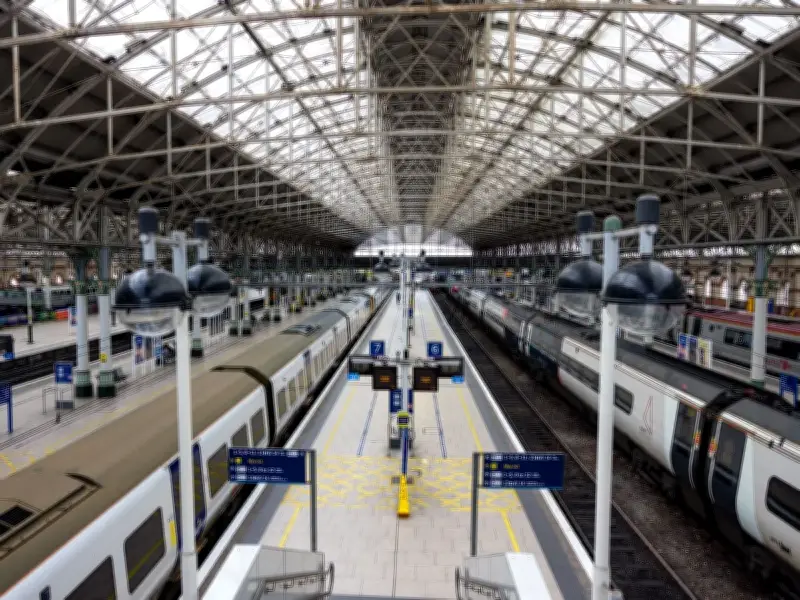
Rail travel around Greater Manchester is set to be transformed as the first round of train stations join the Bee Network this December, with full integration across the region by 2030.
The first 14 stations along the Glossop to Piccadilly line will join the network by the end of the year, with a further 15 from March 2027, including Stalybridge to Victoria and the Rose Hill, Marple and Hyde Loop lines.
Phased Rollout of Rail Integration
The second phase, by 2028, will see more key lines join the Bee Network, with stations including Deansgate, Burnage, Stockport, Manchester Airport, Salford Central and Salford Crescent, Bolton, Rochdale, and Wigan Northwestern, among others.
The final phase of integration will be completed by 2030. The full rollout has been confirmed in a new Transport for Greater Manchester (TfGM) map published in a public report.
Benefits for Passengers
Bringing train stations into the Bee Network is set to bring major benefits for passengers, with improvements planned to service reliability, infrastructure, ticketing and customer experience.
TfGM said in its report: “Rail performance across Greater Manchester remains challenging, with disruption driven by infrastructure resilience, rolling stock and train crew availability, short formations and severe weather.”
“As rail joins the Bee Network, customers will expect a dependable and consistent experience across bus, tram and rail,” the report added.
Tap and Go Technology
Technology will be rolled out so passengers can tap in and out of the rail network, with the system calculating the best value ticket on the day for the journey being made.
It follows the introduction of a ‘tap and go’ payment system on Bee Network trams and buses in 2025 as part of a bid to create the region’s own London-style transport system.
Tap in and out technology will launch at the initial 14 stations on the Glossop to Piccadilly line in December when they join the network, and extend to the next 15 stations in March 2027.
Integrated Ticketing and Fares
A daily multimodal tram, train and bus paper-based ticket will also be introduced by December, allowing passengers to switch between different modes of transport around Greater Manchester.
The longer-term plan is for an integrated Bee Network payment system, with daily and weekly fare caps across bus, tram and rail journeys, giving passengers better value for money and more flexibility over how they want to travel, TfGM said in its report.
This will be delivered by the end of 2028 when the completion of rail-only tap and go is completed across all Greater Manchester railway stations.
Station Improvements and Customer Experience
The first 29 stations being integrated into the network will receive improvements between December 2026 and March 2027, including clearer signage and wayfinding, upgraded information screens and announcements, improved CCTV and help points, customer information areas and better guidance for onward journeys by bus and tram.
Digital improvements are also bringing rail information into the Bee Network app and website, including station facilities and accessibility information, live departures, train tracking and clearer disruption updates, all to be delivered by December 2026.
TfGM added in its report: “Crossmode ticket acceptance is already in place for eligible disruption, with further work under way to provide more consistent customer support, complaints handling and travel information across rail, bus and tram.”
Alongside the changes, TfGM said Northern Trains will enhance evening and weekend service on selected corridors, including Manchester Airport, Alderley Edge and Rochdale stopping services. These will come into effect as part of the December 2027 timetable change.
Background and Governance
Greater Manchester became the first place in the UK to re-take control of its buses in 2023 when the Bee Network was launched.
Since then the region’s public transport system has continued to grow and introduce changes to make travel easier for passengers, from caps on single journeys to tickets which can be used on different modes of transport.
The Bee Network is run by Transport for Greater Manchester, which is currently responsible for tram and bus services. Key decisions about the network’s future are made by Greater Manchester mayor Bev Craig, the Greater Manchester Combined Authority, and the Bee Network Committee.