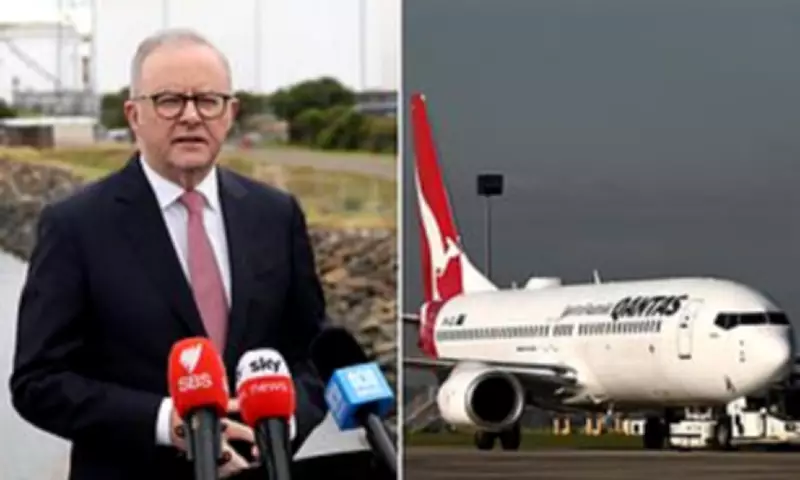
Australia Braces for Potential Flight Cancellations Amid Escalating Fuel Crisis
Flight cancellations remain a distinct possibility for Australia if the ongoing conflict in the Middle East persists, as airlines grapple with severe fuel shortages and dramatically escalating costs. Environment Minister Murray Watt issued a stark warning during an appearance on Sky News, stating that further disruptions to air travel "can't be ruled out" should the hostilities continue.
Government Warns of Worsening Fuel Supply Constraints
"We've already witnessed our domestic airlines implementing adjustments to their flight routes. This is evidently, at least partially, a reaction to the global fuel scarcity we are currently experiencing," Minister Watt explained. He emphasized the government's urgent desire for a swift resolution to the conflict and the reopening of the strategically vital Strait of Hormuz.
"We have consistently maintained that the longer this dispute endures, the more challenging it will become for Australians and people worldwide to meet their fuel requirements. It is abundantly clear that prolonged disruption to global fuel networks will inevitably lead to significant consequences," he added.

Australia currently operates at level two of its National Fuel Security Plan, a framework designed to maintain smooth transport operations. However, the situation could deteriorate rapidly. An escalation to level three would prioritize fuel allocation to essential sectors like agriculture, freight, and emergency services, accompanied by voluntary measures to curtail consumption. At the most critical level four, a single national system would manage all fuel distribution, ensuring key users receive supplies first.
Airlines Implement Capacity Cuts and Fare Hikes
The ministerial warning coincides with decisive action from Australia's major carriers. Both Qantas and Virgin Australia are proactively reducing capacity and increasing fares in direct response to the surging fuel costs linked to the Middle East turmoil.
Virgin Australia recently indicated plans for fewer flights and higher ticket prices throughout the latter half of the 2025–26 financial year and into the following period. "In light of ongoing market volatility, our settings for FY27, including capacity, are currently under review," the airline stated in an ASX announcement. While affirming short-term fuel supply security, Virgin highlighted that prices have risen precipitously, with jet fuel costs more than doubling since late February 2026.
Qantas announced parallel measures, including fare increases, reductions in domestic capacity, and adjustments to its international network. The airline anticipates spending up to $3.3 billion on jet fuel in the first half of 2025–26, noting that price spikes associated with the Strait of Hormuz situation have added approximately $800 million to its costs. Consequently, Qantas and its subsidiary Jetstar will cut domestic capacity by around five percent in May and June, with several routes already suspended.
- Sydney to Busselton services
- Flights to Hamilton Island
- Services to Coffs Harbour
- Routes to Mount Gambier
- Flights to the Gold Coast
Expert Analysis and Broader Economic Impact
Professor Rico Merkert from the University of Sydney Business School warned that airlines may be compelled to implement more extensive cuts if fuel availability tightens further. "Jet fuel availability is poised to become a serious constraint, potentially forcing airlines to cancel flights on a broader scale. If international flights are cancelled and unviable regional routes are paused or culled, airlines will need to compensate for that lost cash flow elsewhere," he told Daily Mail.

Prime Minister Anthony Albanese cautioned that Australians would continue to feel the ripple effects of the war long after any potential peace agreement is secured. "There is significant volatility, that's clear," he stated in Sydney. "Fuel supply chains operate on extended timeframes, often thirty days or more. Infrastructure damage, shipping bottlenecks, and regional instability all contribute to the risk. What we can control is our response, and that's why we are doing everything possible to secure supply, work diplomatically to support de‑escalation, and coordinate nationally."
International Tensions Complicate Resolution
The aviation crisis unfolds against a backdrop of heightened international tensions. In Washington, President Donald Trump indicated he was "highly unlikely" to renew a two‑week ceasefire with Iran, set to expire. "I'm not going to be rushed into making a bad deal," President Trump asserted in an interview with Bloomberg News.
Following the collapse of peace negotiations between American and Iranian officials, President Trump declared that the US Navy would halt "any and all" vessels from entering or exiting the Strait of Hormuz—a critical trade passage that recently carried about one‑fifth of the world's oil supplies. This move came after Iran imposed a toll for ships traversing the strait, prompting President Trump to order the US Navy to intercept any vessel that has paid the fee, stating, "No one who pays an illegal toll will have safe passage on the high seas."
The confluence of geopolitical strife, fuel supply disruptions, and soaring costs creates a perfect storm for Australia's aviation sector, with the threat of widespread flight cancellations casting a long shadow over national travel and connectivity.