FAA Warns Airlines That Exploding Rockets Could 'Significantly Reduce Safety' for Commercial Flights
The Federal Aviation Administration has issued a stark bulletin to air carriers and pilots, warning that the increasing frequency of commercial space launches could lead to catastrophic failures that would significantly reduce safety for both flight crews and passengers. This urgent communication follows a series of high-profile test failures involving Elon Musk's ambitious Starship rocket programme, which has reportedly showered dangerous debris over busy passenger airways.
Multiple Passenger Flights Forced to Take Evasive Action
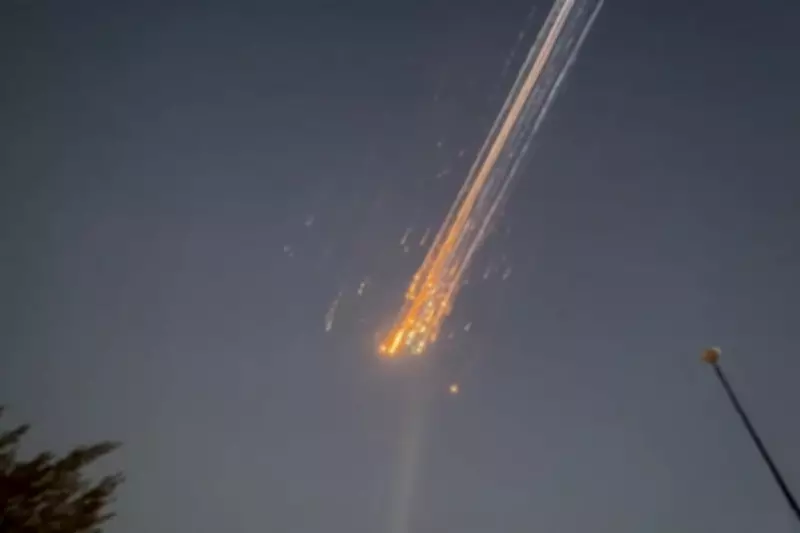
While the FAA bulletin, published on January 8, did not explicitly name SpaceX, it coincided with new public revelations about the impact of two failed test launches of the company's gigantic Starship rockets. According to an investigative report by Pro Publica, multiple jetliners carrying hundreds of passengers were forced to take evasive action as pieces of the disintegrating Starship rained down over the Caribbean in January and March of last year.
The bulletin stated clearly: "As commercial and government space launch activities increase, it is imperative that airspace users account for potential disruptions due to launch operations." It further advised that air industry workers and flight crews should ensure appropriate personnel are trained on the impact of space launch and reentry operations and take actions to mitigate risks.

Starship's Troubled Test History
Billed by SpaceX CEO Elon Musk as "a revolutionary technology" that will open humanity's pathway to the stars, Starship represents a massive, fully reusable rocket designed to lift enormous payloads into orbit and potentially transport humans to the Moon or Mars. Musk has made grand claims about its historical significance, stating on a podcast in December: "If there are historians in the future, they'll look back at Starship and say it's one of the most profound things that's ever happened."
However, unlike SpaceX's successful Falcon rockets, the Starship line has struggled to achieve stable launches without experiencing what the company sometimes euphemistically calls "rapid unscheduled disassembly." These explosive failures have created significant safety concerns for commercial aviation operating in nearby airspace.
Specific Incidents and Industry Response
Pro Publica's investigation revealed that multiple aircraft were flying through projected debris zones when Starships came apart over the Caribbean last year. One notable example was Frontier Flight 081, whose passengers initially marvelled at the spectacle of shooting stars before their pilot announced the need to divert from their planned path to avoid potential danger.
Further reports from The Wall Street Journal in December indicated that three planes had begun to run low on fuel while avoiding temporary no-fly zones established after Starship incidents. This situation forced two of the aircraft to declare emergencies and cross danger zones to reach safety. The Journal also alleged that SpaceX did not inform the FAA about one incident until 19 minutes after losing contact with the Starship, with officials instead learning about it from air traffic controllers who had heard from witnessing pilots.
In response to these allegations, SpaceX issued a strong rebuttal on Elon Musk's social network X, calling the reports "misleading" and laden with "false narratives." The company stated: "The reporters were clearly spoon-fed incomplete and misleading information from detractors with ulterior motives. No aircraft have been put at risk and any events that generated vehicle debris were contained within pre-coordinated response areas."
SpaceX emphasised its commitment to "responsibly using airspace during launches and reentries, prioritizing public safety to protect people on the ground, at sea, and in the air." Despite these assurances, the company is currently seeking FAA approval to conduct more Starship tests across a significantly wider geographical area, raising further questions about coordination and risk management.

Expert Concerns and Regulatory Challenges
Aviation experts consulted by Pro Publica expressed serious concerns about the difficulty of predicting where rocket debris might land, what impact it could have on aircraft, and how close the industry has already come to a tragic accident. The combination of unpredictable failure patterns and increasing launch frequency creates a complex challenge for regulators and aviation authorities.
The FAA's bulletin represents a clear acknowledgement of these growing risks, stating that appropriate mitigation actions must be taken to address potential safety reductions. As commercial space activities continue to expand, the tension between technological ambition and aviation safety promises to remain a critical issue for regulators, space companies, and the travelling public.