

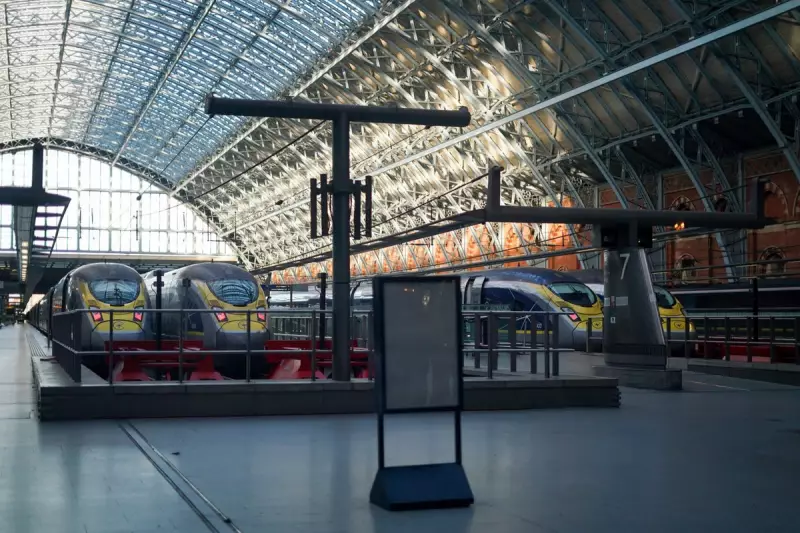
For travellers in Kent hoping for a swift return of direct Eurostar services to the continent, the wait looks set to continue. Despite minor political shifts, the high-speed rail operator shows little appetite to reopen its stations at Ebbsfleet and Ashford, with Brexit-era border arrangements creating significant logistical and financial hurdles.
The High Cost of Post-Brexit Borders
Before the pandemic, a portion of Eurostar trains from London St Pancras International would stop at either Ebbsfleet International in northeast Kent or Ashford International in the southeast, providing direct links to Paris and Brussels. This service was part of the original payback for the High Speed One rail link cutting through the county.
However, both stations were promptly closed when Covid-19 struck in 2020. The pandemic itself led to massive losses for Eurostar, which ran near-empty trains even without the extra operational costs of the Kent stops. The subsequent implementation of Brexit at the start of 2021 fundamentally altered the landscape.

The UK's insistence that British passport holders be treated as "third-country nationals" dramatically increased the workload for French border police (Police aux Frontieres). This, coupled with the impending EU Entry/Exit System (EES), which will require more space and resources for biometric checks, has made reopening the stations economically unviable for Eurostar. The company is currently enjoying strong profits from its monopoly on the core London-Paris/Brussels route.
A Glimmer of Hope from Virgin Trains?
A potential challenger could revive Kent's continental connections. Virgin Trains has received approval to run competing services from around 2030, and Richard Branson's company has expressed interest in the Kent market. However, the financials must be right, potentially requiring millions in infrastructure investment from the government or local authorities.
Travel expert Simon Calder, answering a reader's question, suggests that if any station were to reopen first, it would likely be Ashford International. It boasts a wider catchment area across Kent, into Sussex, and potentially Essex once the Lower Thames Crossing is complete. Calder notes, however, that Kent itself voted 51% to 49% in favour of Brexit, and without a reduction in border friction with the EU, passengers may be waiting a long time for services to resume.
Travel Troubles: Crying Infants and Japanese Journeys
In other travel advice, Calder addressed the frustration of passengers whose expensive business class flight from Orlando was ruined by a crying baby. While sympathising that such an experience is "doubly annoying" after paying a premium, he clarified there are no grounds for a compensation claim. Airlines rarely guarantee the composition of their passenger cabin. His advice is to write a polite complaint, which may result in goodwill frequent flyer points.
For those planning a five-week trip to Japan in September, Calder offered extensive guidance. He recommends starting in the north on Hokkaido and travelling south, allocating at least a week for Tokyo. While bullet trains (Shinkansen) are fast, their advance tickets are complex and the Japan Rail Pass is no longer the bargain it once was. He suggests considering excellent long-distance coaches to save money.
Regarding car hire for rural exploration, Calder advises against it. Japan's public transport is adequate even in remote areas, and driving brings the stress of navigation and parking in towns and cities. For the long flight, he notes that routing via China with Chinese airlines can often provide the lowest fare and a quicker journey, as they fly over Russia.






