
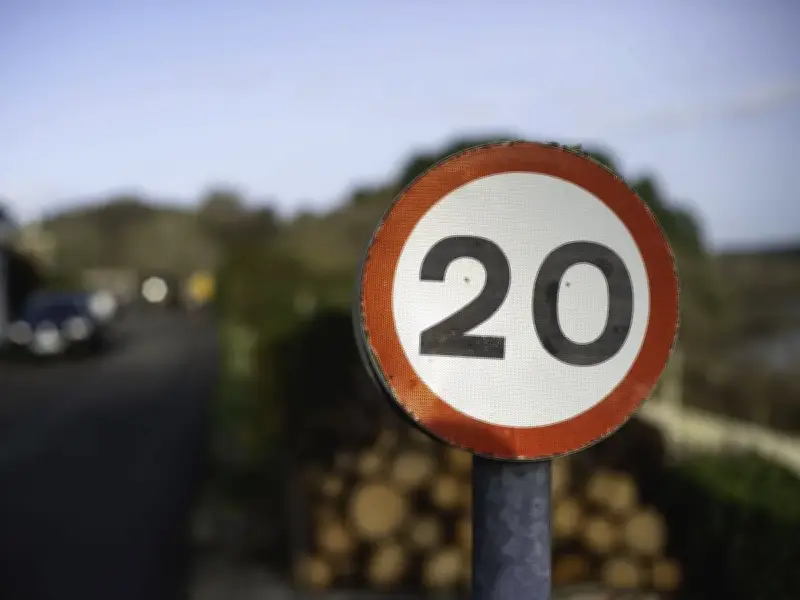
UK councils have spent more than £41.9 million introducing 20mph roads over the past three years, with Hertfordshire the biggest spender at £4.64 million, according to data obtained by Confused.com through Freedom of Information requests.
Oxfordshire followed with £3 million, and Cornwall spent £2.66 million. The analysis also revealed that at least 174 roads across the UK have been returned to higher speed limits after initially being made 20mph.
Wales leads reversals
The vast majority of these reversals, 92%, were in Wales, where 20mph roads are the default in residential and built-up areas. Scotland is rolling out 20mph roads more gradually under a national strategy introduced in 2024.
The introduction of 20mph roads in Wales and Scotland was fully funded by their respective governments. In England, there is no national policy, and individual councils decide whether to introduce them. In Northern Ireland, 20mph limits mainly apply near schools, though a public consultation on wider residential use was launched earlier this year.
Speeding notices on the rise
Confused.com also found that police forces handed out 7.5 million Notices of Intended Prosecution (NIP) between the financial years 2023/24 and 2025/26, a rise of 14% over the period.
The minimum penalty for speeding in the UK is a £100 fine and three penalty points. First-time or minor offenders may be offered a speed awareness course, typically costing between £80 and £120, which avoids points.
Matt Crole-Rees, motoring expert at Confused.com car insurance, said: "Sticking to the limit, whatever it is, keeps you and other road users safe, and it protects your licence too."
He added: "It's also worth remembering the costs can continue long after the fine is paid, as a speeding offence can push up your insurance premiums too."
Biggest council spenders
The top ten councils by spending on 20mph roads over the last three years are: Hertfordshire (£4,644,924), Oxfordshire (£3,029,200), Cornwall (£2,664,026), Neath Port Talbot (£2,126,000), Aberdeenshire (£2,107,654), Cardiff (£2,056,444), Swansea (£1,893,000), Flintshire (£1,796,000), Redbridge (£1,285,000), and Newham (£1,245,187).
Flintshire has rolled back 47 roads despite spending over £1.79 million, followed by the Isle of Anglesey with 27 reversals after spending £786,445, and Newport with 21 after spending £796,000.
Cllr Paul Zukowskyj, Executive Member for Environment, Transport and Growth at Hertfordshire County Council, said: "We're introducing 20mph speed limits in the places our residents tell us they want to see them; on residential streets, around schools and in town centres."
Councillor Tim Bearder, Leader of Oxfordshire County Council, said: "We have made a conscious decision as a county to take speed seriously because lower speeds save lives, reduce the severity of injuries, and make our communities safer and healthier places to live."
A spokesman for Swansea Council said: "None of the spending on the Welsh Government's 20mph initiative in Swansea was paid for by the council. It was all funded by Welsh Government grant at no cost to council taxpayers."
A Transport Scotland spokesperson said: "We all want our local streets to be as safe as possible and the £41m that the Scottish Government is investing in road safety this financial year shows just how important that aim is to us all."
Research cited by Transport Scotland shows that if someone is hit by a car at 20mph, they are seven times more likely to survive than if hit at 30mph. Reducing speeds on appropriate streets is part of the work to lower the likelihood of serious incidents while making local areas better places to live and work.




