

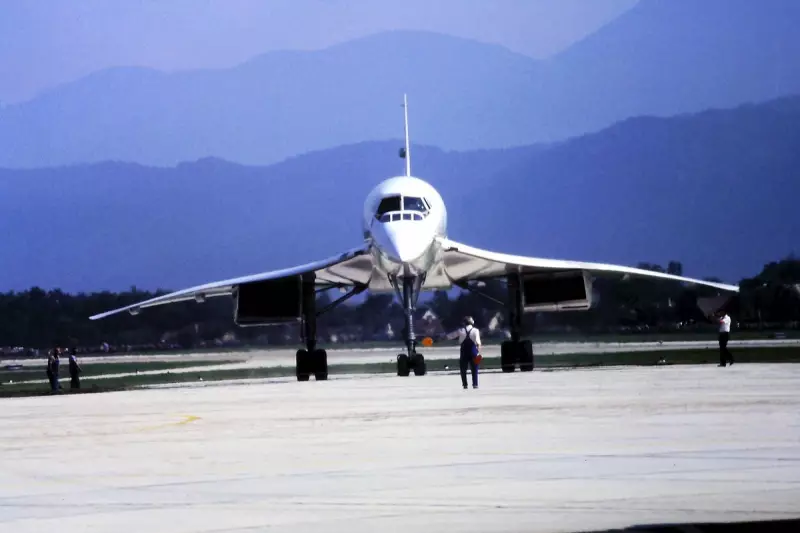
Two decades after its catastrophic final accident, the story of Concorde remains a compelling tale of ambition, luxury, and technological daring. The iconic supersonic passenger jet enjoyed a creditable 27-year career, yet ultimately proved to be an evolutionary dead end in commercial aviation.
The Birth of a Supersonic Dream
The journey began in November 1956 with the establishment of the Supersonic Transport Aircraft Committee. Its vision was clear: an aircraft carrying 150 passengers from London to New York at twice the speed of sound. This dream solidified into an Anglo-French treaty on 29 November 1962, known as the Concord Agreement. Signed by UK Minister of Supply Julian Amery and French Ambassador Geoffroy de Courcel, it tasked Sud Aviation and the British Aircraft Corporation (BAC) with building the plane.
Initial orders arrived on 3 June 1963 from Air France, BOAC (later British Airways), and Pan Am, each for six aircraft. While airlines like Air India and Qantas showed interest, all but the British and French orders were later cancelled. Political uncertainty briefly threatened the project in November 1964 when a new Labour government considered abandonment, but hefty cancellation penalties ensured its survival.

Taking Flight and Facing Rivalry
The first prototype was unveiled in Toulouse on 11 December 1967. It was then that UK Technology Minister Tony Benn insisted on adding an 'e' to the British 'Concord', signifying "Excellence, England, Europe, and Entente." The jet faced competition from its Soviet rival, the Tupolev Tu-144 or "Concordski," which first flew on 31 December 1968.
Concorde's own maiden test flight followed on 2 March 1969 from Toulouse, with the UK's first flight from Filton occurring five weeks later. A milestone was reached on 1 October 1969 when it broke the sound barrier for the first time. Tragedy struck its rival on 3 June 1973 when the Tu-144 crashed at the Paris Air Show, killing all six crew and eight people on the ground.
Commercial Service and Global Icon
Passenger service finally commenced on 21 January 1976. British Airways flew from Heathrow to Bahrain, while Air France operated from Paris to Rio via Dakar. The coveted transatlantic routes opened later, with services to Washington DC starting on 24 May 1976 and to its principal destination, New York JFK, beginning on 22 November 1977.
Concorde became a symbol of elite travel and celebrity. It enabled Phil Collins to perform at both Live Aid concerts in London and Philadelphia on 13 July 1985. It set a record for the fastest-ever New York to London flight on 7 February 1996, completing the journey in a staggering 2 hours and 53 minutes.
The Fatal Crash and an Era's End
The jet's fortunes changed forever on 25 July 2000. An Air France charter flight from Paris to New York crashed in Gonesse shortly after takeoff. The aircraft had run over a strip of metal, causing a tyre to explode. Debris ruptured a fuel tank, starting a fire that led to the loss of all 109 souls on board and four people on the ground.
The entire fleet was grounded for over a year. Although services resumed, the magic had faded. On 10 April 2003, both British Airways and Air France announced the end of Concorde passenger flights. The final commercial flight by Air France was on 30 May 2003, followed by British Airways' last passenger service, BA2 from New York to Heathrow, on 24 October 2003.
The very last Concorde flight of all took place on 26 November 2003, ferrying the aircraft from Heathrow to its manufacturing home in Filton, Bristol. Thus concluded the career of a pioneering but ultimately unsustainable marvel of aviation, leaving behind a legacy of speed, style, and a poignant reminder of its tragic vulnerability.






