

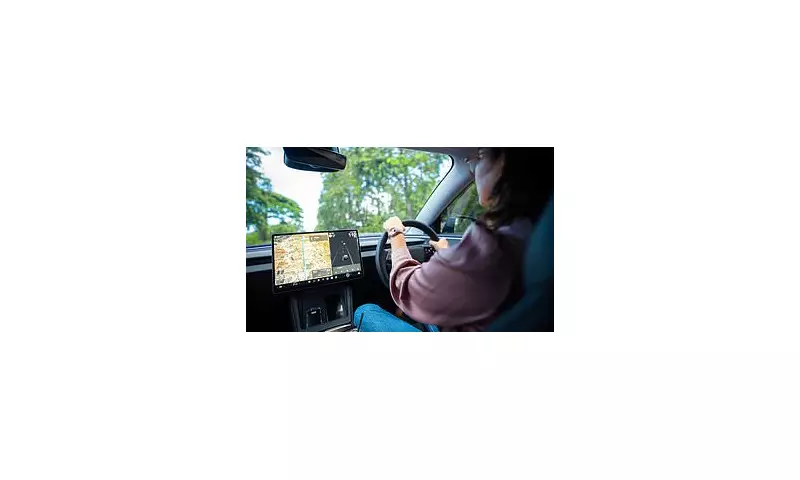
The sleek, futuristic touchscreen dominating your new car's dashboard may be a significant safety hazard, road safety experts are now warning. What was once marketed as a premium feature could be dangerously distracting drivers, with studies showing reaction times plummet by more than half when using them.
The Distraction Data: Screens vs. Smartphones
New research reveals that tapping and swiping through a car's central display to perform simple tasks like adjusting the climate control or changing a radio station is potentially more dangerous than using a mobile phone while driving. Studies indicate that interacting with a touchscreen interface worsens a driver's reaction time by over 50 per cent.
This impact is even more severe than the distractions caused by texting or taking a call on a handheld device, which increase reaction times by 35 per cent and 46 per cent respectively. The core issue, according to specialists, is that these systems force drivers to take their eyes off the road for dangerously long periods to operate basic functions.

Why Touchscreens Are a 'Perfect Storm' of Distraction
Dr Milad Haghani, a safety expert from the University of Melbourne, explained the unique danger to the Daily Mail. 'This is the dangerous combination and a recipe for significant levels of distraction,' he stated. Road safety professionals categorise distraction into three types: visual (eyes off the road), manual (hands off the wheel), and cognitive (mind off driving).
Dr Haghani notes that touchscreen interfaces are particularly perilous because they combine all three elements of a distracting stimulus together. A driver must look at the screen to read menus, use their hands to tap options, and mentally navigate through digital layers. This triple-threat is identical to why texting while driving is so notoriously risky.
A pivotal 2020 simulation study by independent transport firm TRL underscored the real-world effects. Drivers using touchscreen systems like Apple CarPlay showed markedly increased reaction times and poorer lane-keeping compared to those using voice controls. At motorway speeds, these delays equated to travelling several extra car lengths before stopping—a difference sometimes greater than that caused by texting.
The Case for Bringing Back Buttons
In response to these findings, there is a mounting campaign from safety advocates to simplify dashboards and return essential controls to physical buttons and knobs. The argument is that while large screens are acceptable for complex, set-and-forget functions like satellite navigation or viewing a reversing camera, vital controls adjusted while driving must be accessible by touch alone.
'They only demand the manual distraction element, they take your hand off the wheel, but they let you keep an eye on the road,' Dr Haghani said of traditional controls. Muscle memory and haptic feedback allow drivers to operate familiar buttons and dials without a sustained glance away from traffic, a critical safety advantage that smooth glass screens completely remove.
This movement is gaining institutional traction. In Australia and New Zealand, the ANCAP Safety vehicle assessment programme has announced it will incentivise manufacturers to 'bring back buttons' from 2026. Experts stress that features constantly adjusted while driving—such as windscreen wipers, heating controls, and stereo volume—must have a physical, tactile option.
'At least drivers must have the option to access them via easily manipulated buttons or knobs, even if they are included in touchscreen functions too - drivers must be given options,' Dr Haghani concluded. The call highlights a shift in safety thinking, from solely protecting occupants in a crash to actively preventing accidents by minimising distractions in the driver's environment.






