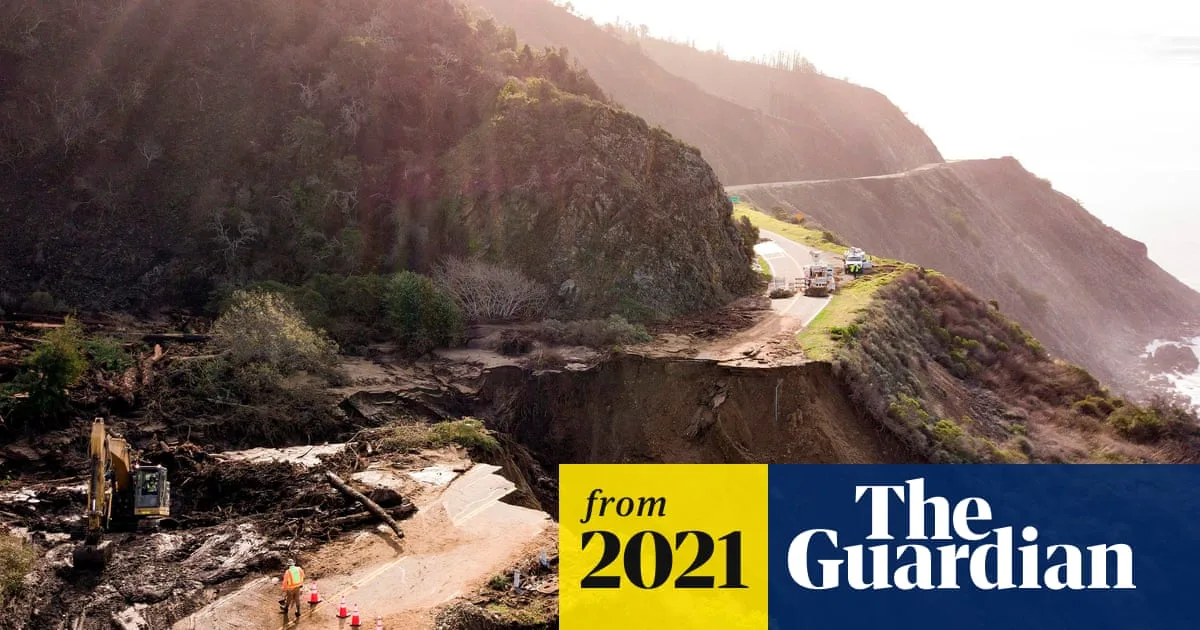
California's iconic Highway 1 has been severed by a landslide, leaving a 23-mile stretch of the coastal road closed for months. The collapse occurred near Big Sur after a severe winter storm created a 150-foot fissure, sending concrete, trees, and mud into the ocean below.
The landslide is the latest in a long history of such events along the highway, which opened in 1937. Experts warn that climate change, combined with increased tourism and traffic, is likely to make these incidents more frequent. Gary Griggs, a coastal erosion expert at the University of California Santa Cruz, said: 'It would not be surprising to see this happening more frequently.'
The slide was probably triggered by a combination of last year's Dolan fire, which burned 125,000 acres, and an atmospheric river that dumped 16 inches of rain—nearly double the monthly average. The burn scar left the terrain prone to slippage, and the soil could not absorb the deluge, overwhelming a drainage pipe.
Caltrans spokesperson Kevin Drabinski noted that while landslides are historic along this route, 'this storm was very large scale and left significant damage.' In addition to the main rupture, 60 other locations were damaged or blocked by debris. The agency has spent millions on repairs, with the 2017 Mud Creek slide costing $54m and taking over a year to fix.
Climate trends suggest such extreme weather events will become more common, with hot dry summers and intense rainstorms increasing landslide risks. In some areas, like Sonoma County, Caltrans has abandoned efforts to preserve the coastal route and is building sections farther inland as the sea erodes the coastline at a rate of 14 inches per year.