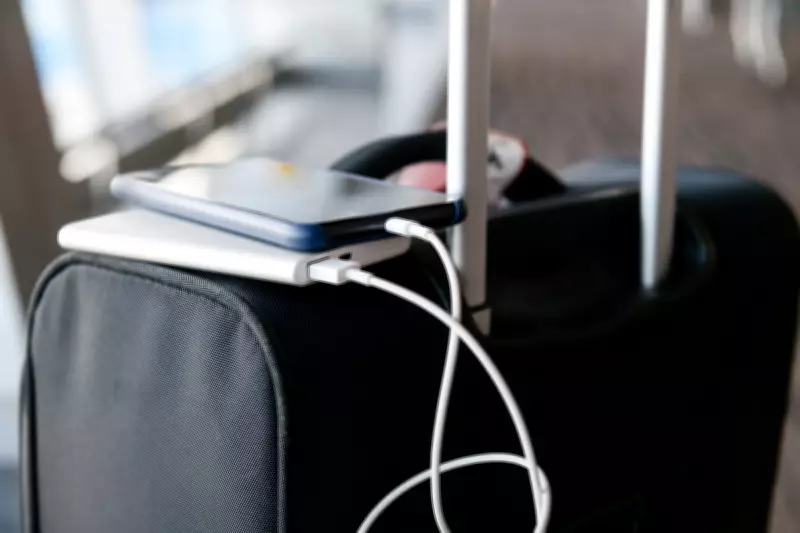
Airline Power Bank Regulations Intensify Amid Fire Safety Concerns
As travel documents become increasingly digital, ensuring your phone remains charged from check-in to customs is crucial for modern travellers. Portable chargers, while essential for a smooth journey, contain lithium-ion batteries that pose significant fire risks in aircraft cabins if damaged. In response, airlines globally are implementing stricter rules on the use and carriage of power banks.
Recent Airline Policy Changes
From 15 January, passengers on Lufthansa Group airlines are prohibited from using or charging power banks during flights, with a limit of two devices per person to enhance onboard safety. This follows similar moves by carriers like Emirates, Virgin Australia, and SWISS, which have banned power bank usage and charging via onboard USB ports. Many airlines also restrict storage, requiring power banks to be kept in seat pockets, under-seat baggage, or on a passenger's person, not in overhead compartments.
UK Civil Aviation Authority Guidelines
The UK Civil Aviation Authority (CAA) permits spare lithium-ion batteries up to 160 watt-hours in carry-on luggage for personal use, with a maximum of two per person. Each battery must be individually protected to prevent short circuits, and they are strictly forbidden in checked baggage. Glenn Bradley, head of flight operations at the CAA, emphasises that lithium batteries can cause intense fires if faulty, advising passengers to carry them in cabin bags, turned off completely.

Global Regulations and Future Trends
Countries including the US, China, Taiwan, Thailand, South Korea, and Singapore have introduced new power bank rules. Japan is considering a blanket ban on power bank use on domestic flights from April, with limits of two chargers per person up to 160 watt-hours. In Hong Kong, a ban on usage was implemented after a flight fire, while Taiwan's EVA Airways prohibits both use and charging. Singapore Airlines and South Korean carriers have also tightened restrictions, with South Korea allowing up to five batteries per passenger under 100 watt-hours each.
These measures highlight a growing focus on cabin safety as airlines work to mitigate risks from lithium batteries, urging travellers to check specific airline policies before flying.