
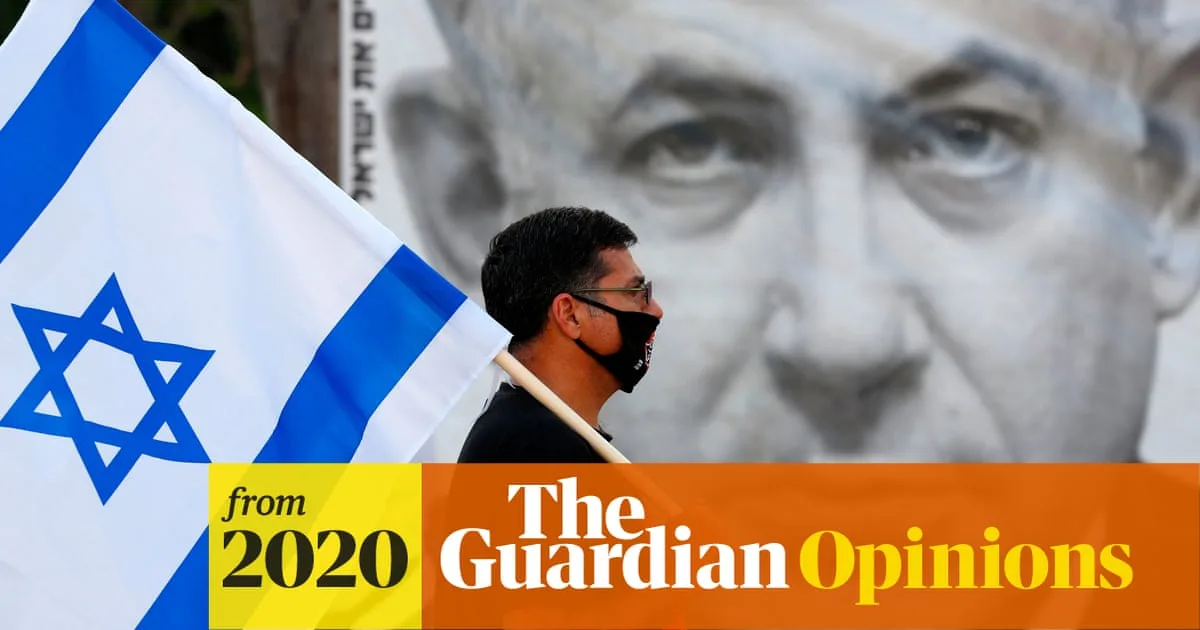
The theft of Palestinian land is a legacy of British colonialism, and the UK must stand in the way of further Israeli annexations, argues historian Avi Shlaim. Writing in The Guardian, Shlaim says the Balfour Declaration of 1917, which supported a Jewish national home in Palestine, recognised the national rights of a tiny minority while denying them to the Arab majority. At the time, Jews constituted 10% of the population.
Shlaim notes that Boris Johnson, in his 2014 biography of Winston Churchill, described the Balfour Declaration as “bizarre” and “tragically incoherent”. The declaration enabled the Zionist movement to embark on what was initially described as settler colonialism, a process that continues today. In 1917, only 2% of Palestine was owned by Jews; by 1947, the UN partition plan allocated 55% of the land to the Jewish state, despite Jewish ownership still being only 7%.
After the 1948 war, Israel controlled 78% of Mandatory Palestine, a status confirmed by the 1949 armistice agreements. The 1967 war saw Israel occupy the West Bank and Gaza. The Oslo Accords saw the PLO give up its claim to 78% of Palestine in exchange for hopes of an independent state, but the expansion of Israeli settlements in violation of international law undermined the peace process.
Shlaim warns that Israeli Prime Minister Benjamin Netanyahu now plans to annex about 30% of the West Bank, including settlement blocs and the Jordan Valley. This would leave Palestinians with roughly 15% of historic Palestine and effectively end the two-state solution. Support for annexation comes from US President Donald Trump, whose “deal of the century” is described as a US endorsement of Netanyahu’s wish list, offering Palestinians a fragmented “state” with no territorial contiguity or sovereignty.
Netanyahu faces protests from leftwing Israeli parties, diaspora Jewish organisations, and 220 former Israeli generals. However, Shlaim argues that the UK has a moral responsibility to act, given its colonial role. He calls on Britain to recognise the state of Palestine, which would help right the wrongs of the Balfour Declaration and stand against further annexation.




