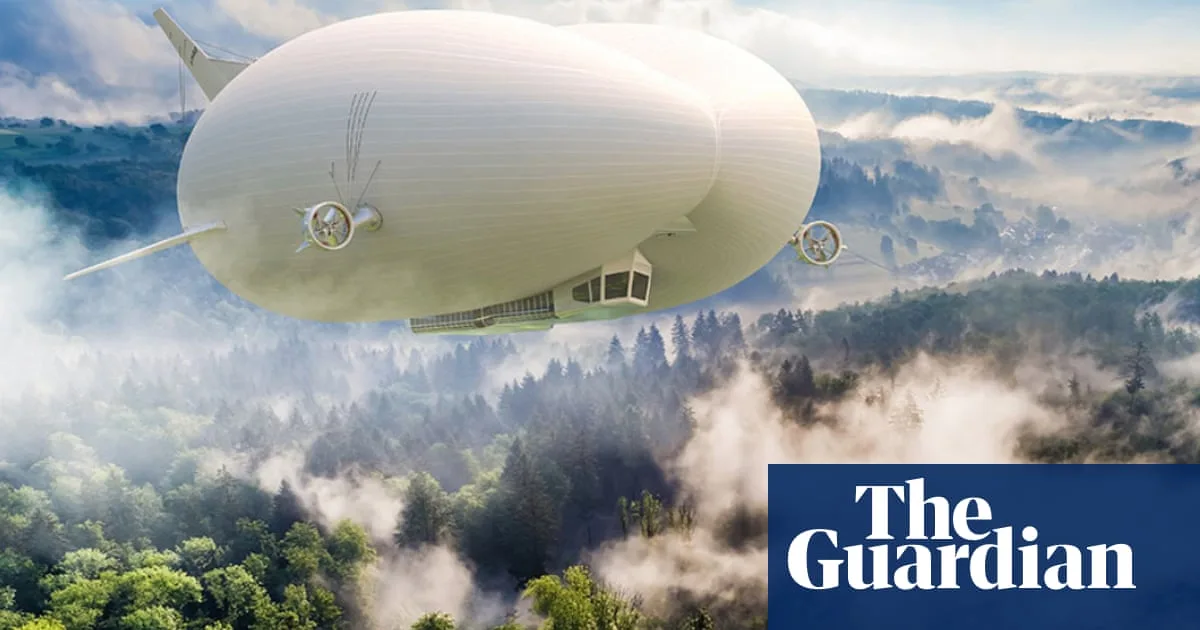
Airlander 10: World's Largest 'Flying Bum' Aircraft Needs No Runway
Airlander 10 'Flying Bum' Aircraft Needs No Runway

The world's largest aircraft, a £60 million mega airship cheekily nicknamed the "flying bum" due to its distinctive shape, promises to transform air travel by eliminating the need for traditional runways. The Airlander 10, measuring a staggering 92 metres—the length of a football pitch—can carry up to 100 passengers and is designed to land on virtually any surface, including grass, gravel, sand, marsh, or even water.

Revolutionising Accessibility and Infrastructure

Hybrid Air Vehicles (HAV), the British manufacturers behind this innovative aircraft, aim to have a commercial fleet operational by 2029. A key advantage of the Airlander 10 is its ability to reach locations currently "inaccessible to all but helicopters," according to company representatives. This is because it requires only "very short" take-off and landing distances, bypassing the need for paved runways.

George, a company spokesperson whose firm acquired the design after the US military abandoned the project post-Iraq War, explained the significance: "The aircraft can land in any open space, it doesn't need a paved runway, so all of a sudden you have taken away some of the barriers to entry. You can try out something because you're not committing to millions of dollars of infrastructure."

From Mock-ups to Manufacturing in Doncaster

Currently, HAV has no operational prototypes but has constructed two mock-ups of the passenger compartment, which will be suspended beneath a helium-filled flotation system. However, production is set to accelerate, with the company securing a site in Doncaster to build an enhanced version of the Airlander 10 within the next 12 to 18 months.

Following construction, the aircraft must undergo a lengthy Civil Aviation Authority approval process. If successful, the South Yorkshire facility could produce up to two dozen units annually from 2030 onwards.

A Comfortable and Eco-Friendly Flying Experience

The Airlander 10 offers a stark contrast to conventional aeroplanes, promising an end to cramped, noisy cabins. It cruises at 3,000 metres—low enough that air pressurisation isn't required—and travels at a maximum speed of 80mph. While this is six times slower than a Boeing Dreamliner, it compensates with endurance, capable of covering 4,000 miles in a single journey without the drone and vibration typical of jets.

In terms of environmental impact, HAV has partnered with UK-American company ZeroAvia to power the aircraft with hydrogen-electric engines. This collaboration could reduce the Airlander 10's emissions to just 1 or 2 per cent of those from a standard kerosene-powered commercial plane.

Val Miftakhov of ZeroAvia commented: "Airlander is another exciting airframe for line-fit for our powertrains as it can open up a whole new market in air travel due to its range, efficiency, and ability to operate from almost anywhere." He added that the project could create hundreds of well-paid jobs across different UK regions.

Embracing the Cheeky Nickname

The aircraft's informal moniker, "flying bum," stems from its peculiar shape, which has been widely noted. George acknowledged the nickname but told the Mirror he has "personally never seen it." Meanwhile, head of marketing Hannah Cunningham revealed that a refined version for commercial aviation would be "less bum" than earlier iterations.

This isn't the first time the Airlander has captured public attention; a test aircraft caused traffic gridlock when it soared above Bedford in August 2016, though it has since been withdrawn from service. With its unique capabilities and eco-friendly ambitions, the Airlander 10 is poised to make a significant splash in the aviation industry, offering a more comfortable, accessible, and sustainable alternative to traditional air travel.




