
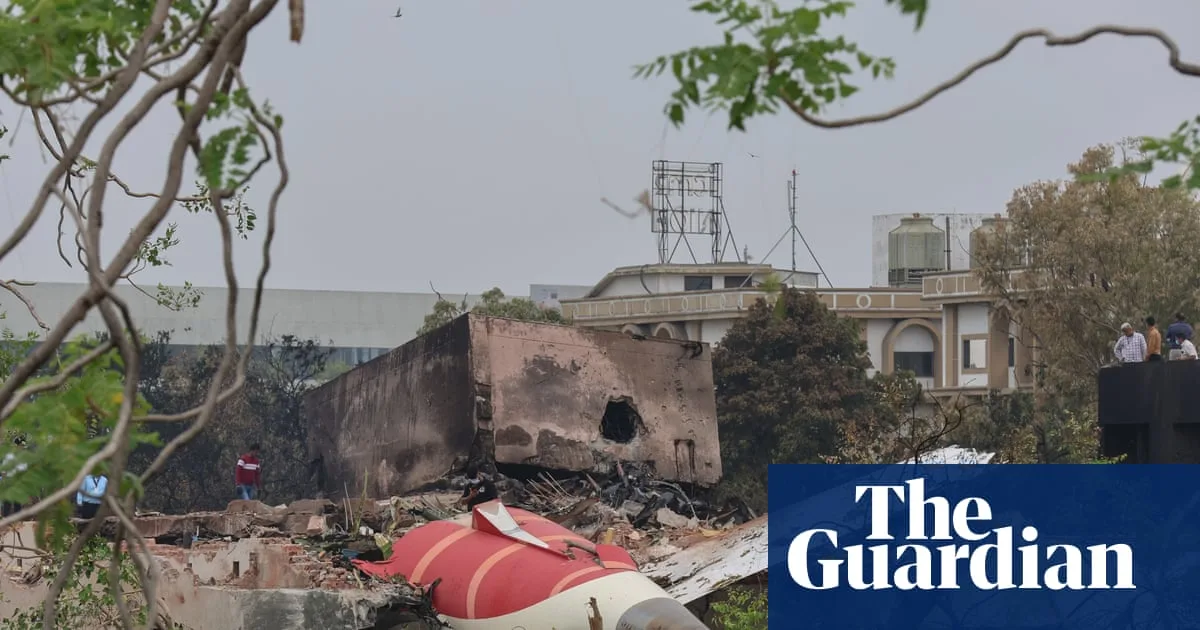
British families grieving after the Air India disaster have discovered that the remains of their loved ones were misidentified before repatriation, according to an aviation lawyer representing them. Relatives of one victim had to abandon funeral plans after being informed that their coffin contained the body of an unknown passenger. In another case, the "commingled" remains of more than one person were mistakenly placed in the same casket and had to be separated before the interment could go ahead.
The mistakes emerged when the senior coroner for London Inner West, Dr Fiona Wilcox, sought to verify the repatriated Britons' identities by matching their DNA with samples provided by the families. A London-bound Boeing 787 Dreamliner crashed into a medical college shortly after taking off from Ahmedabad airport on 12 June, killing 241 people onboard, of whom 52 were returning Britons. Another 19 people died on the ground and 67 were seriously injured.
A preliminary report from India's aircraft accident investigation bureau found that both of the plane's fuel switches moved to the cut-off position immediately after takeoff, stopping fuel supply to the engines. While some of the dead were cremated or buried in India, the remains of at least 12 victims had been repatriated, said James Healy-Pratt, an aviation lawyer representing many of the British families.
Healy-Pratt said he expected Prime Minister Keir Starmer to raise these issues with Indian Prime Minister Narendra Modi during his two-day state visit to London. "The families deserve urgent answers and assurances about the whereabouts of their loved ones," he said. He added that one family who received "commingled" remains had been able to have them separated to hold a funeral service, but the second family had been left "in limbo" with no one to bury.
The family of Akeel Nanabawa, Hannaa Vorajee and their four-year-old daughter, Sara, from Gloucester, who were all killed in the crash, said they were confident they had received the correct bodies but the identification process was "marked by deep unease". They called for transparency, truth, and accountability in how the identification and repatriation of victims was handled.




