Air India Crash Investigation Points to Intentional Pilot Action
Western intelligence sources have made a startling claim regarding the catastrophic Air India flight that crashed last June, resulting in the deaths of 260 individuals. According to these sources, the pilot in command of the aircraft deliberately turned off the fuel switches in a move described as 'almost certainly' intentional. This revelation comes from a report in the Italian newspaper Corriere della Sera, which cites confidential Western informants close to the ongoing investigation.
The Tragic Incident and Its Aftermath
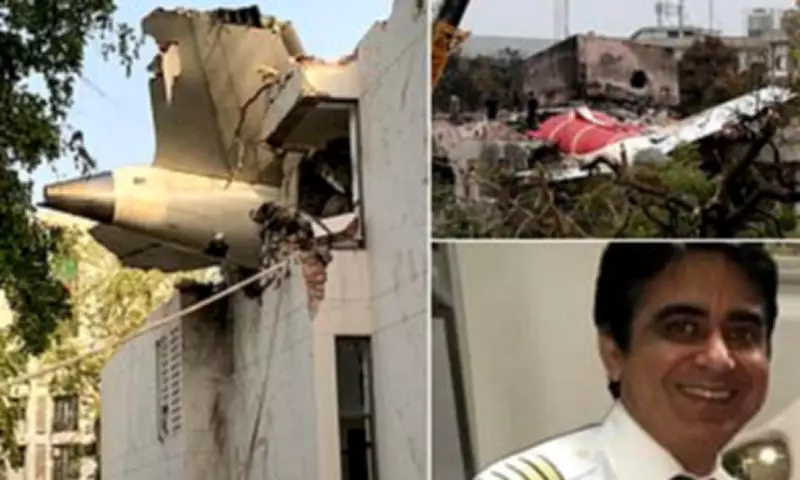
The Air India Boeing 787, operating as flight AI171 and bound for London Gatwick, met with disaster a mere 32 seconds after taking off from Ahmedabad Airport in India on June 12, 2025. The aircraft crashed into a medical college, killing all 241 passengers and 19 people on the ground. The sole survivor was British national Vishwash Kumar Ramesh, who has since spoken publicly about his severe physical and psychological injuries. Among the passengers, 53 were British citizens, adding an international dimension to the tragedy.
Investigation Findings and Technical Analysis
Since the horrific event, a multi-agency probe has been led by India's Aircraft Accidents Investigation Bureau, in collaboration with the US National Transportation Safety Board (NTSB), Boeing, and GE Aerospace, the engine manufacturer. The investigation has uncovered critical evidence pointing towards human intervention. Data from the aircraft's black boxes indicates that the left engine was shut down before the right one. Given that the captain's seat is traditionally on the left side of the cockpit, this pattern strongly suggests that Captain Sumeet Sabharwal, who was monitoring the flight at the time, was responsible for turning off the engines.

Further supporting this conclusion, simulations conducted by US experts have demonstrated that a simultaneous technical failure causing both engines to shut down is virtually impossible on a Boeing 787. This leaves intentional or accidental human action as the only plausible explanation. Investigators have reportedly ruled out simple human error as the cause, based on their analysis of the flight data and cockpit voice recordings.
Cockpit Dynamics and Political Pressures
Intriguing details have emerged from the cockpit voice recorder. In one chilling exchange, one pilot is heard asking the other, 'Why did you turn off the engines?' to which the other responds, 'It wasn't me.' Additionally, the control stick of First Officer Clive Kunder was found in a position indicating he was attempting to regain altitude in the final moments, while Captain Sabharwal's stick remained stationary.
The investigation has not been without its challenges. Western sources allege that Indian officials have frustrated the process over the past seven months, with the final report likely to undergo a 'political' evaluation aimed at avoiding national controversy. There are concerns that the report, expected to be released between June 8 and June 12 this year, may be toned down. However, pressure from the United States, including threats to reassess the safety ratings of Indian airlines, has reportedly pushed New Delhi towards greater transparency.
Survivor's Harrowing Account and Ongoing Struggle
Vishwash Kumar Ramesh, the lone survivor, has provided a poignant and distressing account of his life since the crash. Diagnosed with post-traumatic stress disorder (PTSD), Ramesh revealed that he struggles to communicate with his wife and four-year-old son, often preferring solitude. He described constant physical pain in his leg, shoulder, knee, and back, which impedes his mobility and requires assistance from his wife. Emotionally, he recounted the loss of his younger brother, Ajay, who was sitting a few rows away and perished in the crash, stating, 'My brother is my backbone.'

Ramesh's advisers report that he has received no treatment for his PTSD since returning to his home in Leicester, England, and feels abandoned. The family fishing business in Diu, India, which he ran with his brother, has collapsed, leaving the family in a state of financial and mental crisis. Community figures have called for Air India executives to meet with the victims' families, emphasizing the need for accountability and support.
Broader Implications and Future Recommendations
Amid India's growing investments in air travel, tourism, and trade, there is a reported desire to protect the nation's overall image. A source told Corriere della Sera, 'Admitting that one of the pilots was responsible for the plane's downfall is increasingly seen as a worthwhile sacrifice.' The final report is expected to include recommendations aimed at improving aviation safety in India, notably continuous assessments of pilots' physical and mental wellbeing.
Air India has previously expressed solidarity with the affected families, but the ongoing investigation and survivor testimonies highlight the profound and lasting impact of this tragedy. As the world awaits the official findings, the focus remains on ensuring such a disaster never recurs, while providing justice and support for those whose lives have been irrevocably altered.