

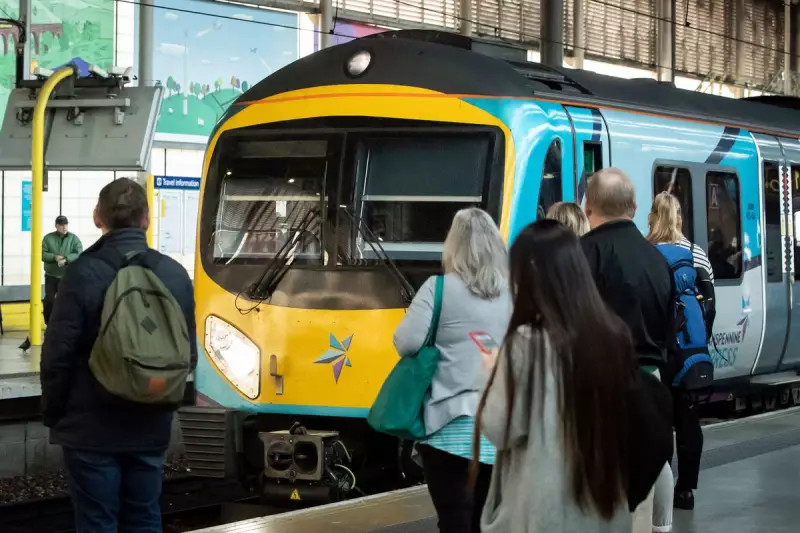
The government has pledged a colossal £45 billion to deliver the long-promised Northern Powerhouse Rail (NPR) project, aiming to revolutionise east-west train connections across the North of England. Transport Secretary Heidi Alexander declared the region has endured "second-rate rail for too long." However, with the first construction phase not slated to begin until 2030 and full completion unlikely before the 2040s, questions are being raised about whether this two-decade endeavour represents the best use of public funds.
The Long Road for Northern Powerhouse Rail
This landmark high-speed upgrade will be delivered in phases. The initial stage will focus on enhancing existing Trans-Pennine routes connecting Leeds, York, Bradford, and Sheffield. A subsequent phase promises a brand-new line linking Liverpool and Manchester. Notably, the project lacks a single, official completion date, a reflection of its vast scale and the legacy of missed deadlines that plagued HS2, whose northern extension was axed two years ago.
While future commuters—currently perhaps choosing their GCSEs—may ultimately benefit, the protracted timeline has sparked debate. Many argue that numerous other rail upgrade projects across the country could be delivered much sooner and potentially offer wider benefits.

Alternative Projects Waiting in the Sidings
One prominent alternative is a full recommitment to the original HS2 vision. The previous government scaled back the project as costs soared, cancelling the northern branches that would have created a Y-shaped network linking Manchester and Leeds. The current plan only guarantees a 49-minute shuttle from London Euston to Birmingham Curzon Street by 2033. Critics contend that to truly reap the economic rewards of improved northern connectivity, links to the Midlands and the South must also be enhanced, reviving HS2's initial ambitions.
Another national priority is Crossrail 2, the long-proposed pan-London route intended to connect Surrey and south-west London with north-east London and Hertfordshire. As the UK's primary economic engine, improving capacity in the capital and the South East with a companion to the hugely successful Elizabeth Line could be transformative. Yet, the project remains stalled in parliamentary sidings awaiting planning permission.
More advanced is the Midlands Rail Hub, a £1.75 billion upgrade set to add 300 extra trains daily and speed up commutes across England's central belt within a decade. This project, improving connections at 50 stations including Birmingham Moor Street and Curzon Street, is expected to be completed long before NPR's new tracks see trains.
Campaigners' "Easier Wins" for the Network
The Campaign for Better Transport has identified four specific, smaller-scale projects as worthy "easier wins":
- Reopening the disused Leamside Line from Gateshead to County Durham.
- Restoring Yorkshire's 12-mile "missing link" between Skipton and Colne.
- Building new stations to reconnect Bristol Temple Meads to North Somerset.
- Reintroducing the rail link between the Fenland market towns of March and Wisbech.
Expanding and improving the rail network is widely seen as vital for boosting the economy and alleviating pressure on congested roads. While cost control is essential for the UK, the central question remains: when it comes to new rail links, can the nation afford to keep kicking crucial improvements decades down the track?






