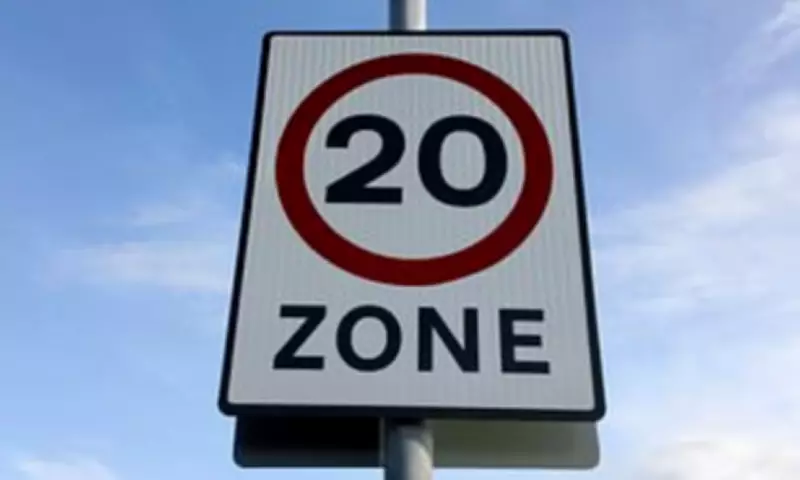
The widespread introduction of 20mph speed limits across Britain has been directly blamed for a significant surge in the number of drivers accumulating penalty points on their licences, with figures approaching one million last year. This dramatic increase highlights growing tensions between road safety initiatives and motorist frustrations over confusing traffic regulations.
Sharp Rise in Speeding Offences
Official data reveals that 939,519 drivers in England, Wales, and Scotland received an SP30 endorsement for breaking speed limits in the last year, excluding motorways. This total represents a substantial 32 per cent increase compared to the 678,367 drivers penalised in 2022. The surge has sparked intense debate about the effectiveness and fairness of expanding 20mph zones.
Expansion of 20mph Road Networks
According to transport consultancy Insight Warehouse, more than a sixth of British roads now operate under a 20mph speed limit. This equates to approximately 39,000 miles of the nation's 246,500-mile road network. The policy has gained particular momentum in devolved administrations and major urban centres.

In Wales, the Labour government implemented a default 20mph limit on most residential and built-up roads in 2023, reducing it from 30mph. Meanwhile, Transport for London reports that over half of London's roads now have a 20mph limit, under the leadership of Labour mayor Sir Sadiq Khan. Numerous local authorities across the UK, including Leeds where dozens of roads are transitioning to 20mph, have either introduced or are planning similar measures.
Confusion and Criticism from Motorists
While evidence suggests that 20mph limits effectively reduce average speeds, many drivers complain they are frequently applied to roads where such restrictions seem unnecessary. Motorists report confusion caused by inconsistent signage and road layouts, with some zones displaying both 20mph and 30mph signs simultaneously.
Edmund King, president of the AA, commented: 'The increase in 20mph zones probably adds to those being caught on camera by police forces.' This sentiment is echoed by Howard Cox of the FairFuelUK campaign, who stated: 'The war on UK motorists' wallets grows exponentially. Recent anti-speeding policies introduced behind alleged safety reasoning is just a dishonest mask to fleece more cash out of the world's highest-taxed drivers.'
Detailed Breakdown of Offence Patterns
The figures, obtained by road safety charity IAM RoadSmart through a Freedom of Information request to the DVLA, show a notable shift in where speeding offences occur. While 216,141 drivers were caught speeding on motorways in 2023 – representing a six per cent decrease from the previous year – the data suggests more drivers are being penalised on low-speed roads, particularly 20mph zones.
This trend may explain why attendance at speed awareness courses soared to a record 1.8 million last year. Drivers can choose to complete these courses instead of receiving penalty points and a £100 fine. Separate police data indicates that 488,599 tickets were issued to drivers caught speeding in 20mph zones in the year to 2024 – a two-thirds increase within twelve months.
Government Analysis and Cultural Challenges
The Department for Transport reports that three-quarters of drivers exceed the speed limit on 'free-flowing' sections of 20mph roads – those without cameras, sharp bends, junctions, or traffic-calming measures. The average speed recorded on these roads is 24mph, sufficient to trigger speed cameras.
High-profile cases include BBC presenter Evan Davis, who was caught speeding in a 20mph zone. Reflecting on his speed awareness course experience, Davis noted: 'Most of us had been speeding at something like 26mph.'
Nicholas Lyes of IAM RoadSmart emphasised the broader safety context: 'Speeding is one of the leading factors in the most serious collisions. We need a shift in mindset – speeding carries serious consequences, but the fact that it is so widespread indicates a cultural problem that needs addressing.'
This comprehensive data presents a complex picture of Britain's evolving road safety landscape, where the expansion of 20mph zones intersects with driver behaviour, enforcement practices, and ongoing debates about traffic management priorities.