
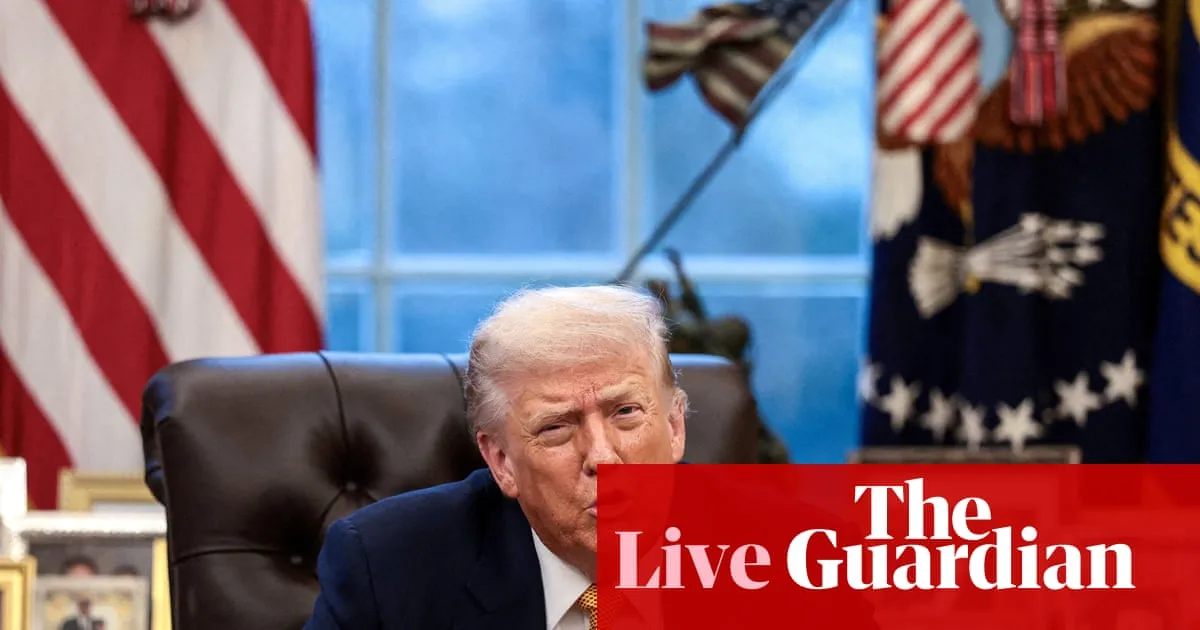
European stock markets fell sharply on Monday after US President Donald Trump threatened to impose new tariffs on eight European countries, including the UK, unless they support his ambition to acquire Greenland. The proposed levies would start at 10% from 1 February and rise to 25% by 1 June, targeting Denmark, Norway, Sweden, France, Germany, the UK, the Netherlands and Finland.
Futures for the Stoxx 50 index dropped 1.51%, while the UK's FTSE 100 fell 0.48% in early trading. France's CAC 40 was poised to open 2.1% lower, and Germany's DAX pointed to a 1.35% decline. In Asia, markets were mixed, with Japan's Nikkei 225 slipping 0.7% as China reported 5% annual GDP growth for 2025, though the pace slowed in the final quarter.
Oil prices and the US dollar also weakened. Brent crude fell 0.73% to $63.66 a barrel, and West Texas Intermediate dropped 0.61% to $59.08. The US Dollar Index declined 0.23%. Meanwhile, gold hit a fresh record high of $4,689.39 per ounce, rising 1.6%, as investors sought safe-haven assets. Silver also surged 3.8% to $93.39 per ounce.
Jim Reid of Deutsche Bank noted that while markets are spooked, the shock could wane, recalling that previous tariff threats were softened after financial market reactions. He warned that the US's twin deficits are a vulnerability, and a Reuters/Ipsos poll showed only 17% of Americans support acquiring Greenland, with 47% opposed. EU ambassadors are considering activating retaliatory tariffs or the anti-coercion instrument, with an emergency summit expected later this week.
In London, Chancellor Rachel Reeves is set to hail a 'new golden age' for the City as new regulatory rules take effect, reducing paperwork and costs for companies seeking IPOs or raising capital. However, a union warned that a trade war would be a 'wrecking ball' for UK manufacturing, highlighting the potential economic damage from the escalating dispute.




