The Trump administration is poised to reveal its most comprehensive and ambitious strategy to date for reconstructing the vital supply chains of critical minerals. These essential materials are fundamental to a vast array of modern technologies, from advanced jet engines and military hardware to everyday consumer electronics like smartphones.
A Strategic Reserve and International Deals
Central to this grand plan is the creation of a substantial $12 billion U.S. strategic reserve, designed to insulate American industry from foreign supply shocks. This initiative comes alongside anticipated purchase agreements with international partners, forming a coordinated effort to reduce dependency on a single source.
High-Level Diplomacy and "Project Vault"
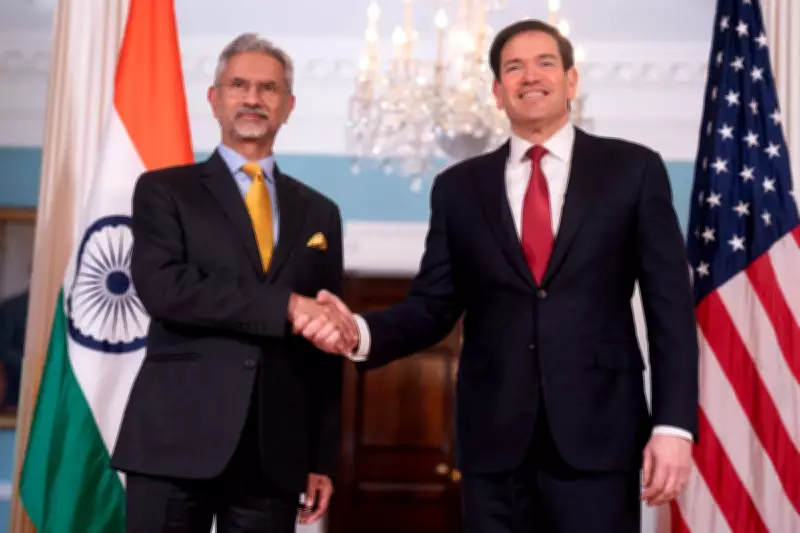
Vice President JD Vance is scheduled to deliver a keynote address at a significant meeting hosted by Secretary of State Marco Rubio. The gathering will include officials from dozens of nations across Europe, Asia, and Africa, with the U.S. expected to finalise agreements on supply chain logistics. This diplomatic push follows Rubio's recent discussions with foreign ministers from key nations like South Korea and India, focusing specifically on mining and processing these crucial minerals.

The timing is strategic, coming just two days after President Donald Trump announced "Project Vault." This stockpiling project is to be funded by a monumental $10 billion loan from the U.S. Export-Import Bank—the largest in the institution's history—supplemented by nearly $1.67 billion in private capital.
Responding to Chinese Dominance
These bold moves are a direct response to China's overwhelming control of the global market. China currently commands approximately 70% of the world's rare earth mining and a staggering 90% of the processing capacity. During the recent tariff war, China restricted the flow of these elements, exposing a critical vulnerability for Western nations.
Although a one-year truce was agreed upon by Trump and Chinese President Xi Jinping in October, leading to a pullback on high tariffs and rare earth restrictions, China's limits remain significantly tighter than before Trump's presidency. "We don't want to ever go through what we went through a year ago," President Trump emphasised when announcing the new stockpile initiative.
Forming a "Buyers' Club" and Direct Investment
Industry experts suggest other nations may join the U.S. in a collective effort. Pini Althaus, founder of USA Rare Earth, described the concept as setting up a "buyers' club" where key producers and consumers collaborate on pricing structures and market stability to counter China's influence.
The government is also taking a hands-on investment approach. Last week, it made its fourth direct investment in an American critical minerals producer, extending $1.6 billion to USA Rare Earth in exchange for stock and a repayment agreement. Althaus noted that securing government funding now involves rigorous scrutiny similar to meeting with private equity investors, with officials demanding terms that ensure a return for taxpayers.
The Stockpile Strategy and Bipartisan Backing
The $10 billion loan for the U.S. Strategic Critical Minerals Reserve is intended to ensure stable access for major manufacturers, including companies like Clarios, GE Vernova, Western Digital, and Boeing. Bank President John Jovanovic hailed the public-private partnership model as uniquely American and effective, ensuring all parties contribute to solving the supply chain crisis.
Wade Senti of AML suggested this stockpile could help establish a more organic pricing model independent of China, which has historically used its market dominance to flood markets with cheaper products and stifle competition. Furthermore, the Pentagon has invested nearly $5 billion over the past year to secure its own access to these materials.
These efforts are garnering rare bipartisan support in Congress. A group of lawmakers recently proposed a new agency with $2.5 billion to spur domestic production. Senators Jeanne Shaheen and Todd Young praised the administration's steps, calling it a clear sign of bipartisan commitment to reducing reliance on China and stabilising the market.

Long-Term Challenges and Domestic Demand
While building a stockpile will help companies weather future disruptions, experts like David Abraham caution it is a long-term endeavour, given current scarcity due to Chinese restrictions. Abraham also highlighted the importance of fostering domestic manufacturing that uses these minerals, noting that previous decisions to cut incentives for electric vehicles and wind turbines have ironically undercut American demand for the very elements the administration is now striving to secure.