Trump Announces Sharp Tariff Increase on South Korean Imports
Former US President Donald Trump has declared his intention to significantly increase tariffs on goods imported from South Korea, sending shockwaves through financial markets and diplomatic circles. In a social media post, Trump stated that tariffs on key South Korean exports, including automobiles, lumber, and pharmaceuticals, would rise from 15% to 25%.
Accusations of Deal Breach and Market Reaction
Trump accused South Korea of failing to live up to a trade agreement negotiated last year, specifically pointing to the Korean Legislature's inaction. "South Korea's Legislature is not living up to its Deal with the United States," Trump asserted, adding that the tariff hike was a response to Seoul not enacting what he called their "Historic Trade Agreement."
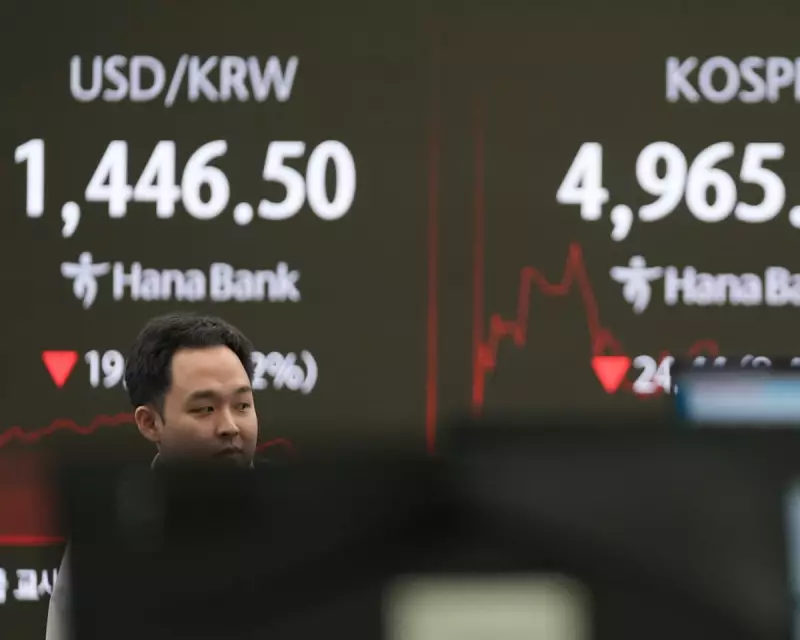
The announcement triggered immediate market turbulence, with shares in several major South Korean carmakers plummeting by as much as 5% in the minutes following Trump's statement. This reaction underscores the significant economic stakes, given that the automotive sector represents approximately 27% of South Korea's exports to the United States.

South Korea's Response and Diplomatic Moves
South Korean officials expressed surprise at the announcement, with the presidential office confirming they had not received prior notification about the tariff increase plans. In response, the government has dispatched Trade Minister Kim Jung-kwan to Washington for urgent discussions with US Commerce Secretary Howard Lutnick.
The situation represents a dramatic reversal from the trade and security agreement reached between Washington and Seoul last year, which was finalised during a meeting between Trump and South Korean President Lee Jae Myung in October. That agreement included mutual concessions, with South Korea making investment promises in exchange for US tariff reductions.
Legal Uncertainty and Political Implications
Complicating matters is the ongoing legal ambiguity surrounding the trade deal in South Korea. While Seoul's presidential office insisted in November that the agreement didn't require parliamentary approval, characterizing it as a memorandum of understanding rather than a binding treaty, Finance Minister Koo Yun-cheol has indicated the government would seek parliamentary cooperation on the matter.
Trump's latest threat would effectively reverse the tariff reductions achieved in last year's agreement, which had brought US tariffs on South Korean cars down from 25% to the current 15% level. This move represents another instance of Trump using tariff threats as a foreign policy instrument during his second term, a strategy that has drawn criticism from economists and faces legal challenges in US courts.
Broader Context of Trump's Tariff Strategy
This development follows a pattern of recent tariff threats against multiple trading partners. Just days before the South Korea announcement, Trump warned Canada that he would impose 100% tariffs on all Canadian goods if Ottawa proceeded with a trade deal with China. Earlier in January, he had threatened tariffs on several European nations until his purchase of Greenland was completed, though he later withdrew that particular threat.
International economics expert Josh Lipsky of the Atlantic Council commented that Trump's action reflects growing impatience with the pace of Seoul's implementation of the trade framework. "It's just another reminder that the markets were wrong to believe we were going to get into tariff stability in 2026," Lipsky observed, highlighting the volatility created by such announcements regardless of whether they are fully implemented.
The situation continues to develop, with formal notices from the US administration yet to be issued and diplomatic negotiations between the two nations underway. The outcome will have significant implications for US-South Korea relations and global trade dynamics.