

Taiwan's premier has celebrated a landmark trade agreement with the United States, describing it as the most favourable tariff arrangement secured by any nation with a trade surplus with Washington. The announcement on Friday, 16 January 2026, was immediately met with condemnation from officials in Beijing, underscoring the persistent geopolitical tensions surrounding the island.
Details of the Landmark Trade Accord
The newly negotiated pact slashes US tariffs on Taiwanese goods to a flat rate of 15%. In return, Taiwan has committed to facilitating $250 billion in new investments directed into the American technology sector. Premier Cho Jung-tai emphasised the strategic significance of the deal, stating it positions Taiwan as a key partner for the US.
"For the time being, we obtained the best tariff deal enjoyed by the countries with a trade surplus with the US," Cho said. "This also shows that the US sees Taiwan as an important strategic partner." He confirmed that the 15% rate, achieved without additional fees for sectors like automotive and wood furniture, aligns with terms granted to other major economies like Japan, South Korea, and the European Union.

Geopolitical Tensions and Industry Implications
The agreement arrives against a backdrop of fierce opposition from China, which claims sovereignty over Taiwan. At a routine briefing in Beijing, Foreign Ministry spokesperson Guo Jiakun reiterated China's firm opposition to any official agreements between other states and Taiwan.
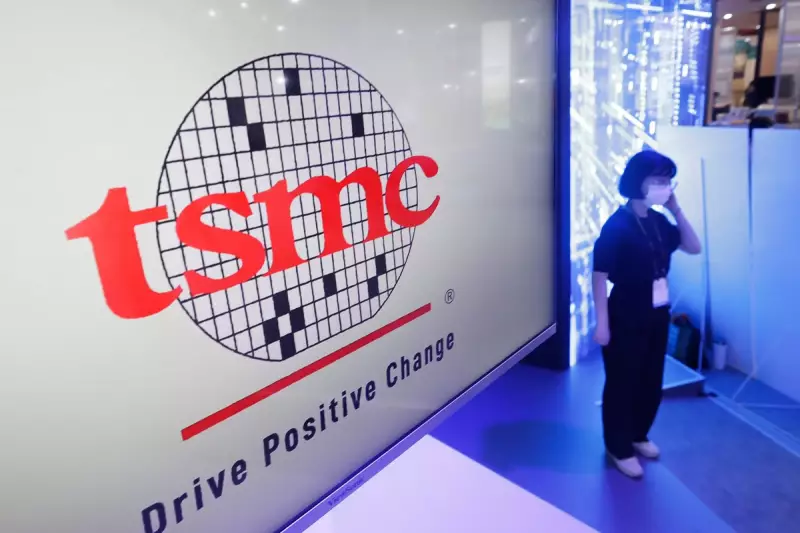
Concurrently, Taiwan Semiconductor Manufacturing Company (TSMC), the world's leading chipmaker, announced plans to increase its capital spending by nearly 40% this year. The firm reported a 35% surge in net profit for the latest quarter, driven by soaring demand for artificial intelligence technologies.
TSMC's substantial US investment plans, part of the wider $250 billion pledge, include accelerating construction of new fabrication plants in Arizona to create a manufacturing cluster. The US Commerce Department stated the deal would "drive a massive reshoring of America’s semiconductor sector," offering favourable tariff treatment, including exemptions, for Taiwanese producers investing stateside.
Ratification and Broader Trade Context
The accord must still be ratified by Taiwan's parliament, where some opposition lawmakers have voiced concerns about the potential impact on the island's domestic semiconductor industry. The deal's timing is notable, as the US Supreme Court is yet to rule on the legality of the broader tariff framework used by former President Donald Trump, who initially set a 32% tariff on Taiwanese goods before reducing it to 20%.
Trade expert Ryan Majerus, a former official under both Trump and Biden, noted the interesting timing but suggested Taiwan's desire to solidify relations with the US amid ongoing pressure from China was a significant motivating factor. "Wanting to solidify things with the U.S. probably played a big role here," Majerus observed.
This agreement represents a critical development in global tech supply chains and great power diplomacy, balancing substantial economic incentives with deep-seated political sensitivities.






