Syria and Saudi Arabia Forge Multibillion-Dollar Investment Agreements to Revitalise Economy
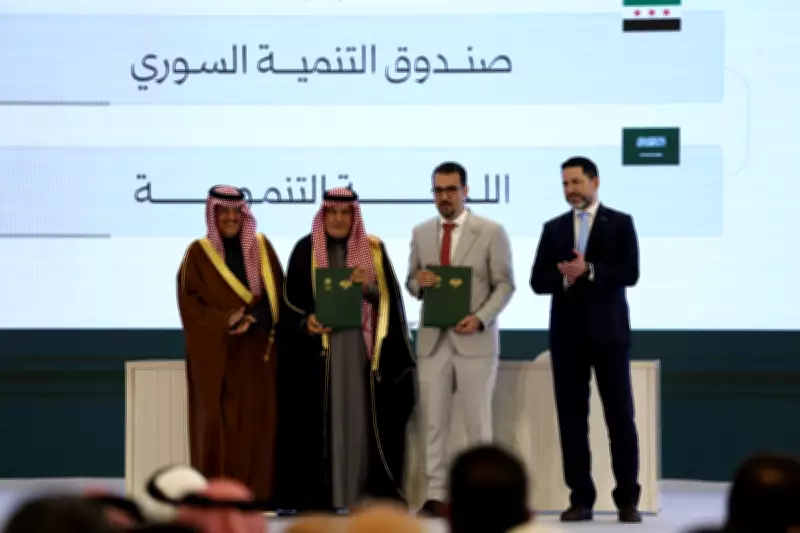
In a significant move to bolster economic recovery, Syria and Saudi Arabia have signed a series of multibillion-dollar investment deals, encompassing a major telecommunications initiative, a low-cost joint airline, and an international airport development. The agreements, finalised on Saturday, aim to inject vitality into Syria's economy, which has been devastated by a prolonged conflict resulting in nearly half a million fatalities and extensive damage.
Key Projects Unveiled in Landmark Deals
The crippling Western sanctions on Syria were largely removed following a leadership transition in December 2024, after the ouster of former President Bashar Assad, paving the way for substantial foreign investments. Abdulsalam Haykal, Syria's Minister of Communications and Information Technology, highlighted a telecommunications development valued at nearly $1 billion. This project, known as the SilkLink, will unfold in two phases over 18 months to two years, involving the laying of thousands of kilometres of cables to enhance internet connectivity between Asia and Europe, positioning Syria as an international telecommunications hub.
Saudi Investment Minister Khalid al-Falih confirmed that the Saudi Telecom Company, or STC Group, will spearhead this initiative. Additionally, Syria's Energy Ministry has entered into a water agreement with Saudi Arabia's ACWA Power, a firm renowned for managing power generation and desalinated water production plants across the Middle East and other regions.

Aviation and Infrastructure Investments Take Flight
As part of the broader investment framework, the two nations announced the creation of a new low-cost airline, Flynas Syria, though the specific investment value remains undisclosed. Saudi Arabia, a key supporter of Syria's new government led by interim President Ahmad al-Sharaa, will also establish an investment fund to develop an international airport in the northern city of Aleppo. This facility is projected to accommodate up to 12 million passengers annually, significantly boosting regional connectivity and tourism potential.
These latest agreements build upon earlier announcements made in July, when Syria and Saudi Arabia revealed 47 investment deals totalling over $6 billion, underscoring a deepening economic partnership aimed at fostering stability and growth in the post-conflict era.