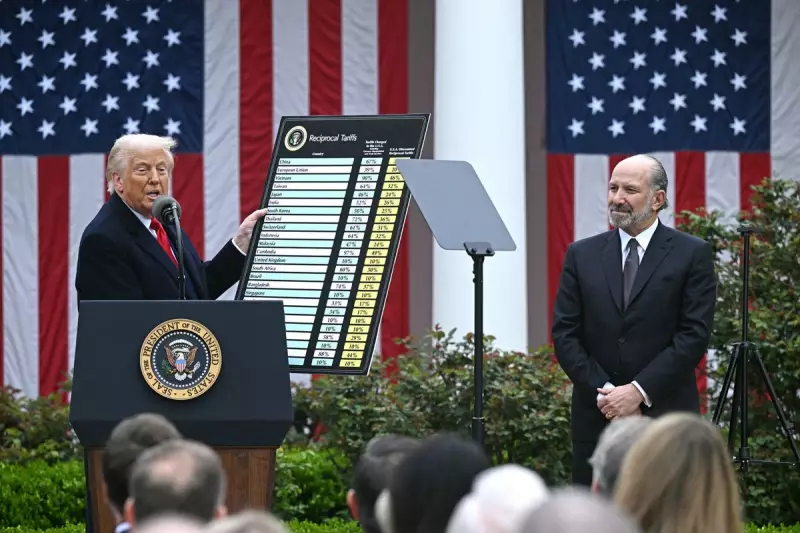
A new economic analysis has delivered a stark verdict on the impact of former President Donald Trump's tariff strategy, concluding that the overwhelming financial burden is being shouldered by American businesses and households, not foreign exporters.
American Consumers Foot the Bill
The report, released on Monday 19 January 2026 by Germany's Kiel Institute for the World Economy, dismantles a central claim of the Trump administration's trade policy. Researchers found that foreign exporters did not meaningfully lower their prices in response to the US tariff increases.
Instead, the study calculates that roughly 96 percent of the added costs have effectively become "a consumption tax on Americans." Only an estimated 4 percent of the financial burden is being absorbed by foreign operators. The report states that the $200 billion surge in customs revenue directly equates to $200 billion extracted from American businesses and households.

Exporters Cut Volumes, Not Prices
The analysis provides a clear case study in the behaviour of major trading partners. It highlights the experiences of Brazil and India – both members of the BRICS bloc – which faced 50 percent tariffs on certain exports under Trump's policy.
In both nations, exporters chose a similar path. "Brazil's exporters did not substantially reduce their dollar prices," the report notes, with a near-identical response observed in India. Faced with the tariffs, firms opted to reduce the volume of their exports to the US market rather than offer price concessions to American importers.
This leaves American importers with a difficult choice: absorb the steep new costs themselves or pass them down the supply chain to manufacturers and retailers. Those entities then face the same decision, with the costs often ultimately landing with the American consumer.
Contradiction and Escalation
The Kiel Institute's findings directly contradict the Trump administration's justification for the tariffs. "This claim has been central to the policy’s justification: Tariffs are framed as a tool to extract concessions from trading partners while generating revenue for the US government — at no cost to American households," the report stated. "Our research shows the opposite: American importers and consumers bear nearly all the cost."
There is no indication of a change in approach from the White House. The report emerges amid a fresh trade confrontation with Europe. Earlier in the week, President Trump threatened to initiate a trade war with European nations if Denmark does not cede control of Greenland, which he deems a national security imperative.
On Saturday 17 January 2026, he followed through with a specific threat: a 10 percent tariff in February, escalating to a 25 percent tariff in June, on European goods unless his demands are met. European leaders are scheduled to hold an emergency meeting in Brussels on Thursday to discuss a potential response, which could include counter-tariffs on US goods. Such a move would likely further increase prices for Americans already grappling with a significant affordability crisis.