

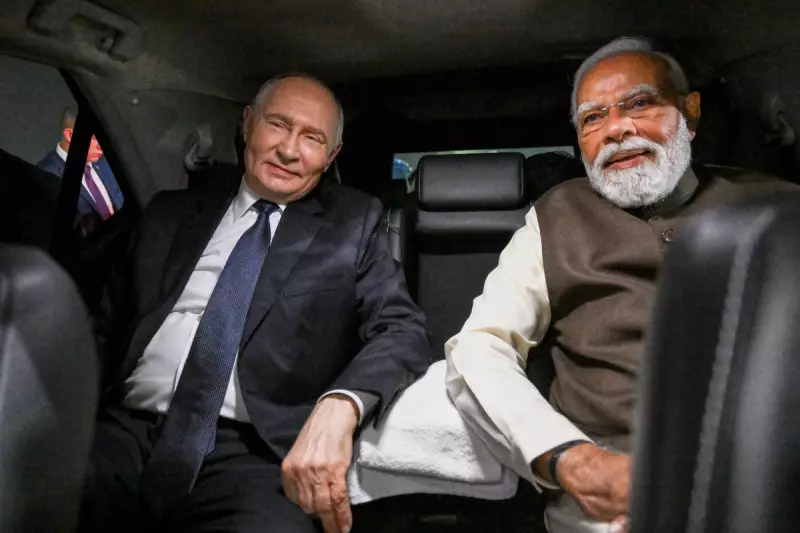
In a significant display of diplomatic alignment, Russian President Vladimir Putin and Indian Prime Minister Narendra Modi have solidified their nations' partnership with a major new economic agreement. The deal, struck during a 30-hour visit by Putin to Delhi, aims to dramatically boost bilateral trade.
A Strategic Partnership Defying Western Pressure
The warm reception for President Putin, including the leaders' characteristic 'bear hug', was interpreted as a clear signal of India's commitment to its policy of 'strategic autonomy'. This stance allows New Delhi to maintain strong ties with Moscow despite considerable pressure from Western nations following Russia's actions in Ukraine. The summit underscored India's determination to pursue its own national interests in foreign policy.
Key Outcomes: From Oil to Tourism
The centrepiece of the talks was an economic cooperation programme extending to 2030, with an ambitious target to increase annual trade to $100 billion. A critical component for energy-hungry India is Russia's pledge to ensure an 'uninterrupted supply of fuel'. India has become a major buyer of discounted Russian crude since the imposition of Western sanctions, with Russia now its second-largest oil supplier after China.

While no major new defence contracts were announced, discussions progressed on two fronts:
- Expediting the delivery of remaining S-400 Triumf air defence missile systems.
- Establishing joint manufacturing of spare parts for Russian-origin military equipment used by India.
In a move to boost people-to-people links, India also plans to introduce free electronic visas for Russian tourists, potentially revitalising a key tourism market.
What Wasn't Agreed
Analysts noted that the visit, which concluded on Saturday 6 December 2025, did not yield the concrete new defence deals some had anticipated. The focus remained on consolidating existing agreements and ensuring the smooth flow of energy and trade, rather than announcing headline-grabbing new arms sales.
The outcomes from Delhi reinforce a crucial geopolitical axis. As Western nations seek to isolate Russia, its partnership with India, a key democratic power, remains resilient, anchored in mutual energy needs, defence ties, and a shared vision of a multipolar world order.






