Prime Minister Sir Keir Starmer is engaged in a frantic diplomatic effort to prevent a "hugely damaging" trade war with the United States, following startling tariff threats from former President Donald Trump linked to his bid for Greenland. Economists warn the escalating row could tip Britain back into recession.
Trump's Tariff Ultimatum and Economic Warnings
The crisis erupted over the weekend when Donald Trump vowed to impose sweeping tariffs on allies resisting his plan to acquire Greenland. He declared a 10 per cent tariff on imports from several nations, including the UK, would commence on February 1, rising to a staggering 25 per cent in June. The other targeted countries are Denmark, Finland, France, Germany, the Netherlands, Norway, and Sweden.
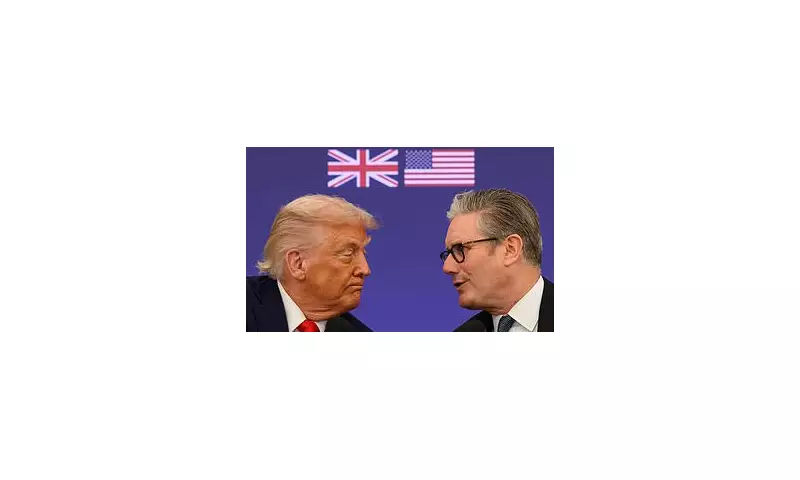
Speaking at an emergency Downing Street press conference on Monday, Sir Keir stated President Trump was "completely wrong" to threaten allies in this manner. However, the former US leader later affirmed he was "100 per cent" committed to the plan, with Treasury Secretary Scott Bessent cautioning the EU against retaliation.

The potential economic fallout for Britain is severe. Analysis from Capital Economics suggests the tariffs could reduce UK GDP by up to 0.75 per cent, a hit potentially exceeding £20 billion. Chief economist Paul Dales warned that with quarterly growth currently at just 0.2-0.3 per cent, such a shock "could trigger a recession." He highlighted particular "pain" for British carmakers and the pharmaceuticals industry.
Starmer's Cautious Stance Amid Public Fury
Despite a snap YouGov poll showing 67 per cent of the public supports retaliatory tariffs against the US, Sir Keir has all but ruled out a tit-for-tat response. He emphasised that a trade war is "not in our interests" and his primary focus is on de-escalation.
"I don't want to lose sight of the central goal here which is to avoid the seriousness that a trade war would bring," the Prime Minister said. He also ruled out asking the King to cancel a planned state visit to the US this year as a protest.
Sir Keir expressed grave concerns that the situation could trigger a "dangerous downward spiral" in the transatlantic alliance, weakening vital security cooperation. He stressed that Britain's security, including the operation of the Trident nuclear deterrent, is underpinned by a strong relationship with Washington.
While he said he did not believe Mr Trump planned military action to seize Greenland—a semi-autonomous Danish territory—the former President yesterday declined to rule it out. In a show of force, Danish troops conducted live-fire exercises in Greenland over the weekend.
Diplomatic Scramble and Domestic Political Reaction
The crisis has upended the government's schedule, with a planned speech on the cost of living in Yorkshire abandoned and Chancellor Rachel Reeves pulling out of a City event to attend the PM's emergency briefing.
Sir Keir is now actively lobbying fellow EU leaders against imposing immediate retaliatory tariffs. French President Emmanuel Macron is reportedly pushing for the EU to deploy a tariff 'bazooka', a mechanism originally designed for hostile states. In contrast, European Commission President Ursula von der Leyen is said to favour a more cautious approach.
The US stance has drawn condemnation from across the UK political spectrum. Business Secretary Kemi Badenoch urged Mr Trump to "withdraw the threat of tariffs, for the good of US and European security." Reform UK leader Nigel Farage called the threat "wrong" and "very, very hurtful to us," adding he would raise the issue with Trump's team at the Davos summit.
The Prime Minister concluded that the principle that Greenland's future is for its people and Denmark to decide "cannot be set aside because it goes to the heart of how stable and trusted cooperation works." The coming weeks will test whether diplomacy can avert a costly economic conflict.