When 53-year-old Agbar Mohammad pulled into a petrol station in Fiji in May, he was expecting a queue. Instead, it was almost empty. “I could only see one or two cars at the service station, which was very unusual,” Mohammad says. The reason became clear very quickly: as Mohammad filled his car, the numbers on the fuel pump climbed so much faster than the needle on his dashboard. Normally he would put in about $40 of fuel, but this time $100 barely got his 60-litre tank halfway full.
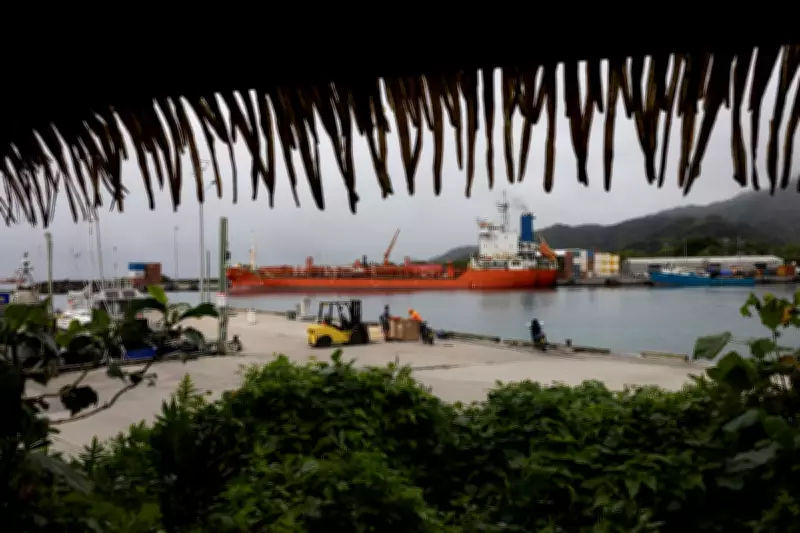
The Pacific region is already at the forefront of the climate crisis thanks to rising sea levels and increasing natural disasters. But the fuel crisis caused by the US-Israel war on Iran is revealing another fossil-fuel based vulnerability. The reliance of countries and territories in the Pacific on imported oil is expected to hit economic growth and increase inflation. The shortages are already showing up in the price of cassava, the cost of the school run, and in businesses’ bottom lines.
High Dependence on Imported Oil
Dr Rubayat Chowdhury from the Australian National University says Pacific Islands are very dependent on imports for food and basic necessities. And in a region that earns a lot from tourism, remittances and foreign aid, higher fuel prices will not just push up the cost of goods, but could also threaten incomes. “The Pacific will be hit hard,” says Chowdhury, for two main reasons. “The first is its remoteness. And the second is small populations.”

Oil accounted for more than 80% of the region’s energy supply in 2023 – more than half of that for transport, and more than a third for electricity. At least eight Pacific countries generated more than half of their electricity in 2024 from oil products – over 90% in Solomon Islands and more than 80% in Tonga and Nauru. By comparison Australia and New Zealand derived 2.3% and 1.5% of their electricity from oil products in 2024, mostly from small, intermittent or temporary sources, such as remote or emergency generators.
Renewable Energy Targets and Import Reliance
Many Pacific countries have a target to generate 100% of their electricity from renewables by 2030. Some, like Tokelau, have already achieved this, but most have not yet. Oil products accounted for about 20% of all imports for some Pacific countries in 2019, but many also import a lot of food and other staples that cannot be produced locally, meaning higher transport costs will affect a variety of goods and services. Data from the UN shows that in 2021-23, food made up over 20% of net imports in Samoa and Tonga, and over 29% in Kiribati.
Government Responses and International Support
Many Pacific countries are already taking action, before oil supply shortages start to hit. Fiji’s parliament voted for a 20% pay cut for its members due to pressure on the budget from the global fuel price shock. Other countries have had to repeatedly hike fuel prices while introducing relief for businesses and residents. To help with fuel security, the Australian government has announced $30m in support for Fiji – including a supply and storage hub in the region. Fiji’s prime minister, Sitiveni Rabuka, said this would support the country’s upcoming national budget as Fijians brace for another fuel price increase this month.
Concentration of Fuel Suppliers
Guardian Australia analysis of global trade flows in 2024 found that Pacific countries received most of their fuel from just one of a handful of countries – Singapore, Malaysia, South Korea and China. Some Pacific countries source 80%, 90% or more of their oil products from their largest supplier country. This kind of concentration could leave Pacific countries exposed if their suppliers have to prioritise their own domestic markets. Australia has already been warned that Malaysia or South Korea might need to do this if the crisis continues.
Dr Chowdhury also notes that Australia is relatively protected from an oil supply shock by its purchasing power, and by being one of the world’s largest producers and exporters of liquefied natural gas. “It’s relatively easier for bigger nations like Australia to negotiate, right? To reach out to Brunei, for example, to secure the oil supply. It’s not easy for Solomon Islands or the Federated States of Micronesia to do the same.”

Impact on Daily Life
For Agbar in Suva, the fuel crisis so far has largely meant working longer hours to break even. For bus operators, tighter margins. For farmers from provinces like Tailevu, Naitasiri and Ra, it means paying more just to get produce into town. And for fellow driver Gerald Elaisa, every trip now comes with calculation. “We only buy fuel for the important runs – school, work, home,” he says. “The children now catch the bus or walk. We are cutting down on unnecessary spending.” For many Fijian families, fuel is no longer just filling their tanks. It is shaping how they live.