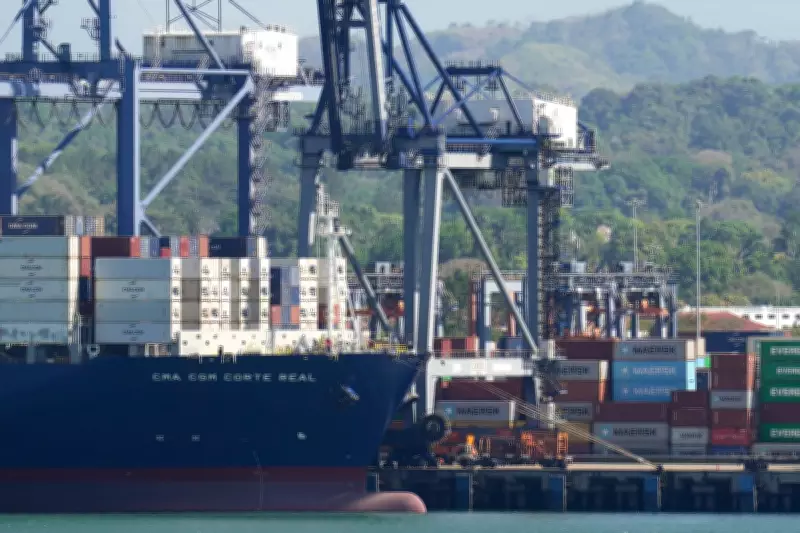
Hong Kong-based conglomerate CK Hutchison Holdings has confirmed that its subsidiary has formally commenced arbitration proceedings against the Republic of Panama. This legal action follows a landmark ruling by Panama's Supreme Court, which declared the company's concession to operate key ports along the Panama Canal as unconstitutional.
Arbitration Proceedings Initiated Amid Constitutional Dispute
The company announced on Wednesday that its subsidiary, the Panama Ports Company, initiated arbitration on Tuesday under the established rules of the International Chamber of Commerce, which is headquartered in Paris. The proceedings will be overseen by the chamber's independent International Court of Arbitration. CK Hutchison stated it strongly disagrees with last week's judicial decision, which has created significant uncertainty regarding the future of port operations at this vital global shipping corridor.
Panama Assures Continuity as Geopolitical Tensions Flare
In response to the ruling, Panama's president has moved swiftly to reassure the public and international shipping community that port operations will continue without interruption. However, the court's decision has been interpreted as advancing a longstanding US objective to prevent any perceived Chinese influence over the strategic canal that connects the Atlantic and Pacific Oceans. The Panamanian president's office and commerce ministry did not immediately respond to requests for comment following the arbitration announcement.

China Issues Stern Warning to Panama
The ruling has provoked a sharp response from China, with Beijing's office overseeing Hong Kong affairs criticising the Panamanian court's decision as legally groundless and ridiculous. In a statement shared on the social media platform WeChat, the office asserted that the ruling demonstrated Panamanian authorities were yielding to hegemonic powers, in an apparent reference to the United States.
The Chinese statement warned explicitly that Panama would pay "a heavy price both politically and economically" if it persisted with this course of action. This diplomatic escalation comes amid already strained relations between Beijing and Washington, with the statement specifically noting that politicians from certain countries had expressed encouragement about the ruling, seemingly alluding to US Secretary of State Marco Rubio.
Company Caught in Crossfire of Superpower Rivalry
The Panama Ports Company, a subsidiary of CK Hutchison, has operated ports at both ends of the Panama Canal since 1997. The current predicament highlights the complex challenges facing Hong Kong's business elite as they navigate Beijing's expectations of national loyalty during periods of heightened US-China tension.
CK Hutchison is controlled by the family of Hong Kong's wealthiest individual, Li Ka-shing. The company finds itself in an increasingly awkward position as it attempts to manage a planned sale of its global port assets to a consortium that includes US investment firm BlackRock Inc. This proposed transaction has already become entangled in geopolitical tensions between Washington and Beijing.
Sale Plans Complicated by Geopolitical Considerations
Last July, CK Hutchison revealed it was considering bringing a Chinese investor into the consortium as a significant member, a move widely interpreted as an attempt to appease Beijing amid the sensitive sale process. The consortium also includes BlackRock subsidiary Global Infrastructure Partners and Terminal Investment Limited, chaired by Italian shipping heir Diego Aponte, whose family reportedly maintains longstanding ties with Li Ka-shing's business interests.
Panamanian authorities have consistently maintained that they retain full control over the canal and that Hutchison's operation of the ports does not equate to Chinese control. However, US officials, particularly Secretary Rubio, have made clear they view the arrangement as a national security concern. The arbitration proceedings now add another layer of complexity to this already multifaceted international dispute involving commercial interests, legal jurisdictions, and great power competition.