Davos Economic Leaders Stress Resilience Amid Trump-Led Disruption
Leading global economic policymakers at the World Economic Forum in Davos have called on nations and businesses to navigate past the turbulence sparked by clashes with the Trump administration. They emphasise a renewed focus on stimulating growth and combating inequality in a world where international trade flows persist and cooperation remains critically important.
Unexpected Economic Resilience Despite Political Noise
During a panel discussion, European Central Bank head Christine Lagarde, International Monetary Fund managing director Kristalina Georgieva, and World Trade Organization director-general Ngozi Okonjo-Iweala noted the global economy is demonstrating surprising robustness. This resilience holds firm even amidst disruptions stemming from US trade policy under President Donald Trump, who stirred the weeklong forum with tariff threats related to Greenland before retracting the proposal.
However, the leaders cautioned that while growth persists, significant challenges like alarming government debt levels and deepening inequality remain on the horizon. They argued that concerted efforts are now essential to bolster growth, manage worldwide debt burdens, and ensure transformative technologies such as artificial intelligence do not exacerbate social divides or destabilise labour markets.

Calls for Action and Guarding Against Complacency
Kristalina Georgieva pointed to the IMF's recently upgraded global growth forecast of 3.3% for this year, describing it as "beautiful but not enough... do not fall into complacency." She stressed this level of expansion is insufficient to reduce the "debt that is hanging around our necks" and urged governments to support "those who are falling off the wagon."
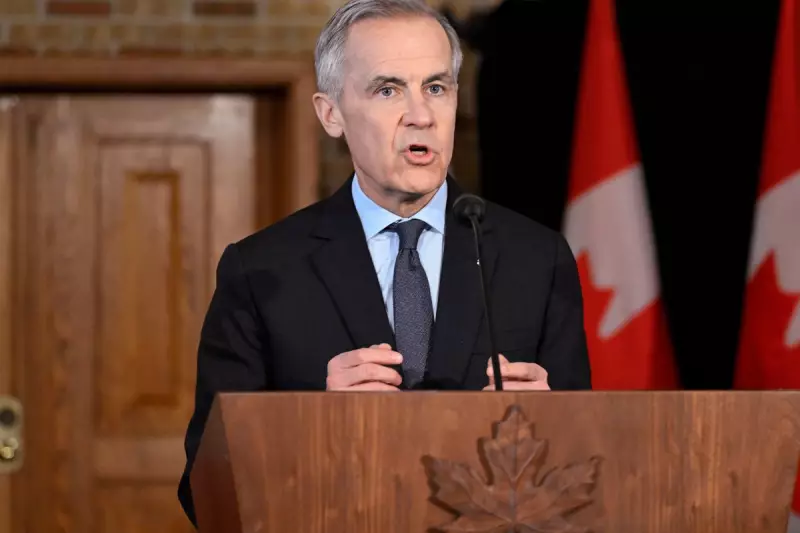
Christine Lagarde advocated for exploring alternatives, stating, "We have to look at Plan B, or Plans B... I think we've had a lot of noise this week... and we need to distinguish the signal from the noise." Responding to "Europe bashing" heard during the summit, she suggested critics highlight Europe's need to enhance its investment climate and foster innovation, remarking, "we should say thank you to the bashers." Lagarde downplayed comments from Canadian Prime Minister Mark Carney, who labelled Trump's approach a "rupture" with the rules-based international order, asserting from an economic standpoint, "we depend on each other."
Trade Adaptability and a Changed Global Landscape
Ngozi Okonjo-Iweala highlighted that 72% of global trade still operates under WTO rules, where countries agree to uniform tariffs for all partners, despite what she termed "the biggest disruption in 80 years." She observed, "Resiliency is built into the system, and that is showing up," while acknowledging, "I don't think we'll go back to where we were."
Georgieva offered a historical analogy, noting, "We have always traded and we will always trade. Trade is like a river, water. You put obstacle, it goes around it. Yes, it would be different, but there would be always the necessity." She conceded the global context has shifted permanently, invoking "The Wizard of Oz" to state, "We are not Kansas any more."
The overarching message from Davos is clear: while political disruptions create noise, the foundational structures of global trade and economic interdependence exhibit remarkable durability. Policymakers must now channel energy into sustainable growth strategies and inclusive policies to address the persistent threats of debt and inequality in this transformed environment.