

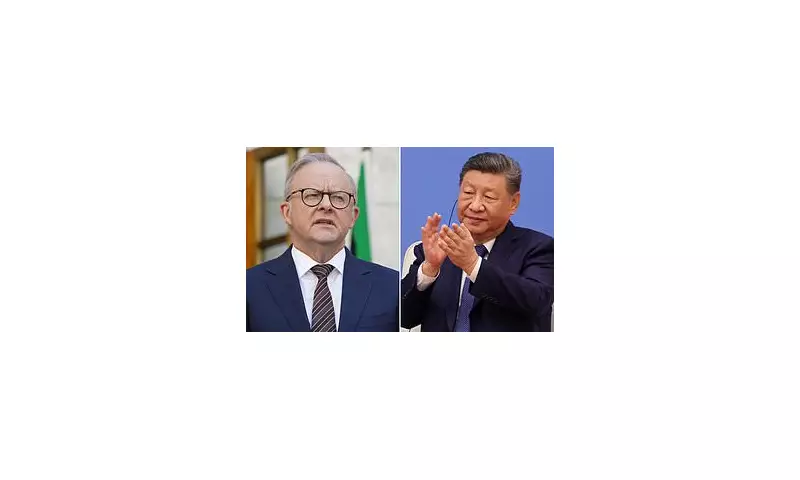
Australia's agricultural sector has been dealt a significant blow at the start of 2026, as China enforces new tariffs on beef imports that threaten to severely curtail a vital export market. The move has sparked accusations that Beijing is breaching the spirit of the landmark free trade agreement between the two nations.
Details of the New Tariff Measures
China's Ministry of Commerce announced the imposition of additional 55 per cent tariffs on beef imports from several countries, including Australia, when shipments exceed established quotas. The measures, which took effect on 1 January 2026, are set to last for three years.
The total annual import quota has been set at 2.7 million tonnes, with Australia allocated 205,000 tonnes. This policy stems from an investigation initiated in December 2024, ostensibly to protect China's domestic beef industry.

Prime Minister Anthony Albanese addressed the issue on Thursday, stating that government representatives were in communication with their Chinese counterparts. He emphasised that Australia was not being 'singled out' by the decision. 'Australian beef is in my view proudly, as the Australian prime minister, the best in the world,' Mr Albanese told reporters. 'We compete in the world very well and our products are in great demand right around the world.'
Potential Impact on Australian Exporters
The financial consequences for Australian farmers are projected to be severe. Industry bodies Cattle Australia and the Australian Meat Industry Council estimate the restrictions could reduce beef exports to China by about one-third compared to 2025 levels.
This reduction equates to a potential loss of more than $1 billion in trade. While China remains a major long-term market, it constituted approximately eight per cent of Australia's total beef exports prior to the new tariffs.
Industry leaders have reacted with dismay. Cattle Australia chair Garry Edwards labelled China's decision as 'entirely unwarranted and at odds with the sentiment' of the China-Australia Free Trade Agreement (ChAFTA). 'We strongly believe this decision will erode the access of Chinese consumers to a reliable source of high-quality, safely produced protein,' Mr Edwards said. He added that Australian representatives had provided formal evidence during the review process showing its imports did not injure China's local beef sector.
A Setback for Trade Relations
The tariffs represent a fresh point of tension in a bilateral relationship that had only recently begun to thaw. In 2024, the last of China's restrictions on Australian imports—which had affected barley, lobster, and wine during a bitter four-year trade feud—were lifted.
Opposition figures were quick to criticise the development. Kevin Hogan, the opposition trade spokesman, noted that quotas were eliminated under the original 2015 free trade deal struck by then-Prime Minister Tony Abbott. Opposition Leader Sussan Ley described the move away from fostering beef trade as 'worrying' and urged the Prime Minister to leverage his relationship with Chinese President Xi Jinping.
Tim Ryan, chief executive of the Australian Meat Industry Council, argued the decision was unfair and failed to reflect the long-standing trade relationship. 'This decision appears to reward other countries who have surged the volume of beef exported to the Chinese market in recent years,' he stated.
The trade dispute coincides with heightened geopolitical concerns, following Australia's condemnation of Chinese military exercises near Taiwan earlier in the week. The Department of Foreign Affairs and Trade labelled the 'Justice Mission 2025' simulations as deeply concerning and destabilising.






