

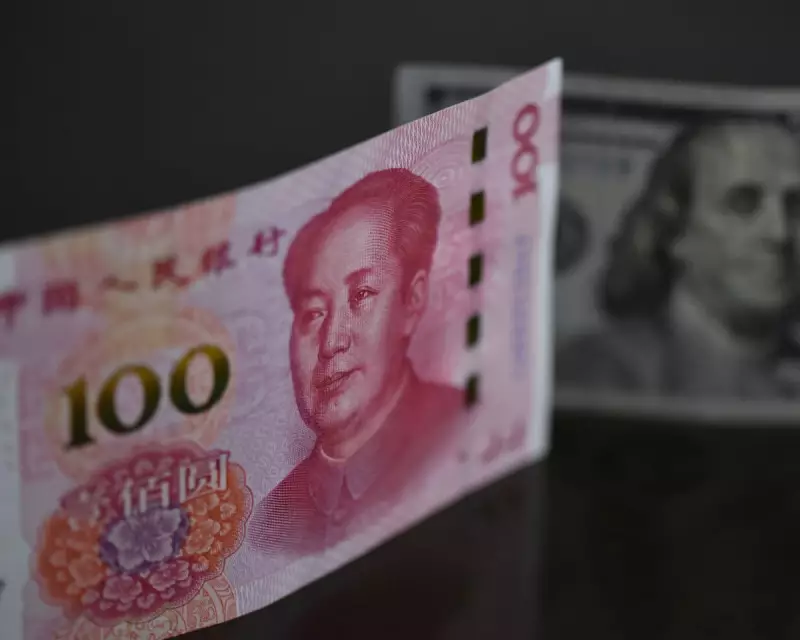
China has posted a colossal, record-breaking trade surplus for 2025, surpassing a trillion dollars and underscoring its economic resilience in the face of renewed US tariff pressures under the Trump administration.
A Surplus on a Staggering Scale
Customs data released on Wednesday revealed a full-year trade surplus of $1.189 trillion, a figure comparable to the entire annual economic output of a major nation like Saudi Arabia. This milestone, first breached in November, highlights China's formidable export engine. Outbound shipments grew by 6.6% year-on-year in December, exceeding forecasts, while imports also rose a stronger-than-expected 5.7%.
The massive surplus, however, presents a double-edged sword. While it helps Beijing counteract a domestic property slump and sluggish consumer demand, it risks further unsettling global economies concerned about China's trade practices, industrial overcapacity, and their own over-reliance on Chinese goods.

Strategic Shifts and Market Resilience
Despite the high US tariffs, which analysts note remain above profitable levels for many Chinese exporters, China's global trade footprint has expanded. Chinese firms have adeptly pivoted, increasing focus on markets in south-east Asia, Africa, and Latin America to offset US duties. This diversification has significantly enhanced the economy's ability to withstand external shocks, as noted by customs vice-minister Wang Jun.
The yuan held steady following the robust data, and Chinese stock markets rallied. Notably, monthly export surpluses exceeded $100bn seven times in 2025, up from just once the previous year, partly underpinned by a weaker currency. Key sectors like automotive saw exports jump 19.4%, with pure electric vehicle shipments soaring nearly 50%, cementing China's position as the world's top auto exporter.
Beijing's Balancing Act and Future Outlook
Recognising the geopolitical and economic friction caused by such large imbalances, Beijing has shown signs of moderating its approach. Premier Li Qiang recently called for proactively expanding imports to promote balanced trade. In concrete steps, China scrapped export tax rebates for its solar industry and fast-tracked revisions to its foreign trade law, signalling a potential shift away from subsidies towards freer trade.
Economists predict China will continue gaining global market share in 2025, aided by overseas production hubs and strong demand for its electronics. The record surplus ultimately reveals both China's formidable strength as a manufacturing powerhouse and the hidden vulnerabilities and external pressures that accompany it.






