

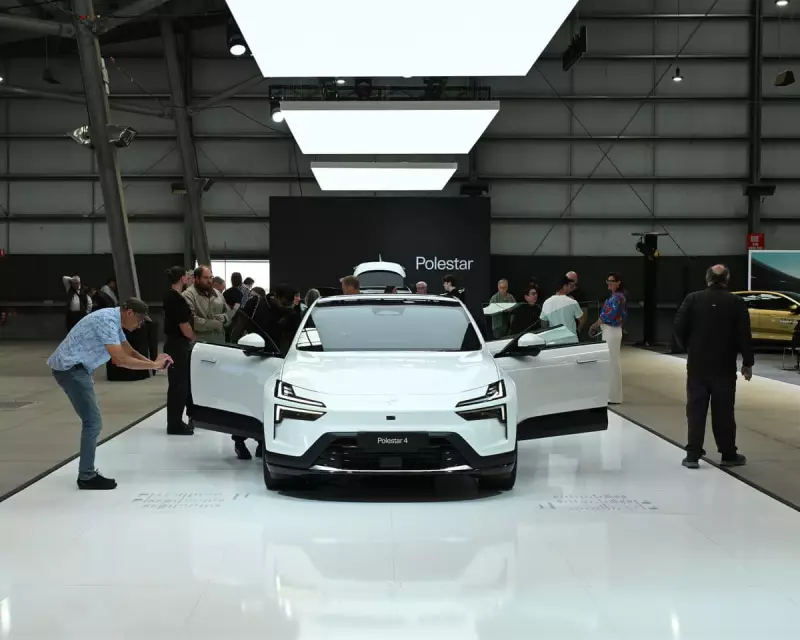
In a significant strategic move, China has announced a substantial investment in European automotive manufacturing, directly responding to the European Union's impending ban on new petrol and diesel cars from 2035 and recent tariff increases.
A Direct Response to EU Policy Shifts
The Chinese government, through its state-owned automotive giant Geely, has committed to a multi-billion-euro investment package. This capital will be directed towards expanding production capacity at Volvo and Polestar plants located in Sweden and Germany. The decision comes as a clear countermeasure to the EU's landmark environmental regulation and its recent imposition of higher tariffs on electric vehicles (EVs) imported from China.
Analysts view this as a masterstroke in trade diplomacy. By investing directly within the EU's borders, China effectively sidesteps the punitive tariffs designed to protect the bloc's domestic industry. The investment is expected to safeguard thousands of European manufacturing jobs while simultaneously securing a stronger foothold for Chinese-owned brands in the critical European EV market.

Securing the Future of Key Manufacturing Hubs
The financial injection is set to benefit key facilities, including Volvo's long-established Torslanda plant in Sweden and a major Polestar production site in Germany. This move provides much-needed certainty for these operations and their workforces amidst a turbulent period for the global automotive sector.
Industry experts note that this is more than a simple financial transaction. It represents a deepening of the complex, interdependent relationship between China and Europe in the high-stakes race for electric vehicle dominance. Geely's ownership of Volvo and Polestar allows China to leverage European engineering heritage and brand trust, while applying its own expertise in battery technology and cost-effective EV production.
Reshaping the EV Trade Landscape
The EU's 2035 ban on internal combustion engines has created a colossal market opportunity, one that Chinese manufacturers are exceptionally well-placed to exploit. However, the bloc's defensive tariffs threatened to derail that access. China's latest investment elegantly neutralises that threat.
This development is likely to have several immediate consequences:
- Increased EV production within Europe, potentially lowering consumer prices over time.
- Heightened competition for traditional European carmakers like Volkswagen and Stellantis.
- A potential cooling of trade tensions, as Chinese investment supports EU employment and green transition goals.
Ultimately, the announcement underscores a new reality in global trade. Rather than engaging in a straightforward tariff war, major economic powers are now pursuing sophisticated strategies of direct investment and localised production to navigate protectionist policies. The battle for the future of the automobile is being fought not just with tariffs, but with strategic capital deployed directly on foreign soil.






