

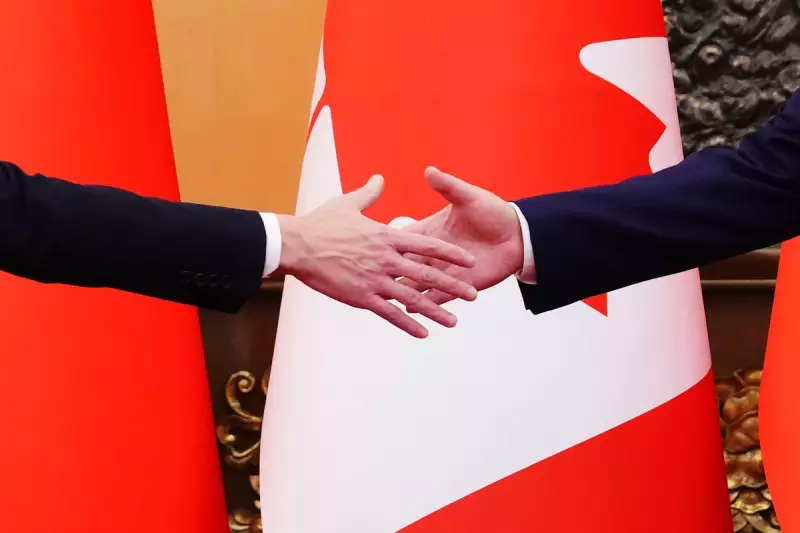
In a significant diplomatic move, the leaders of China and Canada have vowed to forge a new chapter in their bilateral relationship, seeking to move past years of strained ties and acrimony.
A Meeting to Turn the Page
Chinese President Xi Jinping met with visiting Canadian Prime Minister Mark Carney on Friday, 16 January 2026. It was the first official visit by a Canadian premier to China in eight years. President Xi expressed his willingness to continue working towards improved relations, highlighting that discussions on restoring cooperation had been ongoing since the two leaders initially met in October of the previous year.
That first encounter took place on the sidelines of a regional economic conference in South Korea. "It can be said that our meeting last year opened a new chapter in turning China–Canada relations toward improvement," China's top leader stated during the talks in Beijing.

Navigating New Global Realities
Prime Minister Carney emphasised that enhanced Sino-Canadian relations could help mend a global governance system 'under great strain'. He called for a renewed partnership "adapted to new global realities," with specific focus on collaboration in agriculture, energy, and finance.
These realities are heavily influenced by the 'America-first' approach of former U.S. President Donald Trump. The tariffs imposed during his administration negatively impacted both the Canadian and Chinese economies. Ahead of his trip, Carney noted his government's focus on building an economy less reliant on the United States during what he termed "a time of global trade disruption."
Tariffs Remain a Sticking Point
Despite the positive rhetoric, no immediate announcements were made regarding the contentious tariffs that continue to hamper full reconciliation. The trade dispute has its roots in actions taken under Carney's predecessor, Justin Trudeau.
Canada followed the U.S. in imposing tariffs of 100% on Chinese electric vehicles and 25% on steel and aluminium. In retaliation, China levied duties of 100% on Canadian canola oil and meal, and 25% on pork and seafood. A further 75.8% tariff on canola seeds was added in August last year. According to industry groups, these import taxes have effectively shut Canadian canola out of the Chinese market.
Analysts suggest that China hopes the pressure tactics employed by the Trump administration on allies like Canada will encourage a foreign policy less closely aligned with Washington. This sentiment was starkly illustrated by Trump's past suggestion that Canada could become "America's 51st state."
The meeting between Xi and Carney represents a cautious but deliberate step towards a more independent and pragmatic bilateral relationship, as both nations grapple with a shifting international order.






