

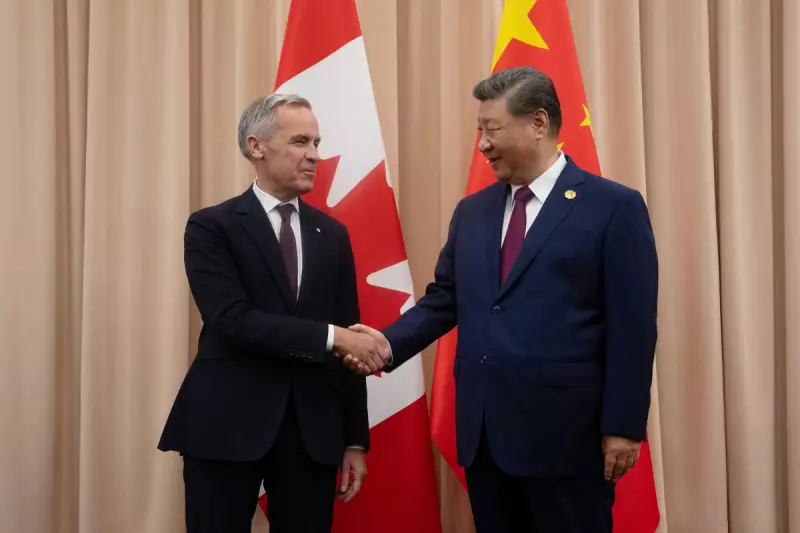
In a landmark diplomatic move, Canadian Prime Minister Mark Carney has held high-stakes talks with Chinese President Xi Jinping in Beijing, aiming to reset and deepen the trade relationship between the two nations.
A New Strategic Partnership
During the meeting on Friday 16 January 2026, Prime Minister Carney told President Xi that both countries had the potential to build a partnership delivering "historic gains". He emphasised a focus on mutual stability, security, and prosperity for their peoples. Carney specifically highlighted key sectors for collaboration, including agriculture, agri-food, energy, and finance.
"It is important to start this new strategic partnership at a time of division," Mr Carney stated, underscoring the significance of the moment. In response, President Xi expressed his pleasure at the months of prior cooperation across various fields. He affirmed that the healthy and stable development of China-Canada relations is conducive to world peace, stability, development, and prosperity.

Repairing Foundering Relations
Mr Carney's visit marks a pivotal effort to repair relations that have foundered in recent years. The Canadian leader arrived in Beijing on Wednesday night for a four-day visit, his first trip to China as Prime Minister. Notably, this is the first visit by a Canadian leader to China in nearly a decade, signalling a major thaw in diplomatic engagement.
The trip is a clear part of Canada's broader strategy to develop and strengthen international relationships beyond its traditional ally, the United States. By fostering deeper trade ties with China, Canada seeks to diversify its economic partnerships and secure new avenues for growth.
Implications for Global Trade
The successful outcome of these talks could have significant ramifications for global trade dynamics. A renewed China-Canada partnership would create a substantial economic corridor, with potential benefits including:
- Increased market access for Canadian agricultural and energy products.
- Enhanced cooperation in the financial services sector.
- Greater stability in bilateral relations, contributing to wider geopolitical equilibrium.
As both leaders concluded their historic discussions, the focus now shifts to the practical steps needed to translate this diplomatic momentum into tangible economic results for both nations.






