

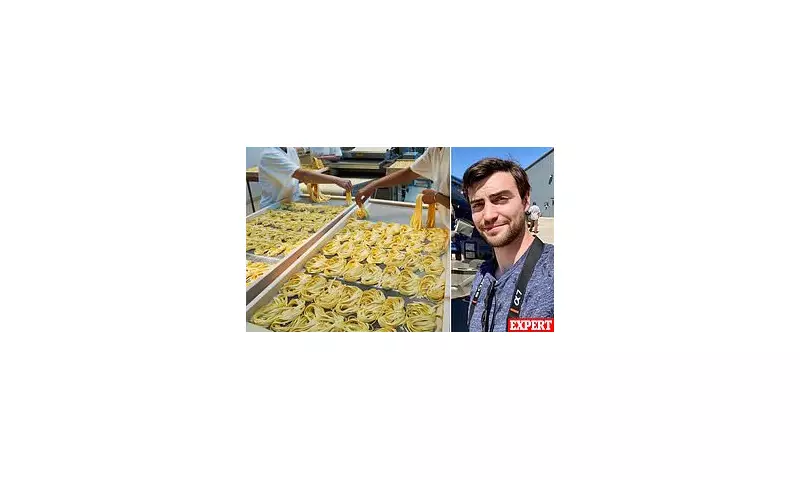
The Trump administration is moving to impose a staggering near-92 percent import duty on more than a dozen Italian pasta manufacturers, alleging they are dumping products in the American market to harm domestic rivals. This potential levy comes on top of existing 15 percent tariffs applied to most EU goods since August.
High-End Brands Face Shelving or Soaring Prices
If the proposed 91.74 percent duty is enacted early next year, retailers stocking affected brands—including Garofalo, Rummo, Giuseppe Cocco, and La Molisana—may be forced to either double their prices or remove the products entirely. The impact is already being felt, with iconic delis like Tino's Delicatessen on Arthur Avenue in the Bronx, New York, deciding to cease sales of these pastas immediately.
Owners Rosa and Giancarlo Paciullo, who have run Tino's for over 50 years, learned of the duty roughly two weeks ago. They have now opted to stock only a specialty brand from Italy's Abruzzo region. 'Rummo, all the other pasta, everybody's scared,' Rosa Paciullo told the Daily Mail.

A Long-Running Trade Dispute Intensifies
The US Department of Commerce is targeting thirteen companies with this import tax, reviving an investigation that began in 1996 into suspicions Italian firms sell pasta at artificially low prices in the US. An administration official stated the Italian makers have not complied with recent data requests, but if they do, the Commerce Department will 'alter the assessed duty rate.' The official denied any punitive intent by political appointees.
However, Scott Laing, a Clinical Assistant Professor of Finance at the University at Buffalo, told the Daily Mail the proposed tariff has a 'punitive' element. He expressed scepticism over the alleged dumping margin, noting a 91 percent duty implies selling in the US for half the domestic price. 'I can't imagine any company could justify keeping prices that low,' he said.
Price comparisons suggest the discount may be minimal. A one-pound bag of Garofalo penne cost $3.49 in Manhattan last week, while a slightly larger 500g bag in central Rome costs about €1.59 ($1.87).
Winners, Losers, and the Consumer Impact
The duty is narrowly targeted, affecting makers who comprise less than 17 percent of total pasta imports from Italy. Professor Laing suggests the average consumer may see little change, as most US pasta is domestic store-brand. The pain will be felt in upscale supermarkets like Whole Foods and Fairway that stock these premium imports.
Conversely, some specialty Italian grocers stand to benefit. Antonio Magliulo, owner of Buon'Italia in Manhattan's Chelsea Market, sells artisanal brands like Pasta Setaro and Marilungo, which are not subject to the duty. These smaller producers use traditional, slow methods like bronze-die cutting and extended drying.
'This will probably help me,' Magliulo said. 'Which pasta would you prefer now that the price gap has been closed or reduced significantly? Now you can have a much better pasta for almost the same price.'
Most Barilla pasta sold in the US is made domestically and will avoid the duty. The Commerce Department has given Italian manufacturers until February 18, 2026, to provide key sales data before final imposition, a deadline that could be extended due to recent government shutdown delays.






