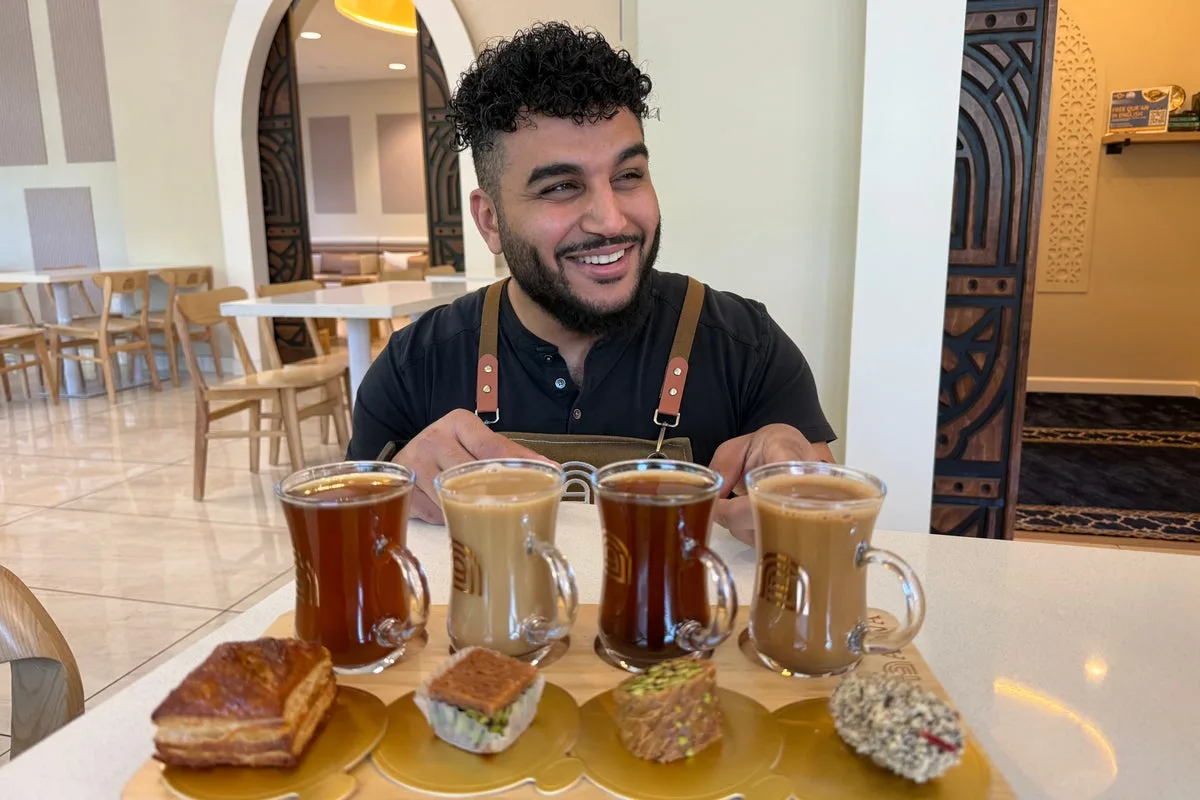
Yemeni coffeehouses are opening at a rapid pace across the United States, driven by demand for late-night social spaces and growing Arab American populations. The number of cafes run by six major chains serving Yemeni-style drinks grew 50% last year to 136, according to Technomic, a restaurant industry consulting company. This figure excludes many smaller chains and independent cafes that import coffee and tea from Yemen.
The popularity of these cafes stems from several factors. They stay open late, sometimes past 3 a.m., especially during Ramadan, and provide alcohol-free socialising options. A Gallup poll last year found that only 54% of U.S. adults reported drinking alcohol, the lowest percentage in 90 years. “Generally in the Middle East, our nightlife is coffee, right? People hang out at coffee shops, they play cards, they talk. We wanted to bring that here,” said Ahmad Badr, owner of an Arwa Yemeni Coffee franchise in Sunnyvale, California.
The Arab American population in the U.S. rose by 43% between 2010 and 2024, compared with around 10% growth for the overall population, according to the Arab American Institute. While most Yemeni coffee shops are in areas with high concentrations of Arab Americans, including Michigan, California and Texas, they are also opening in diverse locations such as Alpharetta, Georgia; Overland Park, Kansas; and Portland, Maine.
Faris Almatrahi, co-founder and owner of Texas-based Arwa Yemeni Coffee, which has 11 cafes across the U.S. and 30 more in development, said the ongoing civil war in Yemen has prevented Yemeni Americans from visiting their homeland. He has tried to evoke Yemen in his cafes through desert-toned paint, mosque-like archways and lampshades shaped like hats worn by Yemeni coffee farmers. “One of the ways to actually visit without traveling there was to bring that experience to the U.S., and that was a huge passion for us when we opened our first location,” he said.
Menus vary but typically include specialties such as Adeni tea (a spiced tea similar to chai) and qishr (a drink made from dried husks of coffee cherries). Familiar drinks like lattes may contain special spices or honey; at Arwa, lattes feature a camel outline stencilled in spices. Bakery items include khaliat nahal (Yemeni honeycomb bread) and basboosa (a cake soaked in sugar syrup). Many Yemeni menus also offer typical U.S. coffee shop fare such as matcha lattes or berry refreshers.
Peter Giuliano of the Specialty Coffee Association said culturally specific cafes have been a key growth driver in the U.S. coffee industry. Most Yemeni coffee is sun-dried, enhancing flavour and bringing out undertones of chocolate and fruit, Almatrahi said. Yemeni cafes often mix coffee with special spice blends called hawaij, which may contain cardamom, ginger, cinnamon, cloves, coriander or nutmeg.